At Two Houston Gatherings, Former Kyrgyz Republic President Roza Otunbayeva Spoke About Two Different Central Asias
At two events in Houston, Roza Otunbayeva spoke about regional development and geopolitics. Days later, speaking to Kyrgyz students, the conversation turned personal, revealing a very different side of both Central Asia and its future.
A Kyrgyz attendee reflects on hearing Roza Otunbayeva speak at two separate Houston gatherings—first at the Ismaili Centre Houston and days later with Kyrgyz students. What began as a formal discussion about Central Asia’s political and economic future gradually shifted into a more personal conversation about identity, education, women’s leadership and whether young people still feel responsible for returning home.
I walk into the Ismaili Centre Houston on April 30, 2026, already feeling more confident than I expected. Part of it comes from knowing who is about to speak: Roza Otunbayeva. There is something grounding about seeing a former president from your own country standing in front of an audience thousands of miles away from home. The title of the event—"Central Asia: Today and Tomorrow"—makes me expect a clear discussion about where the region is heading politically and economically.
The room fills slowly with people from different countries and backgrounds. English moves across the room more than any other language. When Otunbayeva begins speaking, she does not start with symbolism or personal history. She starts with scale. Five countries. Thirty-five years of independence. A region of more than 80 million people spread across mountains, deserts and steppes. She chooses her words carefully and rarely raises her voice. She speaks about connectivity, investment, institutions and the long process of building states after the collapse of the Soviet Union. Even discussions about women’s leadership are framed through systems and responsibility rather than inspiration.
At one point, she says, “Even if the woman is brilliant—in Central Asia she is someone’s daughter and someone’s wife.” The room stays silent for a few seconds after she says it. People keep listening, but nobody laughs or nods. Most just sit there thinking about it. Even after the talk, she still feels more like a public figure than a person. I leave understanding more about the region, but not necessarily more about her.
That changes later.
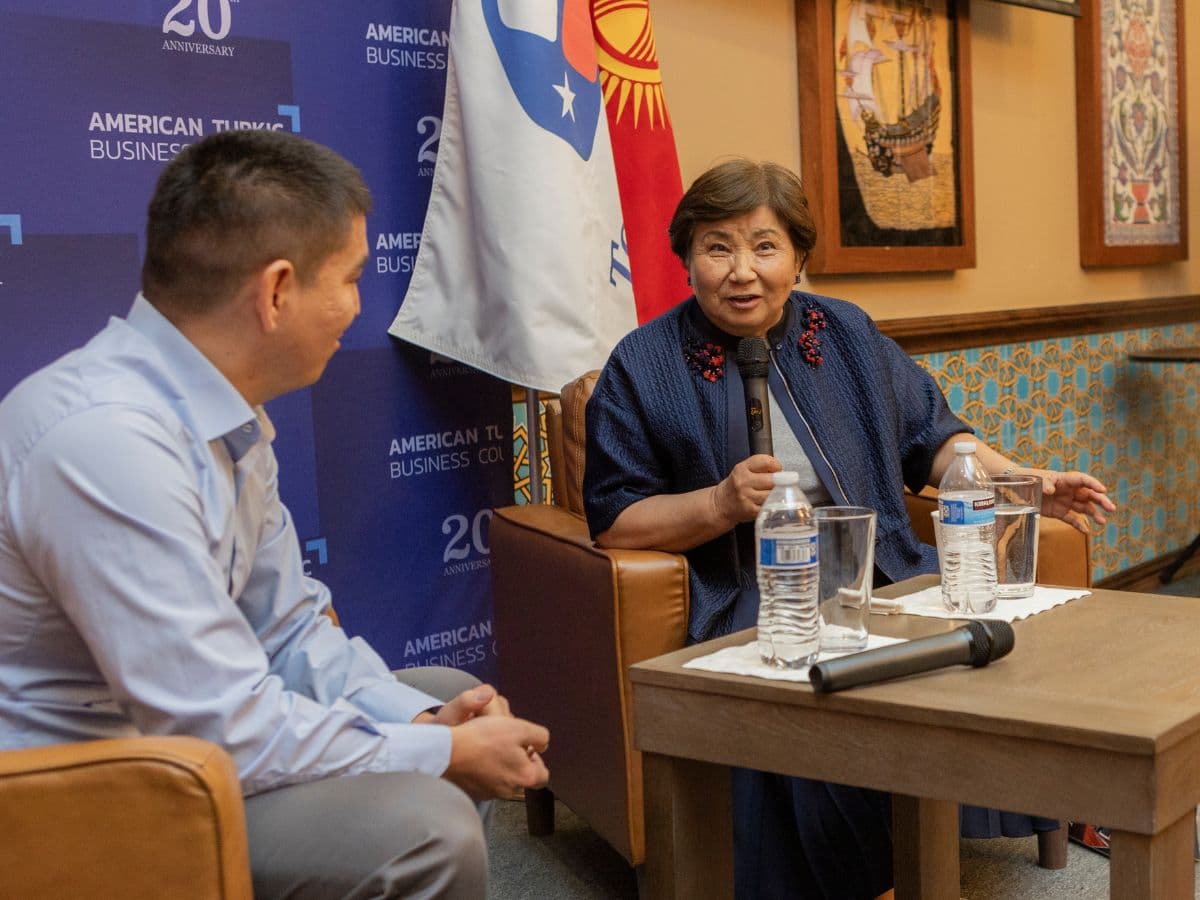
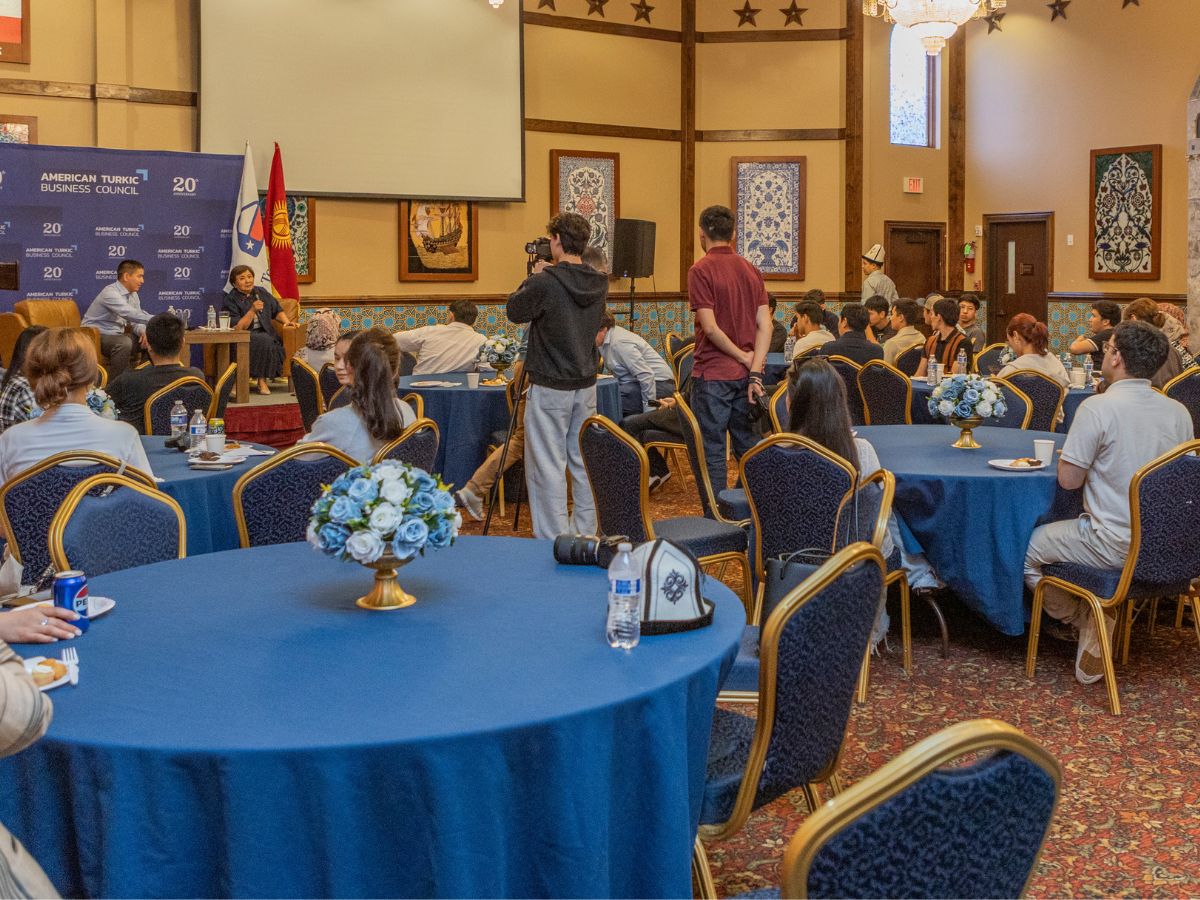
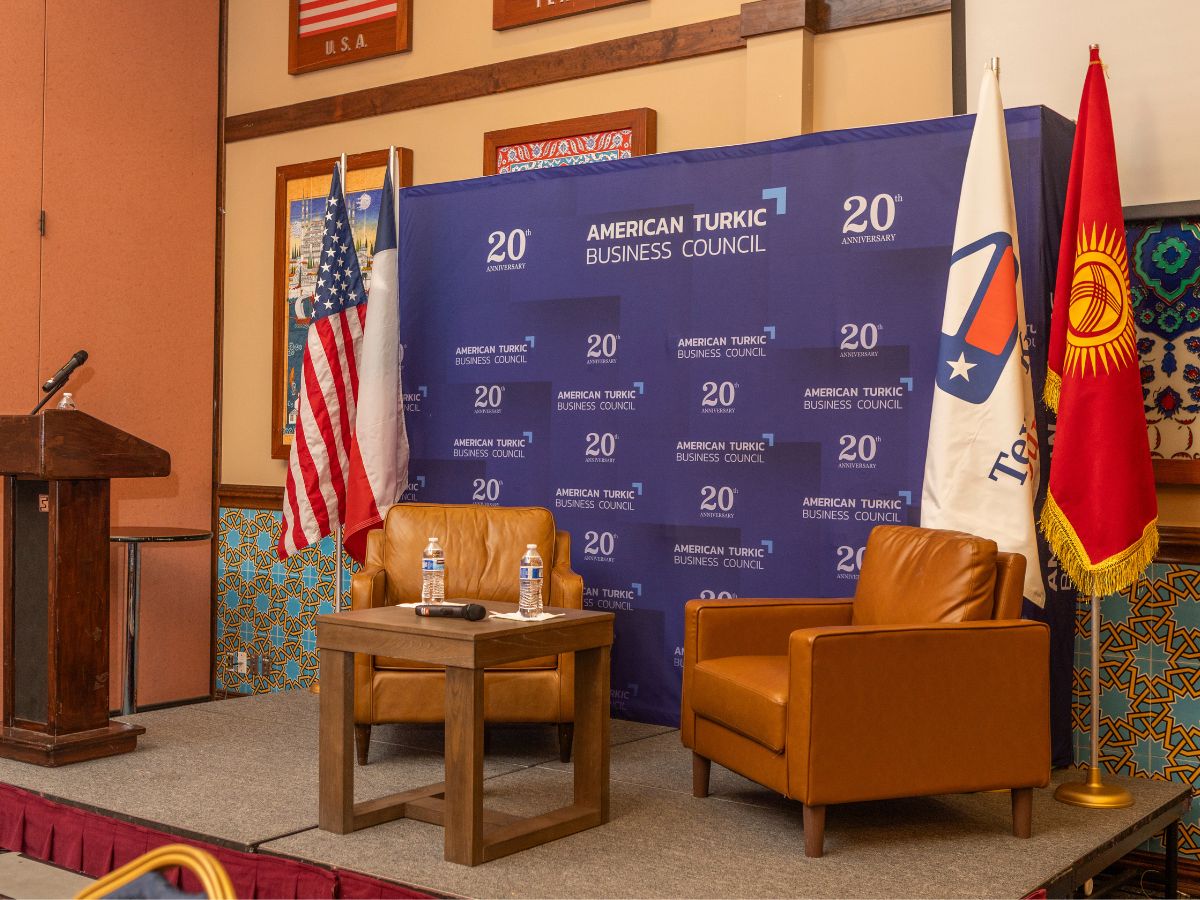
A second gathering on May 6 takes place in a much smaller setting organized for Kyrgyz students under the theme “Youth, Education and the Future.” The second gathering, sponsored by Texas Kyrgyz Foundation, with support from American Turkic Business Council and Kyrgyz Student Association, feels different from the moment people walk in. This time, the room is filled mostly with young Kyrgyz students speaking Kyrgyz among themselves before the event begins. People laugh more easily. Conversations continue even after the event starts. Nobody seems worried about sounding formal anymore.
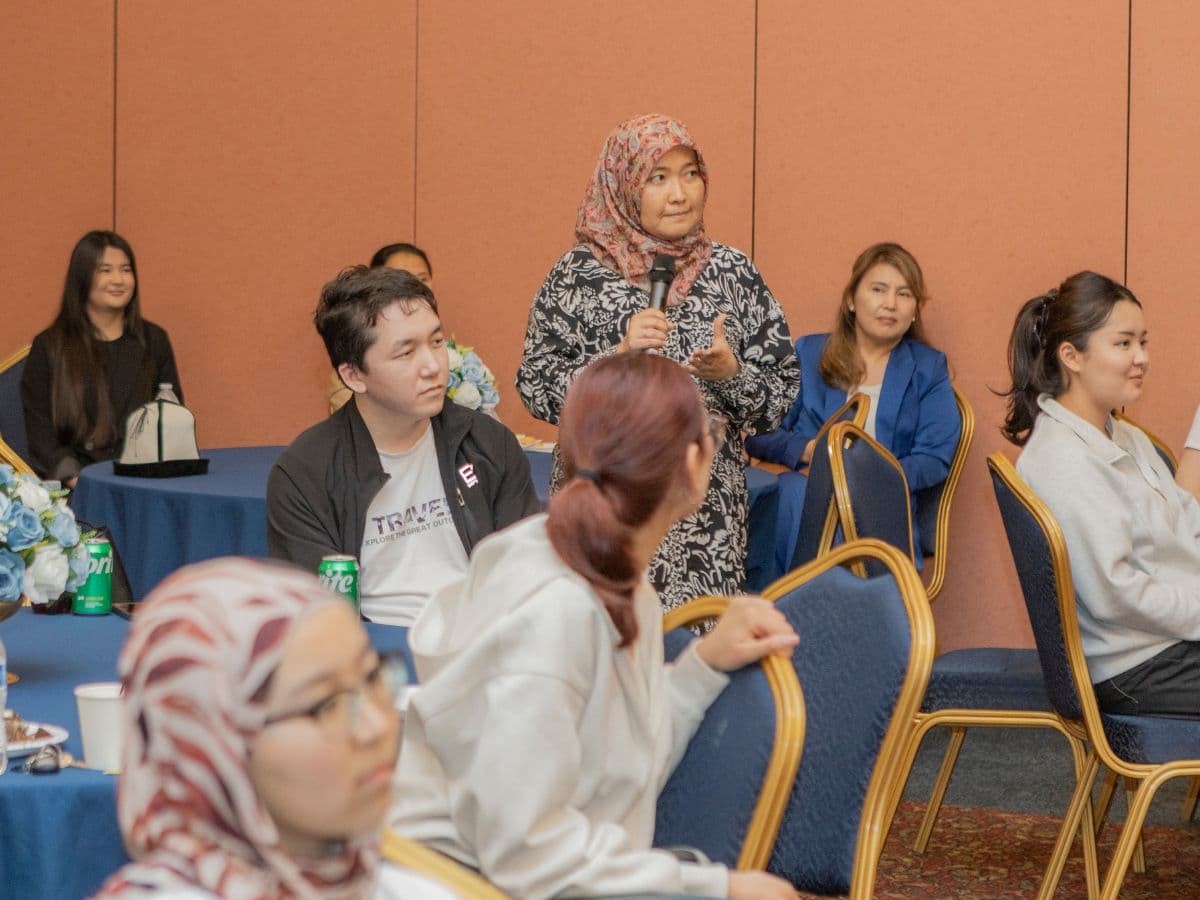
Otunbayeva changes too. Speaking in Kyrgyz, she sounds more relaxed, more direct and at times unexpectedly personal. Instead of standing at a distance from the audience, she moves toward it—sitting beside students, asking questions back and listening closely before answering. At one point, she pays particular attention to the young women in the room, encouraging them to speak louder, ask questions and move forward confidently. At some point, it stops feeling like a speech and starts feeling more like a long conversation between generations.
The discussion moves between politics, economics, education and personal ambition. Students ask about Kyrgyzstan’s future, about studying abroad and about whether young people still have a responsibility to return home. Other members of the community join in as well, raising questions, sharing reactions and at times gently disagreeing with some of her remarks. One moment people are laughing. A few minutes later, the room grows tense over questions about leaving Kyrgyzstan and whether young people should come back. People continue raising their hands, asking follow-up questions and wanting to keep the conversation going. By the end of the evening, the questions still have not run out—only the time has.
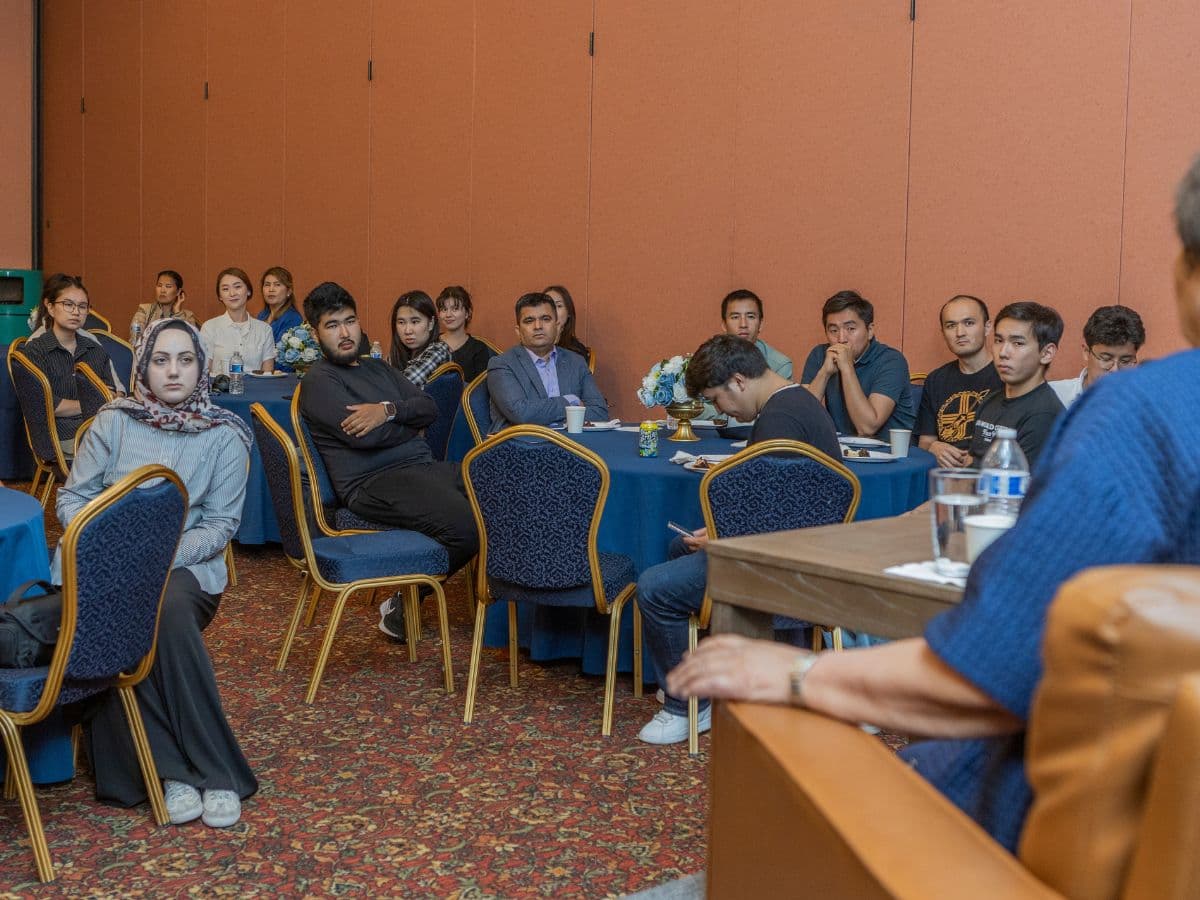
Somewhere during that second gathering, I stop taking notes as carefully as before. The conversation no longer feels like something I am observing from the outside. At the first event, most of the conversation focused on governments, regional cooperation and development. Here, people keep bringing the discussion back to students, families and whether young people still feel connected to home.
By the end of the night, the conversation feels far more personal than it did a few hours earlier. I leave thinking less about regional politics and more about the students still trying to figure out what their relationship to Central Asia will be.
More from
Organizations

English Immersion Summer Camp in Houston for International Teens Organized by Texas Qazaq Foundation
By Alva Robinson
Houston Hosts Grand Opening of Texas Kyrgyz Foundation, Empowering Local Diaspora
By Akylai Ozbekova
Texas NGO Leads Series of Seminars Addressing Mental Health for US Central Asian Communities
By Alva Robinson