How ATBC Helps Central Asian Entrepreneurs Open Doors in Houston
Business experience can take newcomers only so far. American-Turkic Business Council helps turn relationships into knowledge, access and opportunity.

Daniar Musakeev, left, reviews construction plans with his son, Shernazar Musakeev, at KG Construction in Houston. Shernazar began learning the family business on construction sites and now spends time working alongside his father in the office.
Summary: Central Asian entrepreneurs arriving in the US may bring years of business experience but lack the relationships and market knowledge that take time to build. In Houston, the American Turkic Business Council connects newcomers with entrepreneurs, institutions and decisionmakers who can help them navigate unfamiliar terrain. Through their experiences, members show how those relationships can grow into knowledge, access and opportunities to help others.
Seven floors above Southwest Freeway, Daniar Musakeev runs KG Construction, a Houston-based construction company after building businesses on two continents. Experience taught him that succeeding in the United States requires more than knowing his trade. It also requires knowing people.
Musakeev saw that principle tested when city utilities withdrew an approval after work had already progressed on one of his construction projects. Through a relationship he had built with the American Turkic Business Council, the problem reached the district’s congressman and, ultimately, city officials who reconsidered the decision. “If I had been just a single businessman, no one would have taken me seriously,” he says.
For Central Asian entrepreneurs building businesses in the United States, Musakeev’s experience points to a challenge that extends beyond starting a company: how does a newcomer acquire the relationships and knowledge needed to navigate an unfamiliar system? For more than two decades, relationship-building has formed a foundation of ATBC’s work in Houston, connecting entrepreneurs with one another and with the wider business community.
Musakeev arrived in Houston with plenty of business experience but without those accumulated relationships. He had worked briefly in government in Kyrgyzstan before moving into advertising and later construction. A relatively small domestic market eventually pushed him to consider opportunities abroad. After considering Türkiye, Europe and several Asian countries, he chose the US and spent two years preparing for the move. “We didn’t come here randomly just to try doing business. We came here intentionally to do business.”
Preparation could teach Musakeev about a market, but it could not give him years of experience operating within it. Having belonged to a business association in Kyrgyzstan, he sought a similar community after arriving in Houston in 2015. Through ATBC, he met other entrepreneurs, attended events and became an active participant. The organization eventually invited him to join its board.
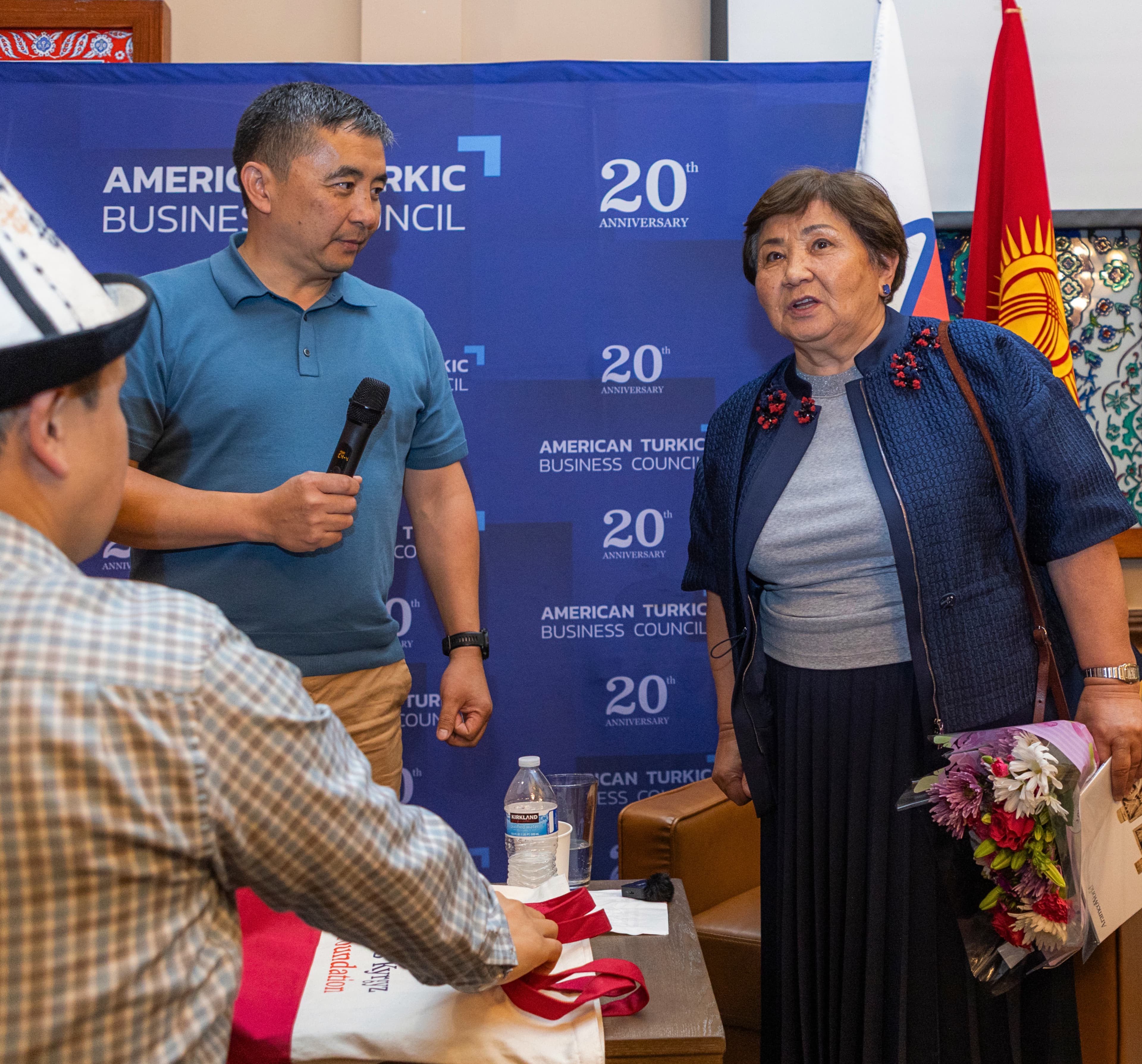
Former Kyrgyz President Roza Otunbayeva speaks with attendees during an American Turkic Business Council event in Houston. ATBC, established in Houston in 2005, brings together entrepreneurs, civic leaders and members of the region’s Turkic communities.
The challenge Musakeev encountered extends beyond any one entrepreneur. Richard Alrayes, assistant professor of management in the Department of Business Administration at North American University, points to trust-based networks, aligned institutions, access to capital and tolerance for risk among the elements that help entrepreneurial ecosystems function.
Those networks can carry particular importance for newcomers who arrive with professional expertise or business experience but lack relationships accumulated over years in a market. Structured organizations, Alrayes says, can accelerate “credibility, visibility and access to decision-makers.”
Access, however, represents only one thing those relationships can provide. Just a few miles down Southwest Freeway from Musakeev’s office, Kuvat Makhum, owner of Beikos Mediterranean Cuisine, draws on his own experience to give newer entrepreneurs something else: knowledge of a market they have yet to learn.
Makhum came to the US in 2006 to teach, though his experience with entrepreneurship stretched back to his student years. He introduced doner in Kazakhstan at a time when many customers had never encountered it and initially struggled to persuade people even to taste it. “When I gave it to people for free, they were scared to try it.”
Makhum eventually walked away from the venture. As doner later spread, he recognized the opportunity he had left behind.
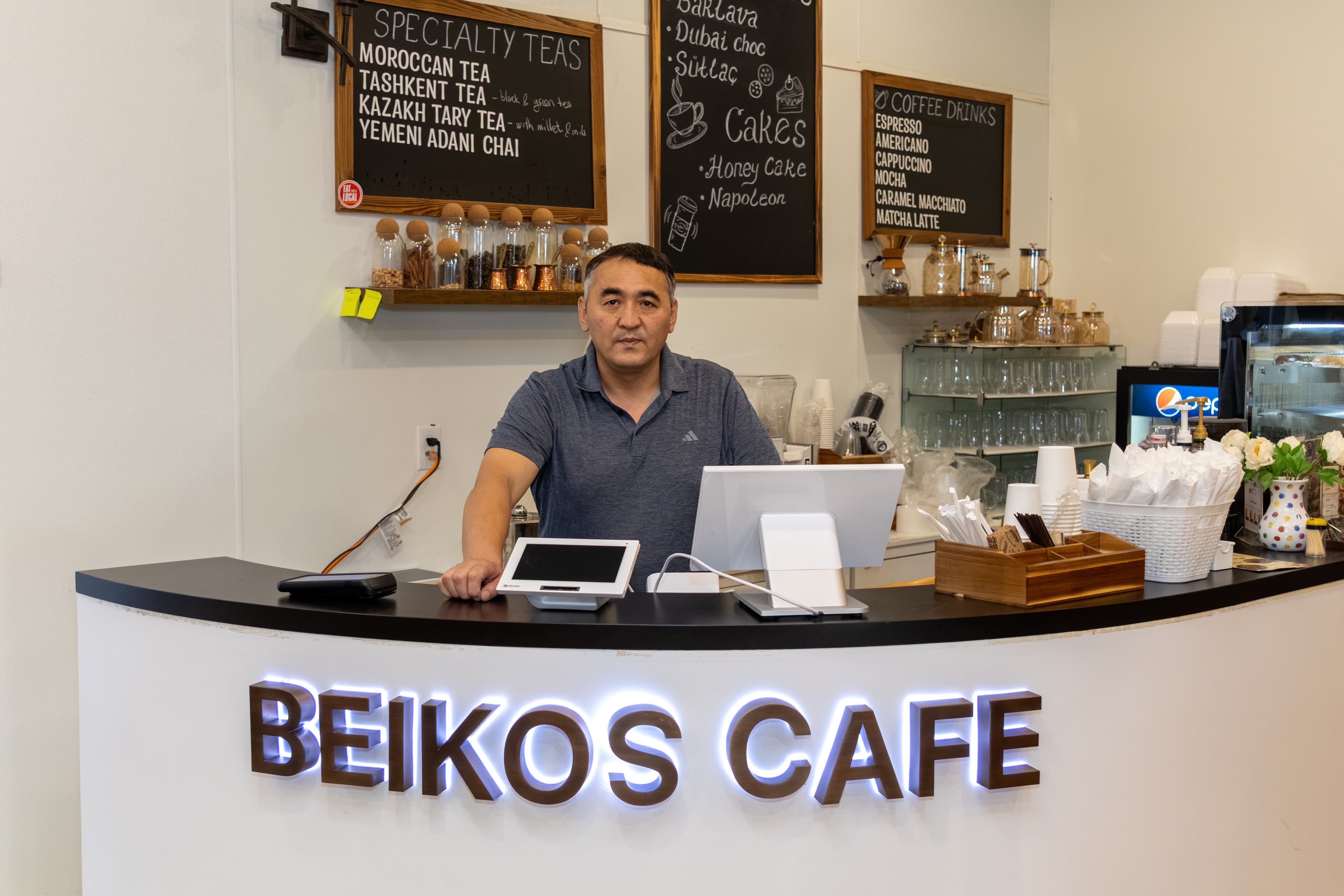
Kuvat Makhum stands behind the counter at Beikos in Houston. Drawing on his own experience as an entrepreneur, Makhum advises newcomers to spend time learning the US market before investing in a business.
That experience now informs the advice Makhum gives newer entrepreneurs in Houston. Rather than encouraging them to open businesses immediately, he recommends spending at least six months observing customers, expectations and business practices before investing. “You need to learn.… You need to see what’s happening.”
Makhum now occupies the other side of an exchange Musakeev sought when he arrived. He realizes that experience acquired through trial-and-error transforms into knowledge that another entrepreneur can use before committing money, making the same mistake or overlooking an opportunity.
Creating opportunities for those exchanges has driven ATBC’s work for more than two decades. Established in Houston in 2005, the organization began as the Texas Turkish American Chamber of Commerce, focused largely on business ties between Türkiye and the United States. After Orhan Osman became president and CEO, he and his team broadened its scope—and its name—to encompass Turkic communities including Azerbaijanis, Kazakhs, Kyrgyz and Uzbeks.
Osman describes his role less as that of a businessman than as a “facilitator and connector.” ATBC creates opportunities for business owners to meet one another and builds connections between entrepreneurs and people outside their immediate circles. Sometimes that work becomes quite direct: When a member needs to reach a particular company, Osman says, ATBC can help arrange the meeting.
For Osman, however, creating a network requires more than making introductions. Relationships grow through repeated encounters, which means entrepreneurs have to keep showing up.
Osman encourages entrepreneurs to attend events even when a program falls outside their immediate business interests. The value may come not from the subject under discussion but from the person sitting nearby. “If I don’t go, I don’t build my network,” he says.
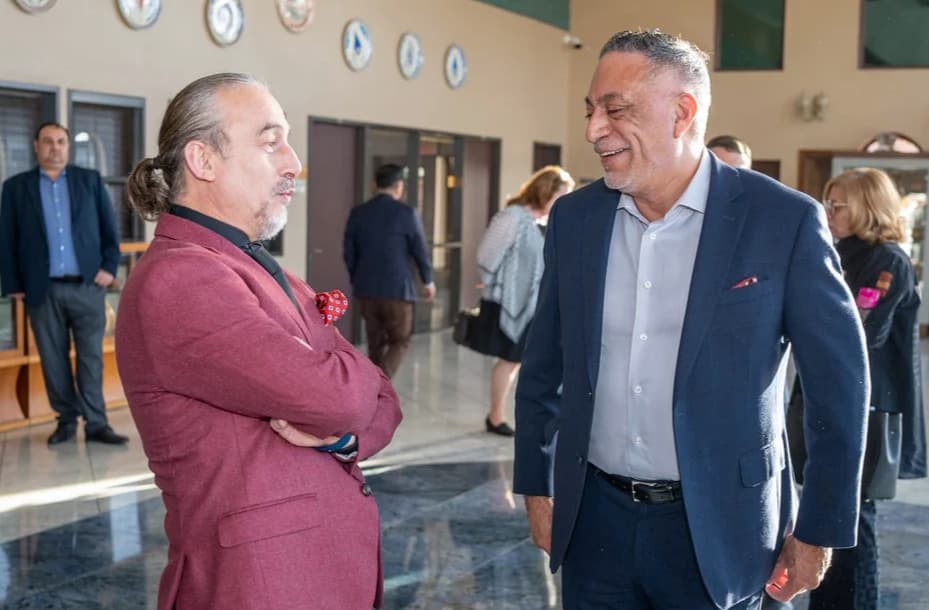
ATBC President and CEO Orhan Osman, left, speaks with an attendee during the council’s 2026 Public Service Appreciation Dinner in Houston. Held during Ramadan, the gathering brought together more than 200 business leaders, public officials and community members. Photo courtesy of American Turkic Business Council
Those encounters also depend on established entrepreneurs contributing what they have learned. Committees and educational programs create opportunities for business owners to share experience with people entering a field or trying to understand the US market. “I cannot do it by myself,” Osman says. “We have to do it as a team.”
Shernazar Musakeev has begun navigating that exchange from the other side. A member of ATBC’s Real Estate and Construction group, Musakeev is learning the construction business from his father, starting on job sites before moving into the office. He sees relationships with more experienced businesspeople as part of that education.
“I believe building relationships is the foundation of business,” the 24-year-old says. “You can learn a lot just by communicating and keeping up with people who are further along than you.”
That cycle—meeting, learning and eventually contributing—turns individual relationships into something larger. Makhum can pass along lessons learned through experience; Osman can create spaces where people who otherwise might never meet encounter one another; and Musakeev can draw on a relationship when a construction project runs into an institutional obstacle.
Musakeev also sees persistence as part of that process. He describes Central Asian entrepreneurs as people inclined to keep searching when the obvious route closes.
“People start looking for additional doors—and if they really need it, they are even ready to climb through a window.”
Musakeev’s own experience adds something to the metaphor. Persistence may keep an entrepreneur searching for another door; relationships can help him find it. The connection that helped resolve his construction dispute did not begin when the problem arose. Rather, it grew from years of participation in a network.
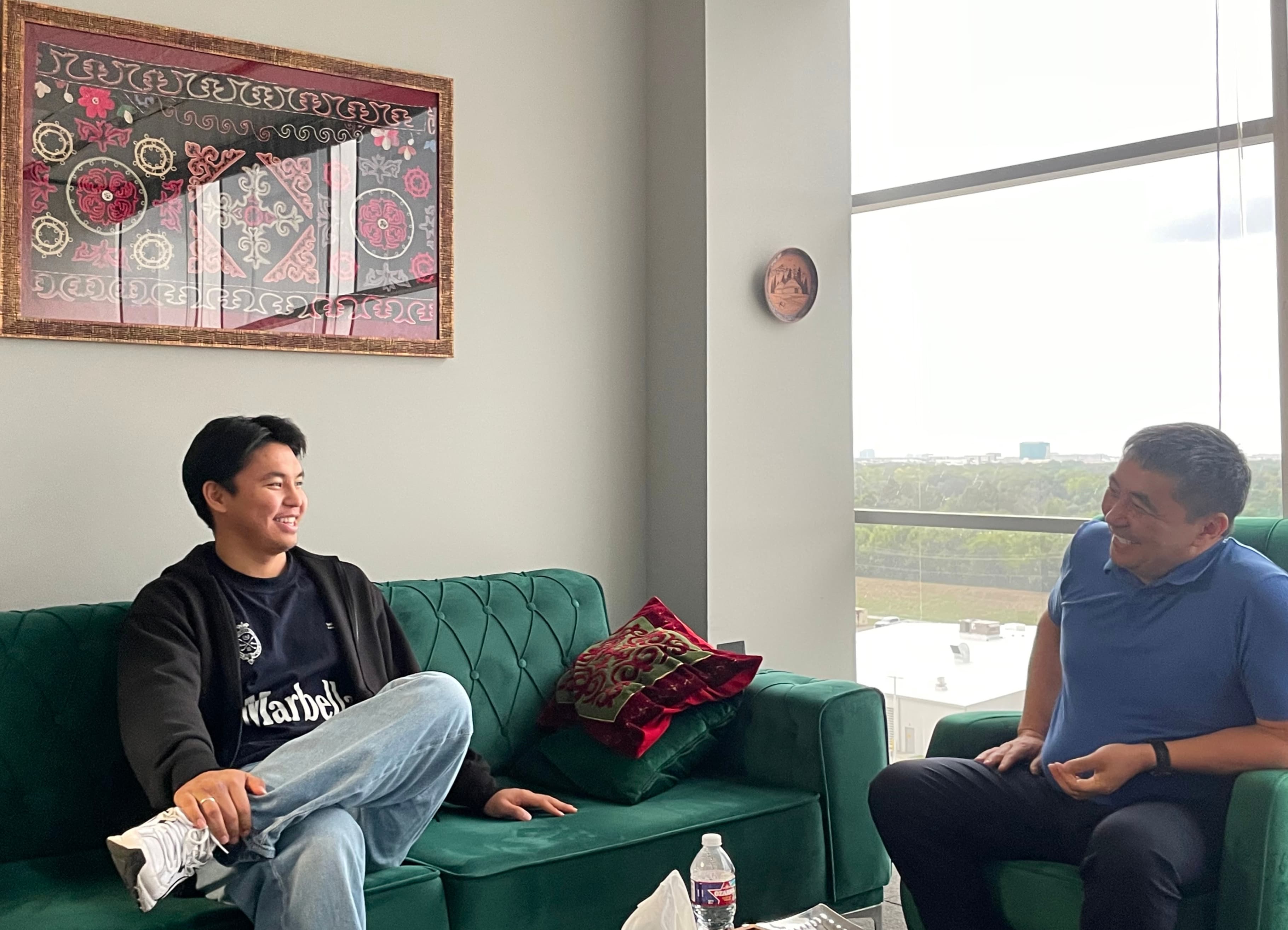
Shernazar Musakeev, left, talks with his father, Daniar, at KG Construction’s Houston office. Shernazar says he is still at the beginning of learning the business: “I am just starting. I have a long way to go.”
For the younger Musakeev, that process has only begun. Asked whether he is following in his father’s footsteps, he says, “I am just starting. I have a long way to go.”
Over time, entrepreneurs who once needed introductions can accumulate relationships of their own and offer someone else the knowledge or connection they once lacked. Musakeev arrived in Houston looking for that kind of network. Years later, he sits on its board—not simply with a larger collection of contacts, but in a position to help open doors for those who follow.