Inside a Houston Boba Shop Where Customers Slow Down and Feel Seen
In a space built for speed, one tea shop slows down—drawing on what its owner learned in her mother’s kitchen.
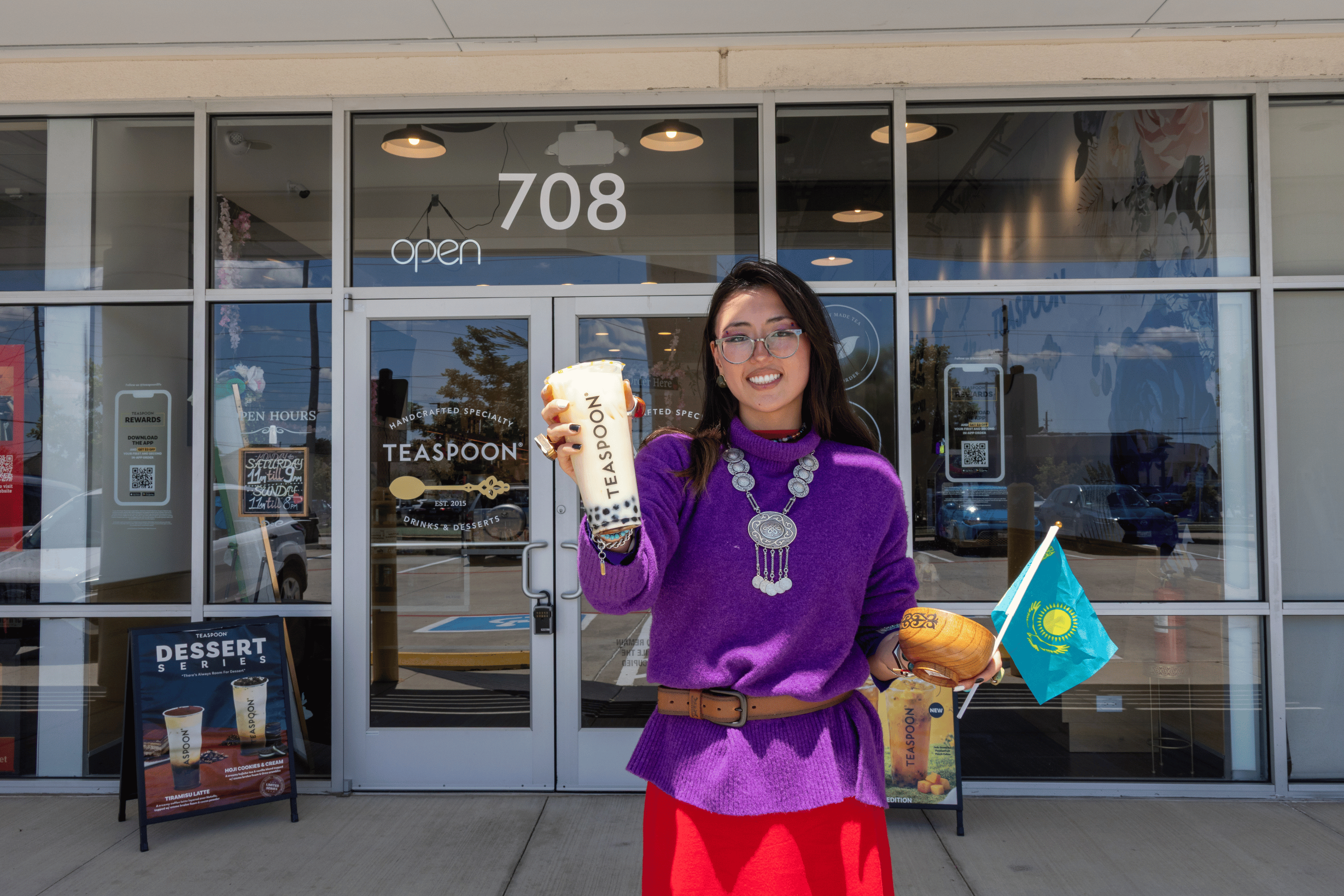
At Teaspoon, in Spring, Texas, owner Dariga Abzalova wants to create a different kind of teahouse experience, one in which she learned growing up: everyone is worthy of being seen.
Ahead of Mother's Day, Dariga Abzalova reflects on the lessons she learned from her mother in a kitchen in Aktobe, Kazakhstan—lessons about care, attention, and hospitality. Today, she brings those same instincts into Teaspoon, a boba tea shop in Spring, Texas, where customers are encouraged to slow down and be seen.
Dariga Abzalova still returns to the same room in Aktobe, in western Kazakhstan.
At her grandparents’ house, the women stayed in one room, moving between the stove and the table, refilling plates, clearing dishes, starting again. Conversations overlapped, voices rising and falling as one story slipped into the next without pause. You could hear it before you saw it.
“That’s the room that had the most laughter,” Abzalova says. “The most life coursing through it.”
Years later, that same rhythm shapes how she runs a boba tea shop in Spring, just north of Houston, where customers pause at the counter and she asks what they like before they decide.
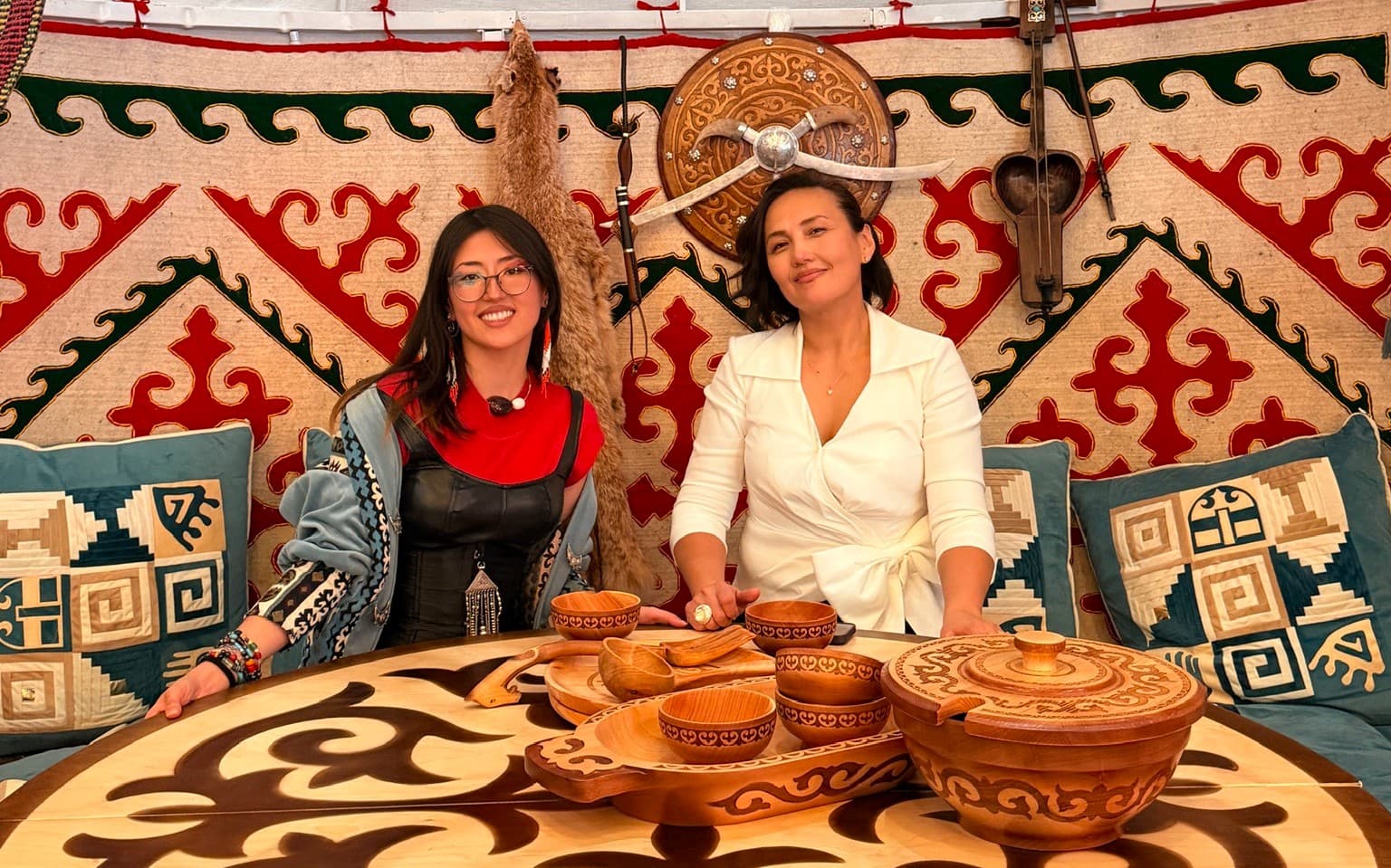
Abzalova learned her sense of caring for others from her mother, Aizhan Abzalova Nurlankyzy, pictured right.
“My girls were always there, helping me,” her mother, Aizhan Abzalova Nurlankyzy, says. “At the time, maybe we didn’t realize it, but they were learning everything.”
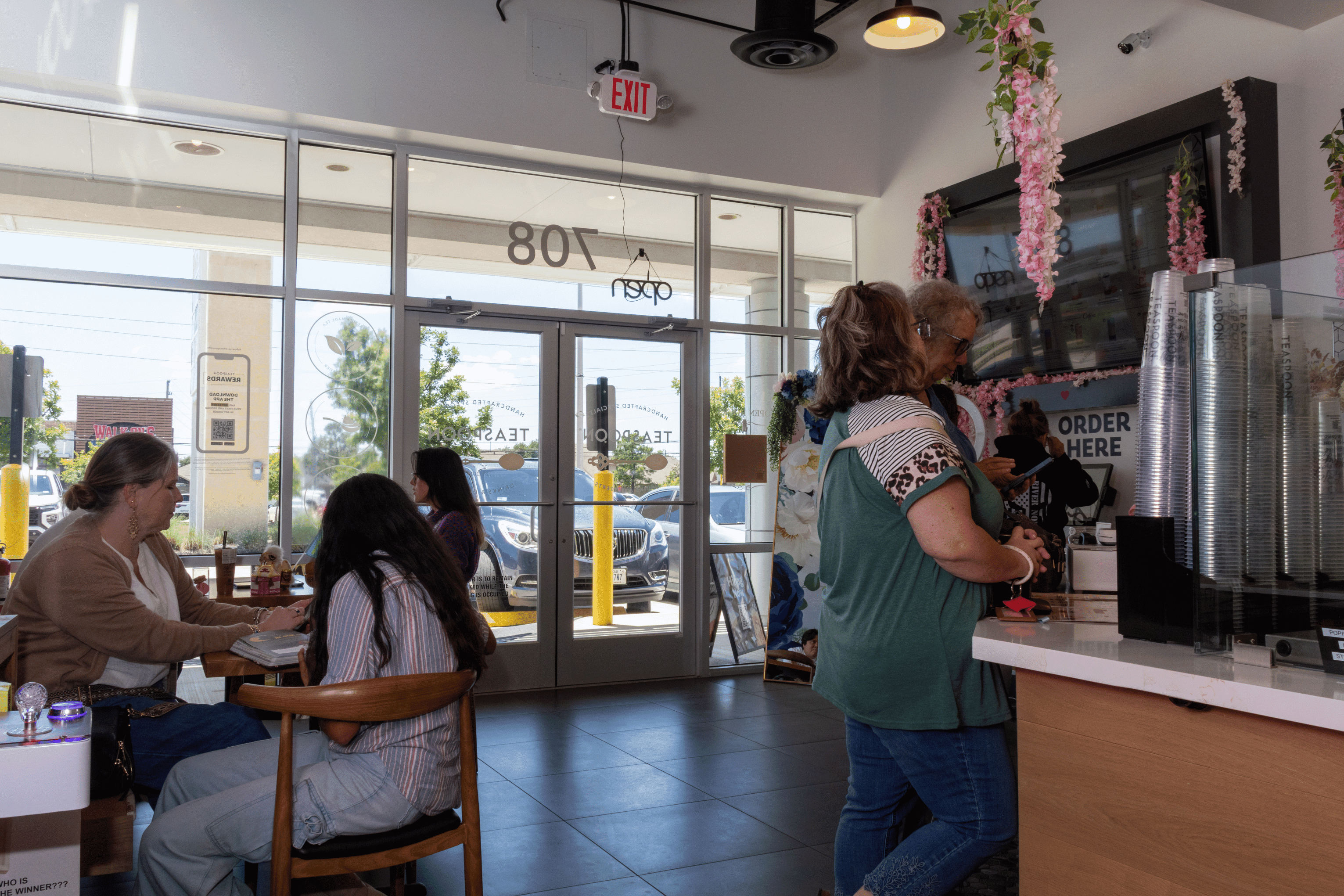
At Teaspoon, the pattern holds. Customers step in, scan the menu, hesitate. Abzalova steps forward before they even begin to ask for guidance.
One regular, Rod Rudine, doesn’t need to.
She looks up when he walks in.
“Rod,” she says, with a smile that signals recognition.
“It’s very specific,” she adds, before he can answer.
“Liquid gold,” he says.
She’s already moving.
Honey oolong—one of the milk teas at Teaspoon, though it isn’t written that way anywhere customers can see. The drink started when he asked nearly a year ago if it could be sweetened with honey instead of syrup. Her mother had some on hand, a gift. She used it. It stayed.
“It’s fresh,” Rudine says. “Some of the things that attracted us to it was some of the fruits… something more natural.” Then, almost as an aside: “It was that personal touch.”
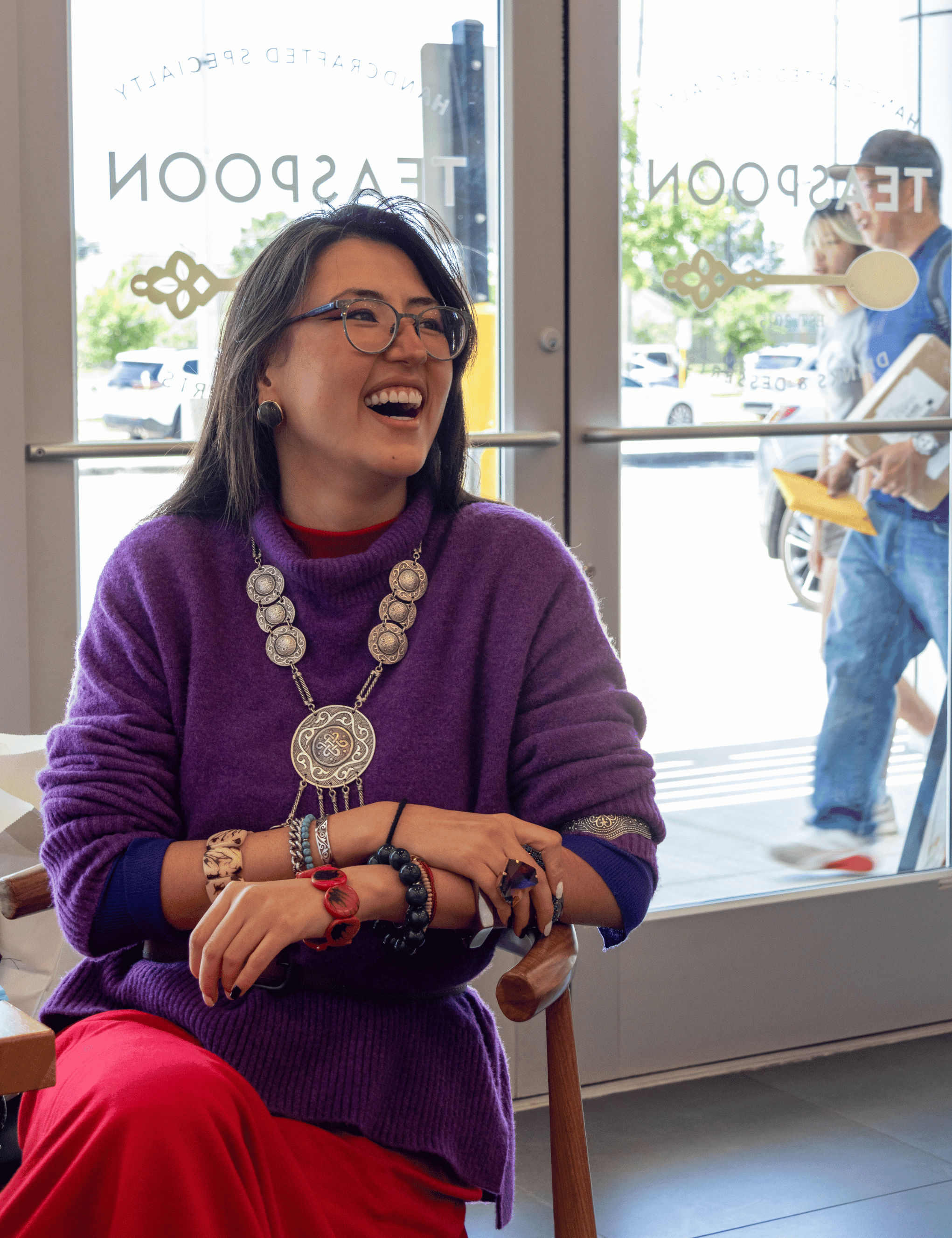
Behind the counter, Abzalova watches the room the way she learned to watch that one in her grandmother’s kitchen. Born in Aktobe, she grew up, as she puts it, “in just a lot of changing rooms.” At 25, that movement still shapes how she works—Kazakhstan, then Houston, then Scotland, then back again. Wherever she and her family were, gatherings took shape the same way. One room filled with guests. Another filled with work. As a child, she didn’t always want to be there. The kitchen meant constant motion, hands always busy. “You feel kind of like a background character,” she says. Over time, she began to see what held everything together.
The work ran on attention—who needed something, what was missing, what came next. “That’s the only reason that the gatherings can take place,” she says. “That’s the only reason all of us are standing there.”
Her mother, Aizhan Abzalova Nurlankyzy, carried that way of working into everything.
One moment stays with Abzalova. It was winter, snow on the ground. She had a class—dance or art—and her mother called her father to ask if he could take her. He said no. If she wanted her to go, he said, she should take her herself.
Her mother didn’t have a license or know how to drive. She wrapped her daughter in layers, zipped her coat too tight, nearly catching her chin and got in the car. “She didn’t know how to drive,” Abzalova says. “But she still took me. She just decided and went.”
She didn’t wait. She moved anyway.
Abzalova takes that to heart when she hires. There's something more than just experience that she looks for when hiring. “What you’re going to be paid to do is to care,” she tells people. “Do you care enough?”
She tells customers to take their time. She asks what they like instead of pointing to options. When someone hesitates, she builds something for them. That's because she recognizes the instinct—the rush, the need to choose quickly, to not take up space—and interrupts it. Sometimes it starts with a question: Do you like mango? Do you want milk tea or fruit tea? Sometimes it becomes something else entirely. “If you don’t tell people that how they like things can be accommodated, they will never have a goal to ask,” she says. “They won’t think it’s okay to.”
She watches for the moment someone relaxes, even slightly. Sometimes it takes only a few seconds. The pace softens and questions change. An order becomes more personal. She reads it in small signals from the pause at the screen to the second look at the menu or the way someone starts to speak and stops. “It’s really nice to have somebody feel seen,” she says. “You can feel when it lands.”
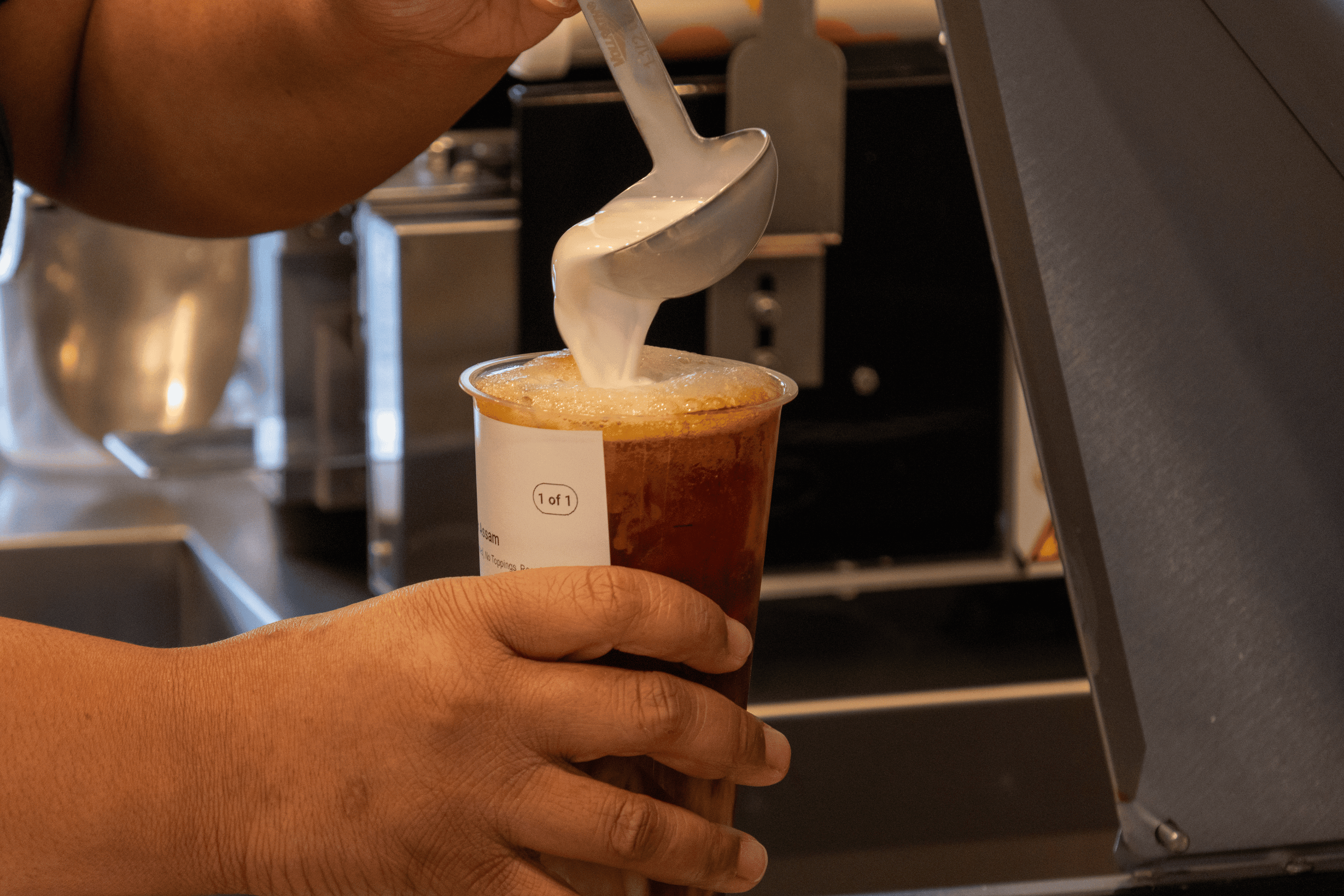
Her mother recognizes it in how Abzalova has designed her store with the customer in mind. “She notices every detail,” Nurlankyzy says. “She wants everything to be beautiful.”
The space shows it in small details. A standing mirror near the door, draped in flowers, catches people as they walk in or out. Children’s drawings cover a section near the refrigerated display. In the bathroom, a message sits on the mirror: you are beautiful.
People linger. Some come in for a drink and stay longer than they planned, sitting awhile, settling int and letting the outside world fall away. “The power of love,” Abzalova says. “Out here, it’s hard to find that. Everything feels like work, traffic, home. Work, traffic, home. It’s hard to find a third space.”
Rather than leave it to chance, Abzalova is building an intentional sense of space. She points to upcoming trivia nights, karaoke, open mics and plans for something else. “A Young Achievers society,” she says. “Kids bring in their report cards. Or their talents.”
“When we lived in Kazakhstan, there was always so much to do before a gathering,” her mother says. “For me, it was always important to make everything beautiful.”
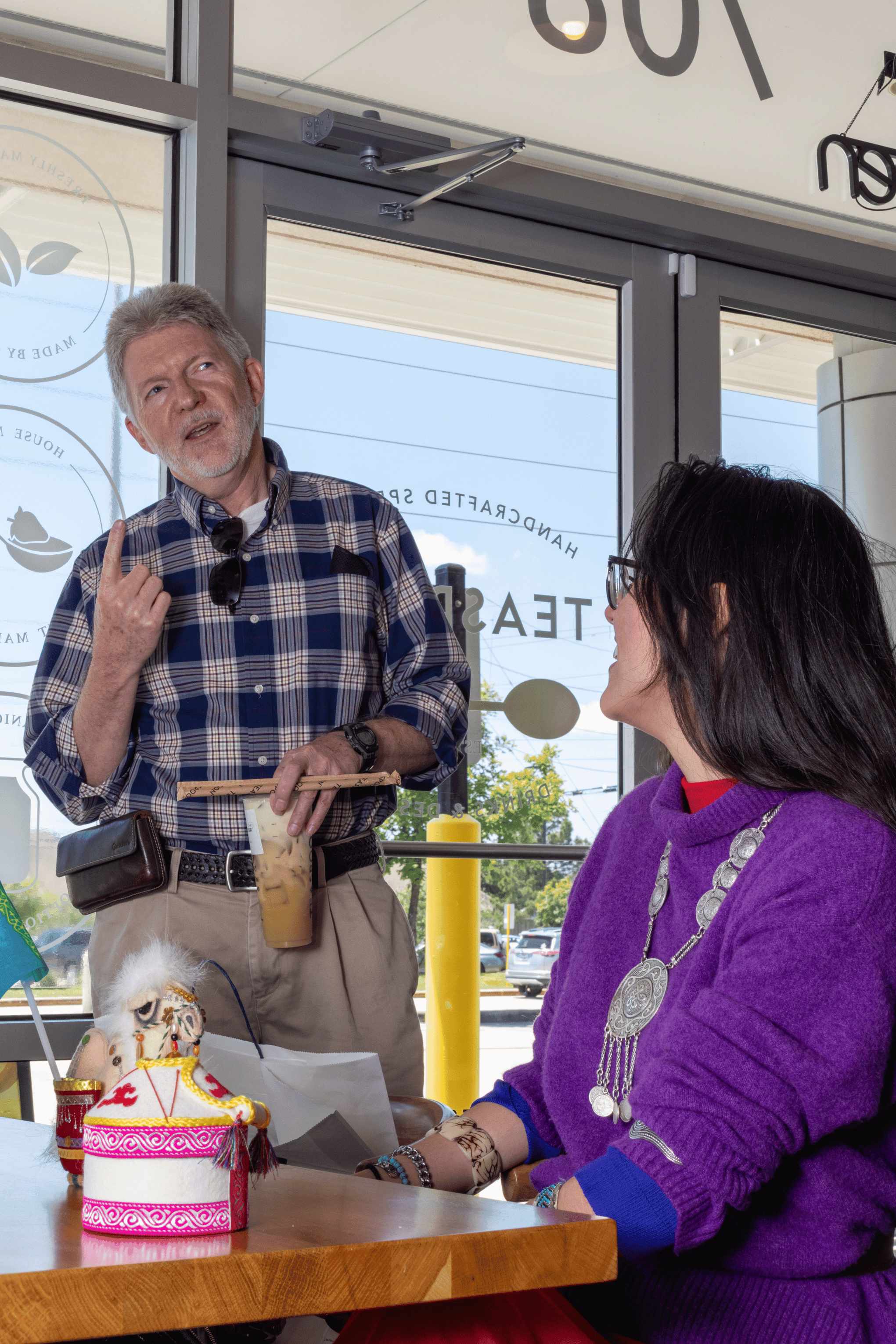
Back at the counter, Rudine finishes his drink and checks the time. He has somewhere to be, says goodbye and heads out just before the pace shifts.
A few minutes later, people start coming in—one after another. Some stand beneath the menu screen, scanning. Others move to the kiosk right underneath. Someone else waits, still deciding.
Abzalova watches. She doesn’t rush them. But when someone lingers just long enough, she leans forward. Reflecting on her own mother, she describes the shift more simply. “Without thinking, I became her,” she says.
She returns to a proverb she grew up with: Balań zhaksy bolsyn deseñ, birinshi özin zhaksy bol—if you want your child to be good, first be good yourself.
It is the same instinct shaped years ago in that room in Aktobe, where the work never stopped, yet someone always noticed what was missing even before it was said.
She leans in before anyone says it.