Remembering Roza Aitmatova
A physicist, educator and author who moved family history into the forefront of Kyrgyzstan’s public memory.
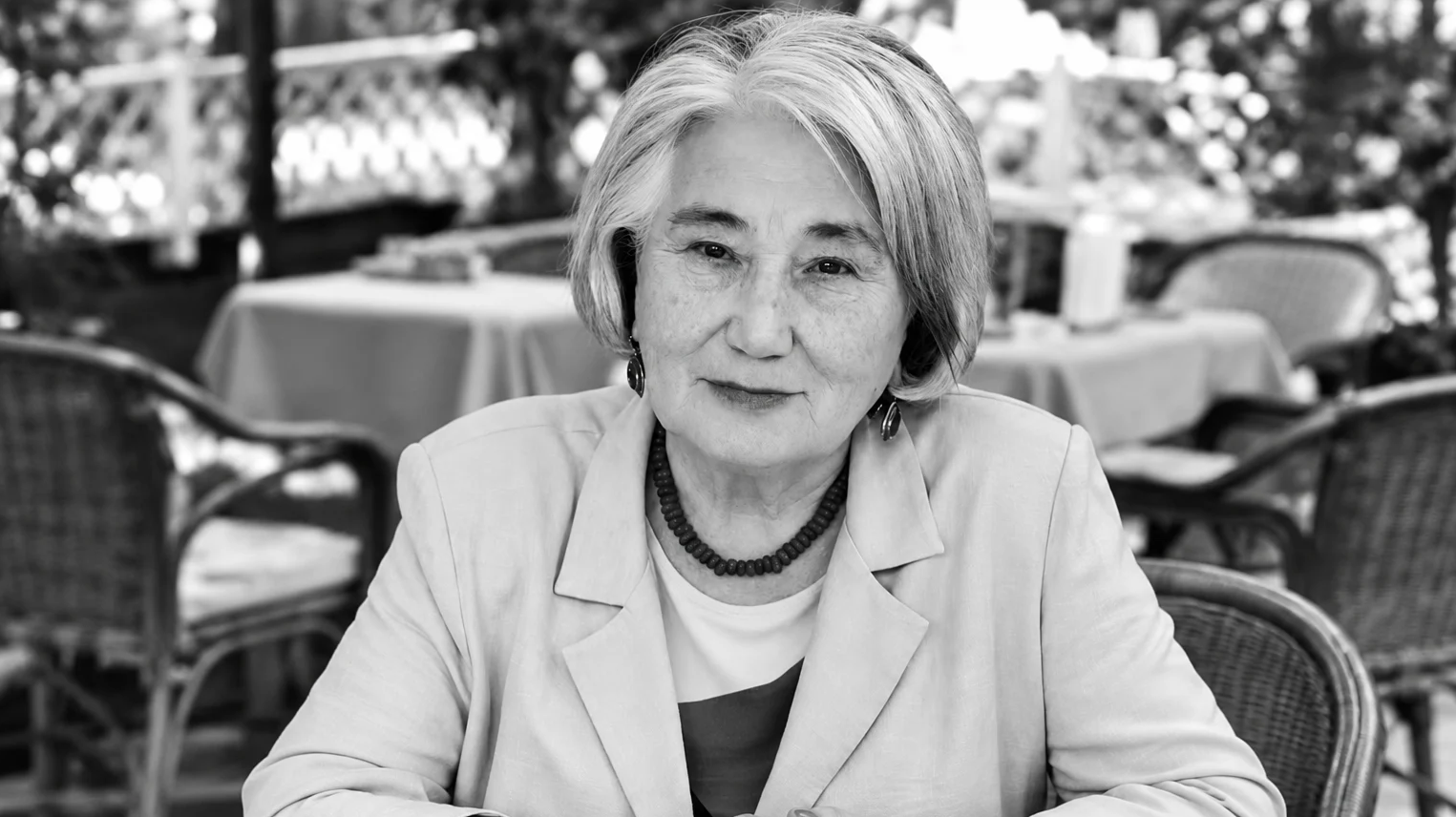
Roza Aitmatova (1937–2026), physicist, educator and author of The White Pages of History, documented her family’s experience of Soviet repression and worked to advance women’s rights in Kyrgyzstan.
Summary: Roza Aitmatova documented her family’s experience of Soviet repression while building a life in science, education and women’s advocacy. Drawing on her memoir and interviews, this remembrance explores how her search for her father and her observations of her mother and paternal aunt informed the history she wrote and the responsibilities she assumed.
As a child, Roza Aitmatova used to ask her mother why her father had never had his photograph taken with her. Didn’t he love her?
“How could he not love you?” Nagima Abduvalieva would reassure her. He simply had not had the opportunity.
Roza spent much of her life finding ways to know the father she could not remember. She listened to relatives, sought out witnesses, gathered archival documents and wrote. Her work helped readers understand how Soviet repression entered a household, followed children into adulthood and left families searching for answers for generations.
A physicist, educator, author and leader of the Women’s Support Center, Aitmatova flew from this world on October 26 at 89. Her family announced her passing in a statement reported by 24.kg.
The youngest sister of the writer Chingiz Aitmatov, she made lasting contributions to Kyrgyzstan’s scholarship and public life. She held a Candidate of Sciences degree in physics and mathematics, worked as a researcher at the Academy of Sciences of the Kirghiz SSR and later taught in higher education. She received recognition as a Distinguished Education Worker of Kyrgyzstan.
Her memoir, Tarïxtïn Aktay Baraktarï—The White Pages of History—grew from questions that had followed her since childhood.
A Father Known Through Stories
Roza was an infant when her father, Törekul Aitmatov, sent his wife and four children from Moscow to Sheker, his home village in the Talas Valley of northwestern Kyrgyzstan. A Kyrgyz public official studying at the Institute of Red Professors, he feared his impending arrest. He knew that his wife could also be imprisoned and their children separated. In Sheker, his relatives could shelter them.
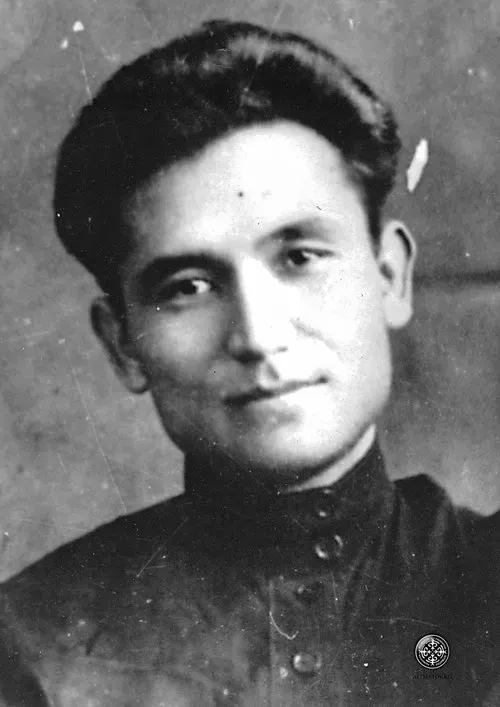
Portrait of Törökul Aitmatov. Aitmatov House Foundation
Roza later reconstructed their departure from Kazansky railway station: her father embracing the children, reassuring their mother and running beside the moving train, waving goodbye.
He would never see them again.
Törekul was executed in 1938 after being accused of being an “enemy of the people.” Roza was only one year and eight months old.
“Mama, what kind of person was Father? Did he love children?” she recalled asking in her memoir.
“Your father loved his children very much,” Nagima told her. “Wherever he went, he brought back toys, books and presents for them.”
Nagima’s stories gave Roza glimpses of life before his arrest. In one, she had prepared cakes and pies for guests. After the young Chingiz misbehaved, she shut him in the pantry. He picked pieces from the pastries, then fell asleep on a chest. Törekul returned home, woke his son, embraced him and kissed him. When Nagima asked why he was fussing over the boy instead of scolding him, he told her not to shut the child in the pantry again.
Through such recollections, Roza came to know an affectionate father whose absence had defined her childhood.
Nagima came from a Tatar family in Karakol, near the eastern end of Lake Issyk-Kul, across northern Kyrgyzstan from Törekul’s home in Talas. Left to raise Chingiz, Ilgiz, Lyutsiya and Roza, she worked as a bookkeeper and relied on relatives who welcomed them.
Roza remembered how her father’s relatives took them in and shared what they had, despite the danger of helping the family of an accused “enemy of the people.”
The accusation followed the children, exposing them to suspicion, humiliation and taunts. It later cost Chingiz a scholarship and an opportunity for postgraduate study. Nagima nevertheless maintained her husband’s innocence.
The Search for Answers
In August 1957, Roza accompanied her mother to collect official information about Törekul. Chingiz was too ill to go. Despite painful legs, Nagima hurried toward the bus stop, hoping her husband might be returning from Siberia. On the journey, she recalled their first meeting and imagined his joy at seeing their grown children and first grandchild.
Roza waited outside the office. Her mother emerged barely able to walk, her face ashen, and handed her the document overturning Törekul’s conviction. Their hope of reunion had ended. They still did not know where he had been buried.
Approaching home, Nagima asked Roza not to cry in front of Chingiz, fearing that distress would worsen his illness. Later, Roza’s paternal aunt Karakyz—Törekul’s younger sister—arrived from the village. Nagima told her the news. The two women embraced and wept.
Roza continued looking for people who could tell her about her father. In their book of conversations, Chingiz Aitmatov and the Kazakh poet Mukhtar Shakhanov recount her encounter in Talas with a woman whose gravely ill brother had shared Törekul’s prison cell. Roza went to meet him. He remembered her father caring for a fellow prisoner and worrying about the children he had left behind.
Public recognition could never replace that lost relationship. Traveling to the unveiling of her father’s monument, Roza recalled colleagues congratulating her. She found herself wishing for something else:
“How different it would be if, instead, I were going to see my father himself.”
Writing a Family Into History
In 1991, the discovery of a mass grave at Chong-Tash, near Bishkek, finally revealed his burial place. Among the remains lay a document concerning Törekul’s sentencing.
Roza described the anguish that followed in her memoir’s preface.
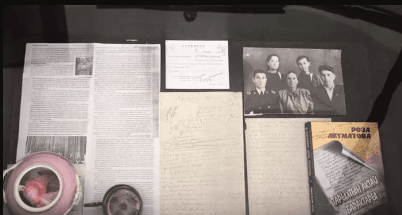
Family artifacts and Roza Aitmatova's first edition of her first book display at Aitmatov House Museum, Bishkek, Kyrgyzstan. Aitmatov House Foundation
“So, I gathered all my strength and took up my pen,” she wrote. “I wanted to write everything down.”
A later visit to Ata-Beyit, the memorial at the burial site, strengthened her resolve. She found young people playing and laughing around it. They attended school in nearby Chong-Tash, yet could not tell her who was buried there. If children living so close did not know its history, she wondered, how would young people elsewhere learn?
First published in 2007 and expanded in subsequent editions, her memoir followed both her father’s Kyrgyz relatives and her mother’s Tatar family. She brought documents together with memories of family life, showing how political persecution affected relationships, livelihoods and the possibilities open to children.
The historian Tynchtykbek Chorotegin recognized the importance of that work. A professor at Kyrgyz National University named after Jusup Balasagyn and president of the Kyrgyz History Society, he reviewed the expanded 2013 edition for the Journal of Central and Inner Asian Dialogue. His assessment placed her book within the unfinished task of investigating Kyrgyzstan’s Soviet past after decades of censorship and restricted access to archives.
Chorotegin praised her account as lively, straightforward and grounded in facts. He emphasized the knowledge of family life that Roza and her close relatives could contribute. Her book, he argued, helped readers investigate an era through the life of her father.
Aitmatova continued that investigation across successive editions. In an interview at Frunze Restaurant in Bishkek, she described gathering archival records, adding material and correcting dates. She distinguished what she had documented from what others had told her and what she herself suspected.
“But those emotions are still with me to this day,” she said. “Right now, I’m telling you about it calmly.”
Learning From Nagima Apa and Karakyz Apa
Her recollections also examined the women whose work had made her own life possible. She credited Nagima’s resourcefulness, education, patience and hard work with keeping the children healthy and fed through years of hardship.
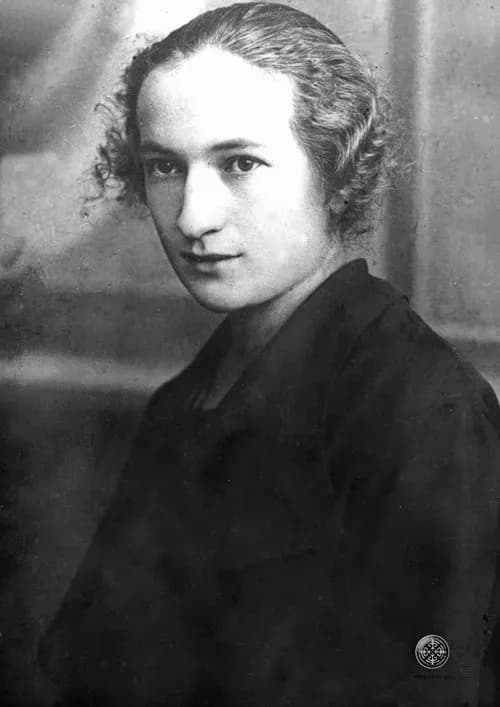
Portrait of Nagima Aitmatova. Aitmatov House Foundation
“Through our own mother’s life, we could clearly see the greatness of love for one’s spouse and responsibility for raising children,” she wrote.
Of her paternal aunt Karakyz, she said: “Without her, God knows what our fate would have been.”
During the war, Chingiz stayed with Karakyz in Sheker. When he carried public money for his work at the village council, she helped sew shut his saddlebag so that no banknote could fall out. She instructed him to deliver every note and reminded him whose son he was. Although she could not read or write, Roza recognized her gift for teaching.
Remembering her aunt led Roza to question the familiar preference for sons. Families might praise sons as their future providers, she observed, yet depend on daughters to return and care for aging parents—washing, dressing and feeding them.
“This, too, is a question of gender,” she said.
She knew these responsibilities through Nagima and Karakyz. Her mother had earned a living, raised four children and kept their father’s memory present. Her aunt had helped care for them and taught them how to conduct themselves. In telling their stories, Roza made their contributions part of the history she wanted others to understand.
Her concern extended into public action. Amid the economic hardship following the Soviet collapse, she helped develop Kyrgyzstan’s women’s movement. In 1996, she and her colleagues founded the Women’s Support Center. As its president, she worked to improve women’s legal knowledge and spoke publicly against forced marriage and bride kidnapping. The center also contributed reporting to the UN committee monitoring discrimination against women.
A Friendship With Ilse Laude-Cirtautas
The Turkologist Ilse Laude-Cirtautas recognized Aitmatova among the women whose work helped sustain Kyrgyzstan’s intellectual and civic life. A University of Washington professor whose scholarship and teaching advanced the study of Central Asian Turkic languages, literatures and oral traditions, Laude-Cirtautas also held in high regard Roza Otunbayeva, the diplomat who became Kyrgyzstan’s first woman president, and Gulnara Jamasheva, a scholar at Kyrgyzstan’s Academy of Sciences and her former student.
In the 1990s, Laude-Cirtautas invited Aitmatova to Seattle to lecture about Kyrgyzstan and Ata-Beyit—a visit also documented in Distinguished Writer of Uzbekistan Muhammad Ali’s Men ko‘rgan Amerika (The America I Saw). In December 2010, she scheduled a university discussion of Aitmatova’s memoir.
Their friendship encompassed conversations about independence, traditions and Kyrgyzstan’s future. In her remembrance of Laude-Cirtautas, translated by Elmira Köchümkulova, Roza described her determination to help women facing hardship. She also expressed disappointment at leaders who placed personal interests above the country’s needs, while continuing to hope for its future.
Her writing carried a similar expectation: knowledge of the past should matter to how people lived.
A Kyrgyz proverb expressed the value she placed on those who could still tell her about her father: “If your father dies, may the person who has seen your father stay alive.”
Roza listened to those people and left an account for those who would follow. In the concluding words of her memoir, she explained her purpose:
“If these recollections of my father and mother, and the difficult fates of people who became unwilling victims of the state system, touch readers’ hearts and offer even a little guidance for the life ahead, then I will have achieved my purpose.”
Roza eje has flown from this world. Her words remain.
Аллах жайын жаннаттан кылсын. May Allah grant her Paradise.
More from
Heritage

Spring Across Borders: How Seattle’s Central Asian Communities Keep Nowruz Alive
By Arslan Atakhanov

Uyghur Children Carry Language Across Generations In Honor of International Mother Language Day
By Alva Robinson

Winter Break Is the Perfect Time to Start Learning a Regional Language With These Apps
By Alva Robinson