Starting Over at Houston’s Darbar Kabab House
At Houston’s Darbar Kabab House, Afghan newcomers rebuild livelihoods and relationships after leaving familiar lives behind.
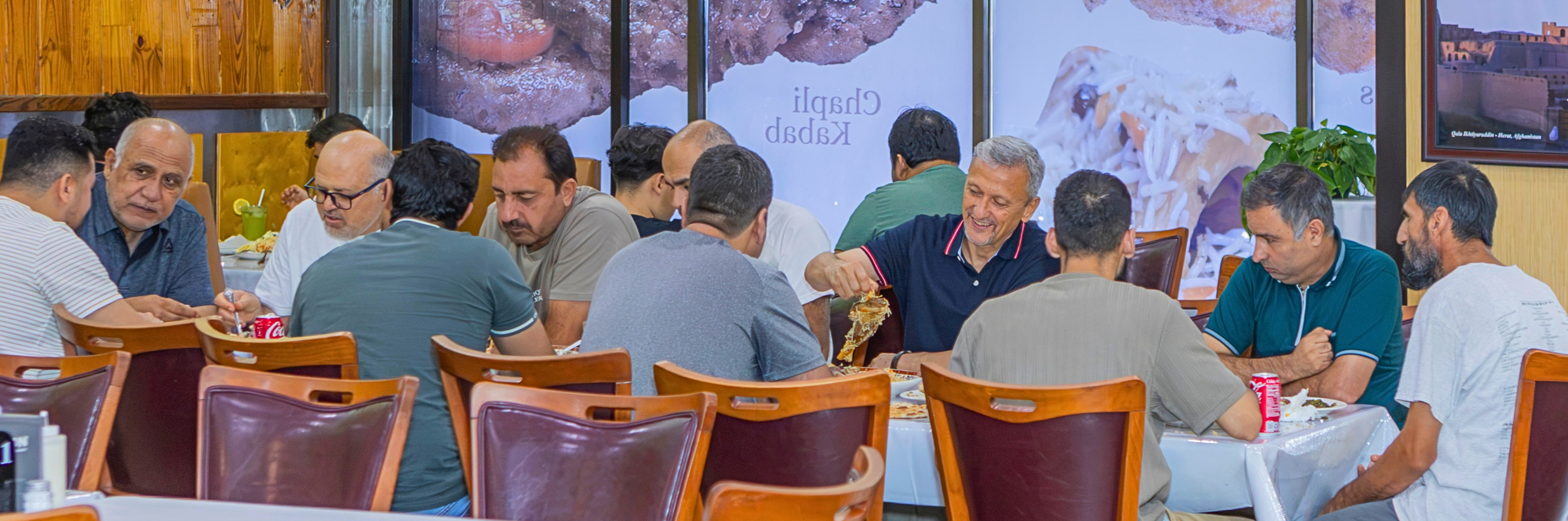
Sunday regulars gather around joined tables at Darbar Kabab House in southwest Houston, sharing lunch, news and advice about life in the United States.
Summary: Mohammad Jawid Reshad’s Darbar Kabab House brings northern Afghan food to southwest Houston. Through shared ownership, employment and weekly gatherings, the restaurant helps newcomers navigate unfamiliar systems and build the relationships that make a new city feel like home.
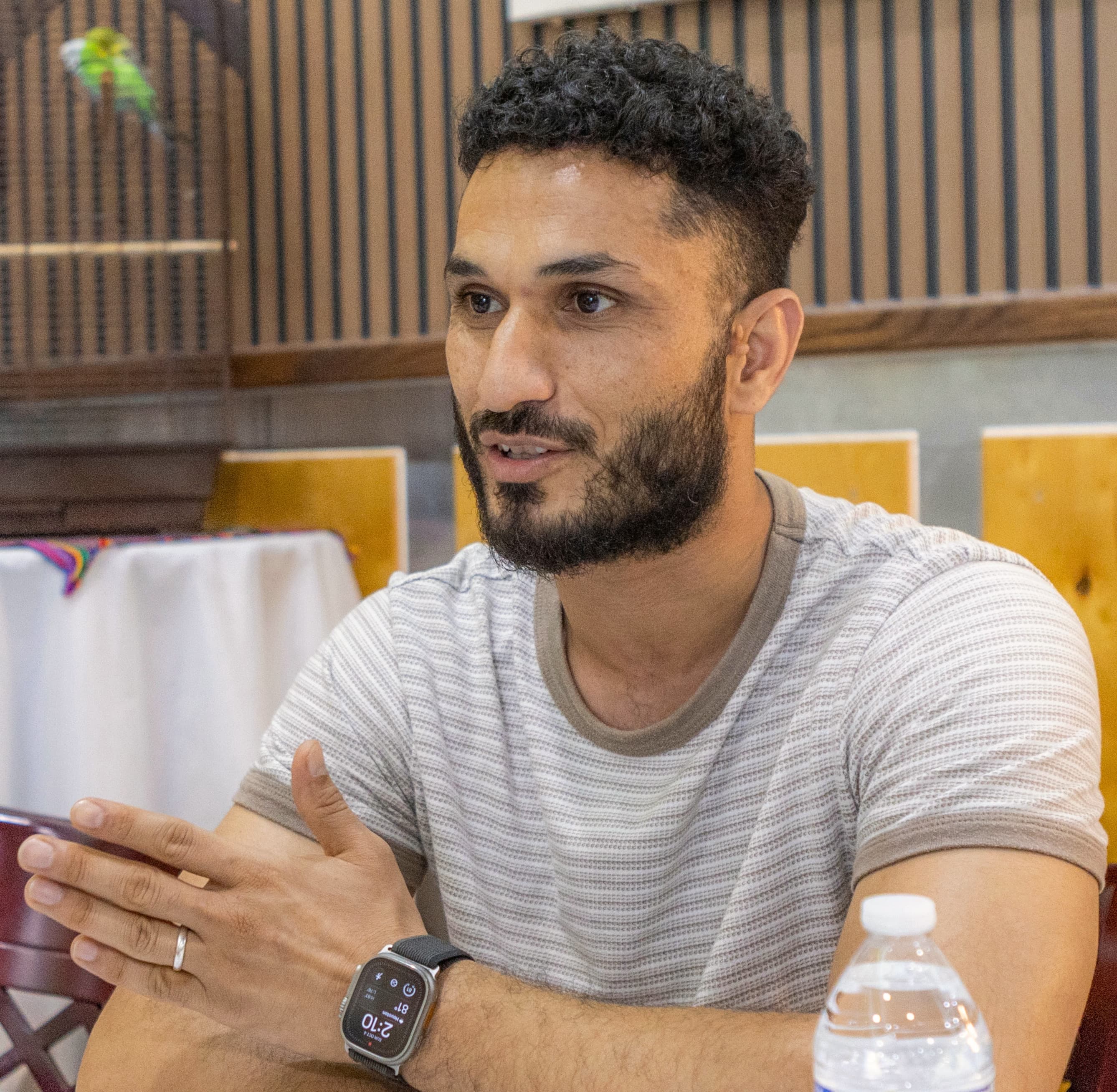
Mohammad Jawid Reshad, 33, arrived in Houston from Afghanistan in 2021. After working in hookah service, valet parking and home repairs, he pursued his ambition of opening a restaurant.
Mohammad Jawid Reshad, 33, steps out of the kitchen at Darbar Kabab House and heads toward the Sunday regulars gathering up front. Here on South Gessner Road near Harwin Drive in southwest Houston, roughly 15 men talk in circles of three or four as his uncle prepares tables pushed together for lunch. White tablecloths cover the tables, and framed photographs of buildings and landscapes line a wood-paneled wall beneath illuminated greenery. Reshad, his uncle and their manager helped transform the shuttered restaurant into this dining room. Now their friends fill it with conversation.
“It’s not just about the business,” he says. “It’s about the hospitality and having people here.”
Since arriving in Houston in September 2021, Reshad has worked to establish his family and help others find their footing. At Darbar, that effort takes shape through shared ownership, employment and familiar food. The Sunday lunches give friends a dependable place to exchange advice and rebuild the everyday relationships that make a new city feel like home.
Samiulhaq Alokozay found those relationships after arriving from Afghanistan in June 2024. Back home, he had worked as a minister’s chief of staff, surrounded by friends, relatives and colleagues. In Houston, he had to learn unfamiliar systems while finding people to turn to.
“When I came here, I didn’t know anyone here,” he says.
The adjustment reached into his household. He spoke English and could go out and meet people, while his wife faced a language barrier and spent much of her time at home. Gradually, new friendships extended to the family as spouses and children began visiting one another’s houses.
For the men, Sunday lunch became a regular time to meet, often for two or three hours. They come from different regions of Afghanistan and became friends in Houston. At the table, they share experiences, raise problems and suggest solutions. This Sunday, Alokozay says, someone discussed how to obtain health and life insurance.
“I’ve never been here alone,” he says of Darbar.
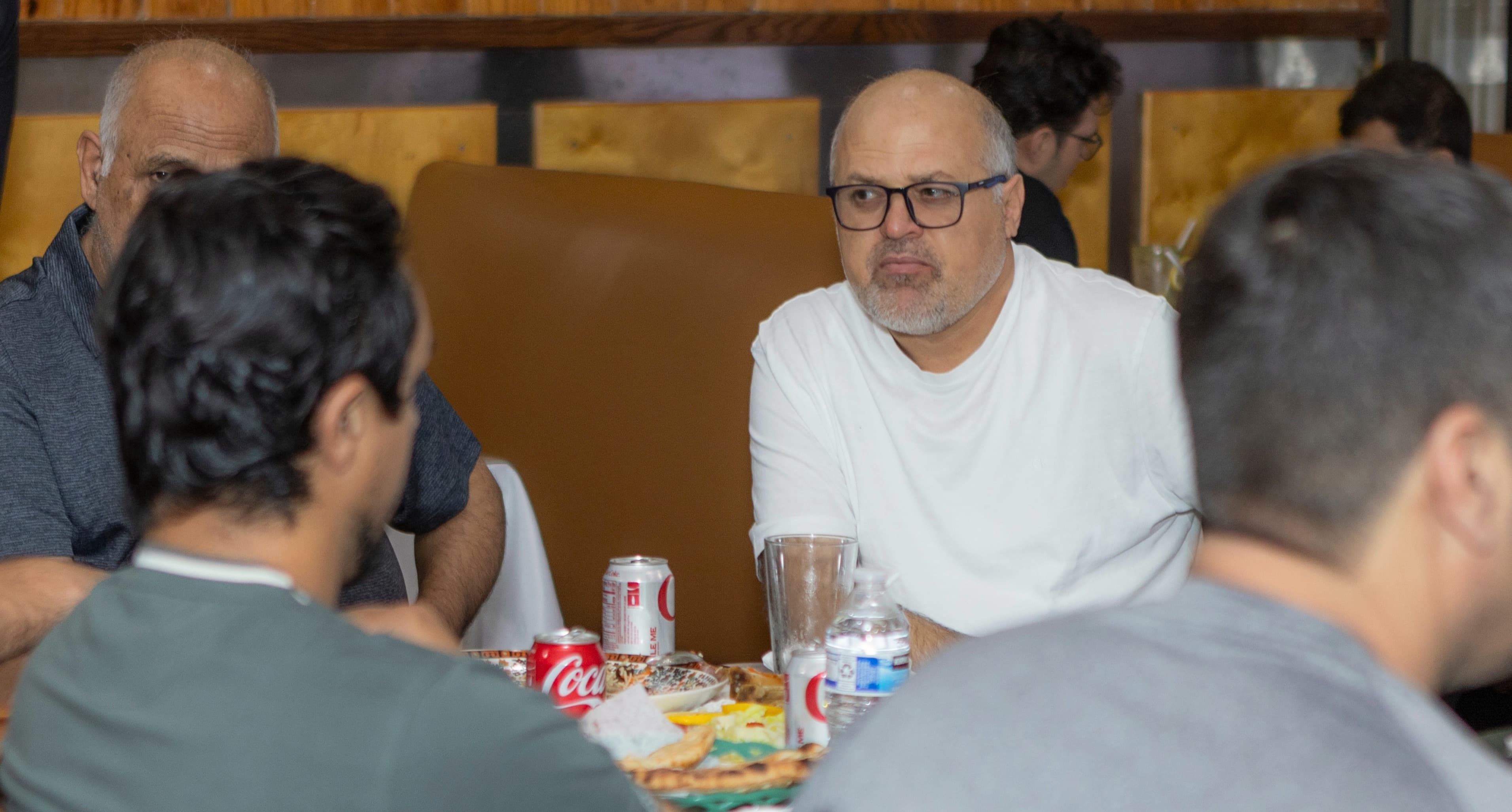
Samiulhaq Alokozay, wearing white and glasses, joins the Sunday gathering. Since arriving in Houston in June 2024, he has found friendship and practical guidance among fellow Afghans at Darbar.
Reshad remembers how difficult it could be to find guidance after arriving following the Taliban’s takeover of Afghanistan.
“I had $20 in my pocket,” he recalls.
He had his wife and two children with him. Resettlement agencies and government assistance helped the family establish itself, while friends provided rides and other support. Still, everyday tasks could take repeated attempts. When he sought a driver’s license, he initially did not understand the appointments and steps involved.
He searched online at night and worked during the day, tending hookahs at a lounge and parking cars. In 2023, he started his own valet business, beginning with one location and eventually expanding to five.
When that work slowed, he drew on his electrical skills and took on handyman jobs: installing lights, mounting televisions, painting and handling other household projects.
“I never say no,” he says.
He wanted to support his family in Houston and relatives in Afghanistan. During his first two years here, he says, he often slept only four to six hours a night. His wife encouraged him to think ambitiously and change direction when a business stopped progressing.
Through those changes, one ambition stayed with him: opening a restaurant. Reshad grew up in Mazar-i-Sharif, in northern Afghanistan, where he worked while attending school and later studied law. Before coming to Houston, he had imagined introducing people to the food of his home region.
“I just want to show that to people,” he says.
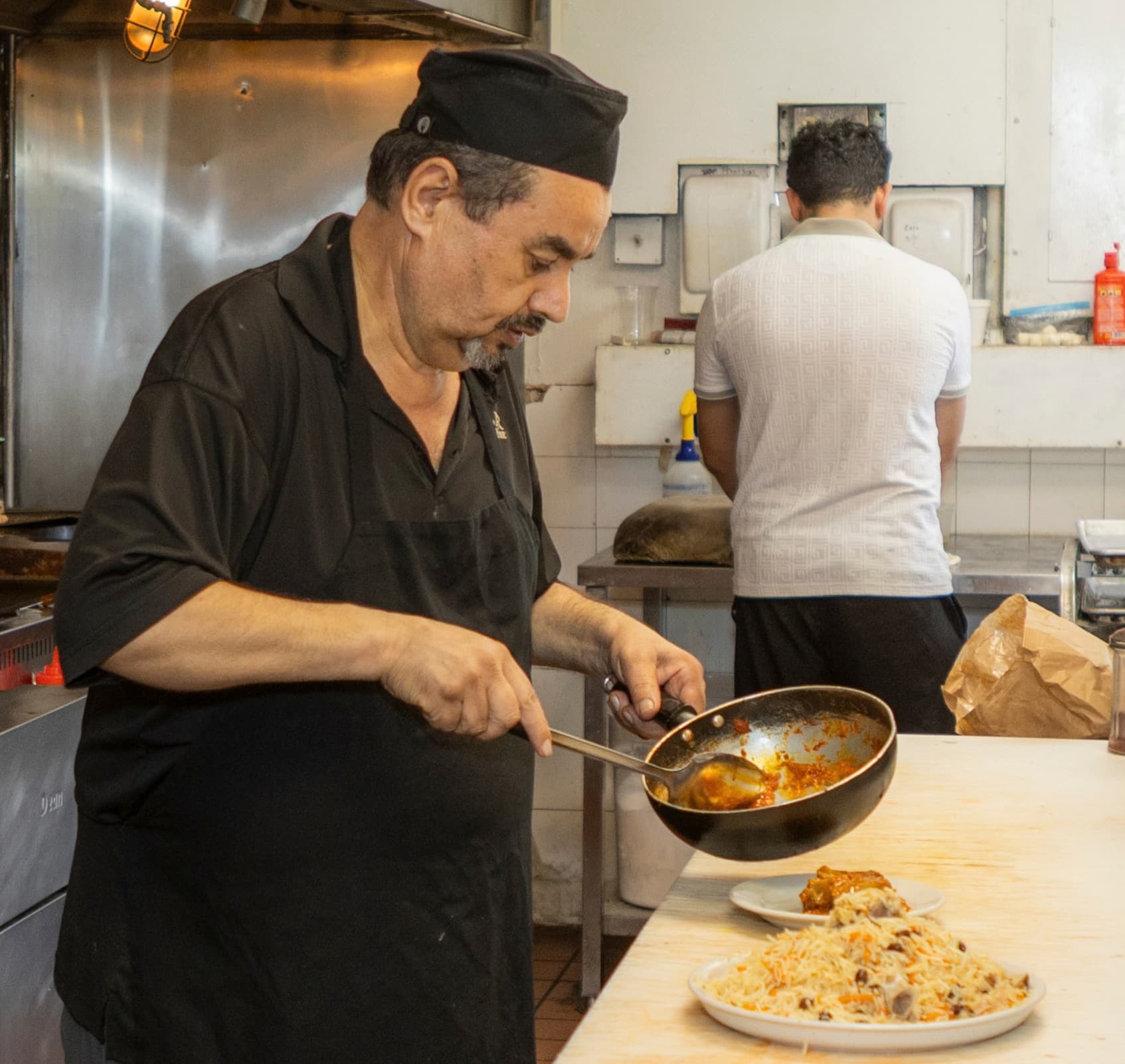
Muhammad Yasin, Reshad’s uncle and a co-owner of Darbar, plates rice in the kitchen. His experience preparing kebabs and qabili palow helped the pair turn their shared restaurant ambition into a business.
His uncle, Muhammad Yasin, shared that ambition. Yasin had arrived in the United States in 2011 and brought experience preparing kebabs and qabili palow. Together, they began looking for a space.
A real estate agent directed them toward an existing restaurant on South Gessner Road. Reshad says it had been closed for about three months and needed considerable work when they bought it in November 2025.
“You cannot believe if I show you the picture,” he says of its condition when they first entered.
Reshad, his uncle and manager Hameed Oghlo cleaned the space and changed its interior. Learning the city’s permitting requirements took time. By February 2026, they were ready to welcome customers.
Opening just before Ramadan shaped how they introduced Darbar. With many prospective customers fasting during the day, they offered an evening buffet and invited social media personalities to visit. Reshad says the buffet brought no profit; its purpose was to let people discover what the kitchen could offer.
Keeping those customers would depend on the people preparing their food. A chef joined before the opening, receiving pay and a share in the restaurant. Reshad believed ownership would give him a reason to stay and help build the business.
“Try to find the right people, make them a part of your business, and then you can grow faster than before,” he says.
For Reshad, that arrangement also helps maintain the flavors customers expect. The menu gives his ambition to share northern Afghan food a tangible form: goat karahi; molung palow, qabili palow with beef shank; and sebze, a spinach-based vegetable stew prepared in the local style of his home region.
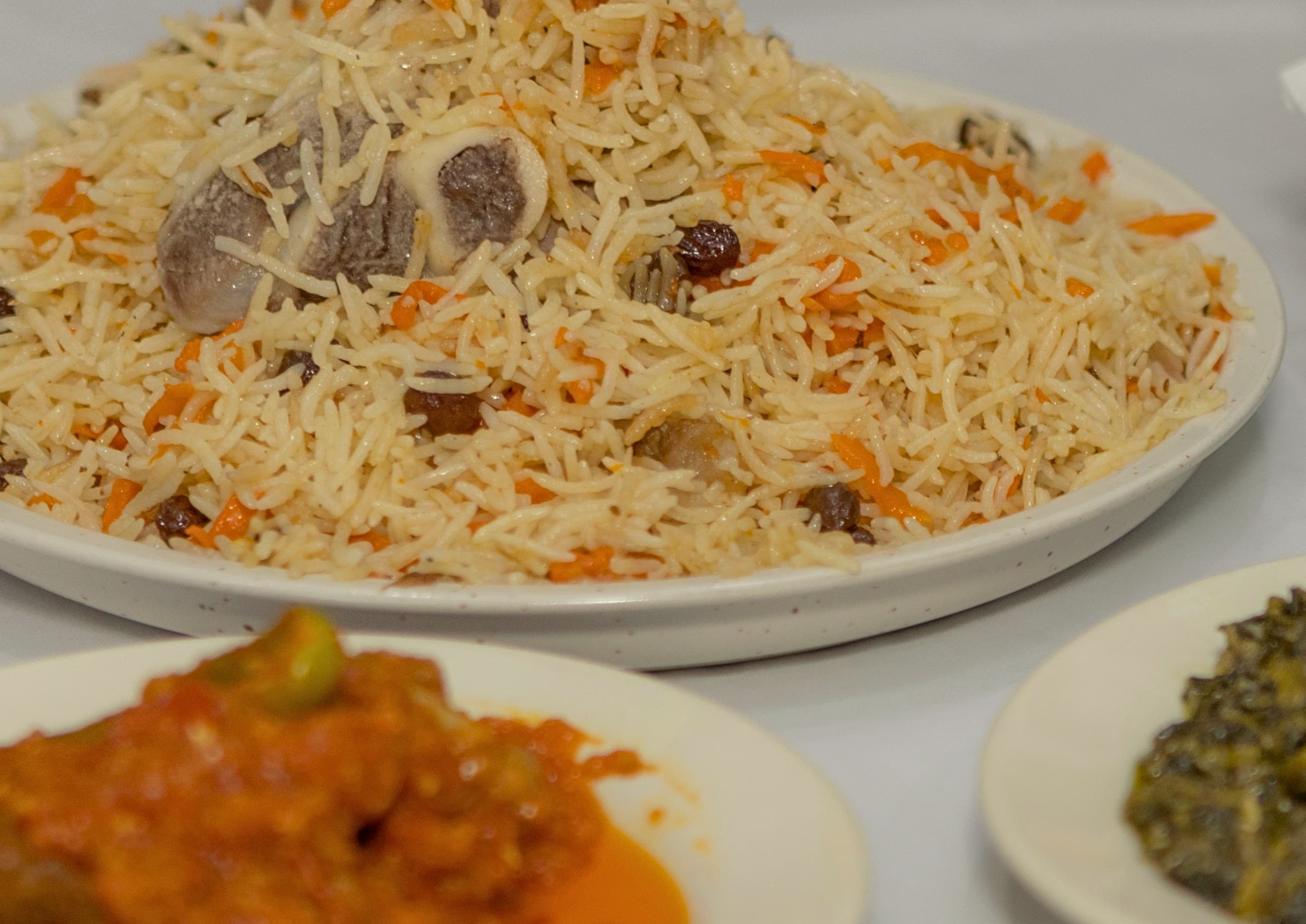
Darbar’s molung palow combines qabili palow with beef shank, carrots and raisins. Goat karahi, lower left, and sebze, a spinach-based vegetable stew, lower right, round out the meal.
He credits his uncle’s seasonings for the kebabs. Even on days off, Yasin sometimes comes in to supply the mixture, keeping the precise recipe to himself. Reshad’s own favorite is qabili palow.
“I’m a rice lover,” he says.
It is also a regular choice at the Sunday table, although the men seek different dishes alongside it from week to week. Familiar food gives them a reason to gather; the conversations help them navigate what remains unfamiliar.
While the kitchen supplies those tastes, Oghlo helps carry the welcome into the dining room. Darbar became his first workplace in the United States after months spent caring for his hospitalized twins. He had known the owners before arriving, and Reshad invited him to join the team.
Oghlo oversees preparations in the dining room and kitchen, checking cleanliness, tables, chairs and readiness for customers. Although he is not an owner, he describes the workplace as a family and takes responsibility for what needs doing.
“I know my responsibilities,” he says.
With guests, he gives them time before approaching them to talk as friends. He says he offers the same welcome to Afghan customers and those from other backgrounds, drawing on lessons learned from his parents.
“We are welcoming guests from the heart,” he says.
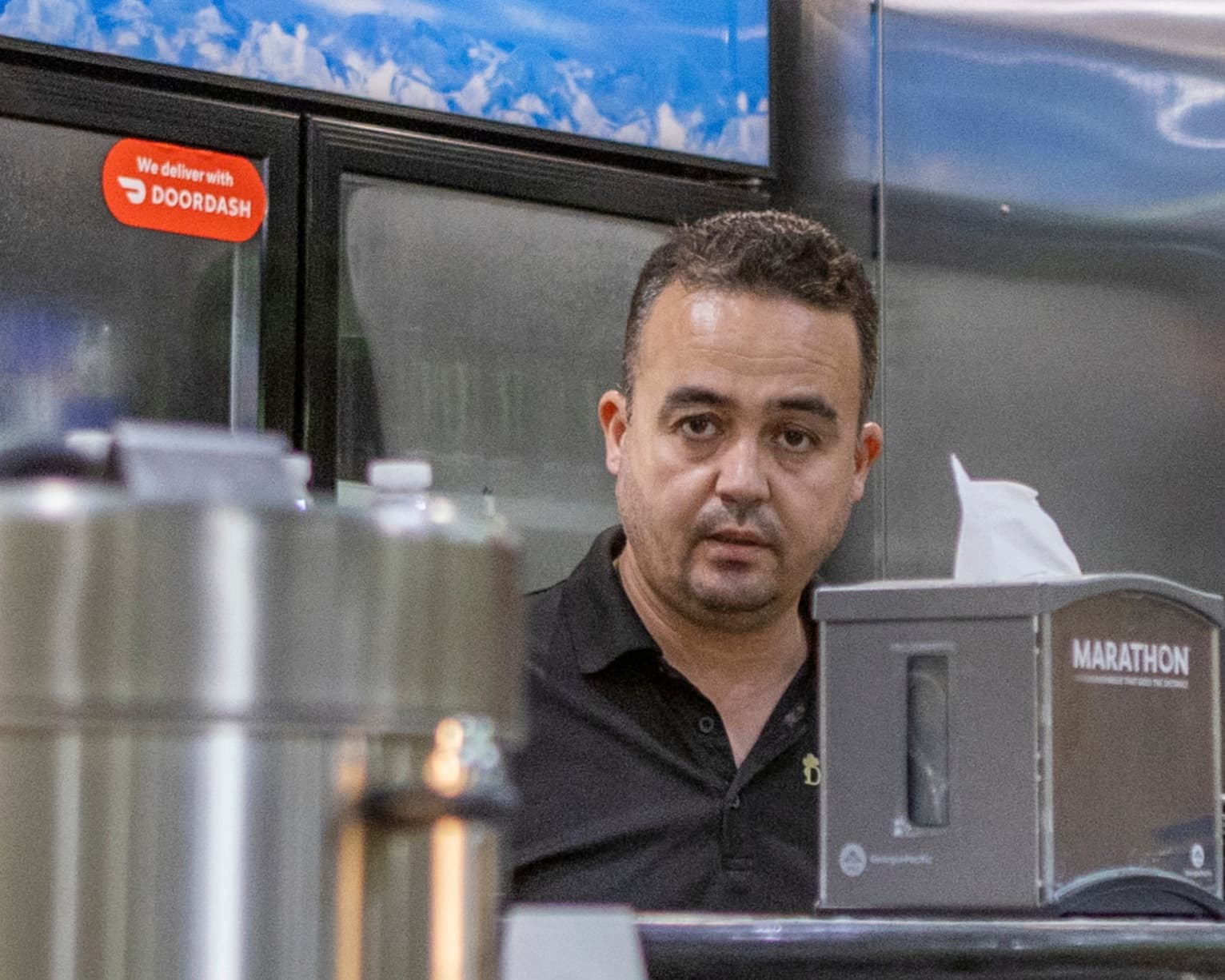
Manager Hameed Oghlo stands behind Darbar’s tea kettles. An Afghan of Turkmen heritage, he says the welcome he learned from his parents guides how he serves guests.
Reshad likewise describes hospitality through a guest’s needs. When someone arrives hungry with little money, he says, he wants to provide enough food for them to leave satisfied.
Alokozay recognizes that approach. The owners make him feel like a guest visiting someone’s home. His comfort comes from the food and language, and from his friendships with the people running Darbar.
“Our culture, our language, our food here, and the environment here,” he says, explaining what makes the restaurant comfortable.
Reshad hopes to extend that welcome beyond the Afghan community. He chose the South Gessner location partly to serve people working and shopping along nearby Harwin Drive who wanted a halal lunch. The restaurant gives him a way to introduce northern Afghan food to customers encountering it for the first time.
His efforts to connect people also reach beyond Darbar. Having struggled to find reliable guidance himself, he organized WhatsApp groups where people could ask about mechanics, groceries, housing and other needs. When families contacted him about trouble obtaining food, he helped direct them to food pantries. He also works with the Islamic Society of Greater Houston to connect families with assistance.
“This is the main concern for community to take care of each other,” he says.
At the restaurant, people can meet face to face. Reshad compares the Sunday lunches with gatherings on days off in Afghanistan, when friends would eat and spend time together. In Houston, Sunday provides an opening in their work schedules.
Making a home here has also involved embracing things he once imagined from afar. Reshad says he chose Texas after reading about the United States before immigrating. In 2025, he bought the pickup truck he had long wanted, followed by cowboy clothes.
“I really like to be like Texans,” he says.
The food and gatherings he remembers from Afghanistan have become part of that Texas life. For Alokozay and the other regulars, the restaurant offers a place to continue building theirs.
As his uncle readies the long table, Reshad makes his way among the men, greeting them. Conversations continue in circles of three or four before they take their places for lunch.