Where to Find Plov in Houston Before Uzbekistan Faces Portugal at the World Cup
As Uzbek fans prepare for one of the biggest matches in their nation's history, four Houston-area restaurant owners share the rice dishes, memories and traditions that connect them to Central Asia.
Summary: The World Cup is bringing Uzbekistan to Houston. For many supporters, the search for home begins long before kickoff. From a Kazakh-owned Turkish restaurant to a Uyghur family business and a Persian chef shaped by years in Tajikistan, restaurant owners across Houston are serving their own interpretations of plov—each rooted in personal stories, regional traditions and a desire to bring people together around the table.
When Uzbekistan takes the field against Portugal in Houston on June 23, thousands of visitors will arrive carrying memories of home.
Some will look for familiar songs. Others will look for familiar faces. Many will search for familiar food.
Across Houston, restaurant owners from different corners of the Silk Road prepare their own versions of a beloved rice dish known by many names—plov, polo, osh and pilaf. Though the ingredients often overlap, each version reflects a different landscape, history and personal journey.
Ahead of the World Cup, Edgu Bilig visited three Houston-area restaurants to explore how one dish can tell three very different stories.
Beikos Mediterranean Grill
Quat Bek Makhum's Pursuit of a Better Plov
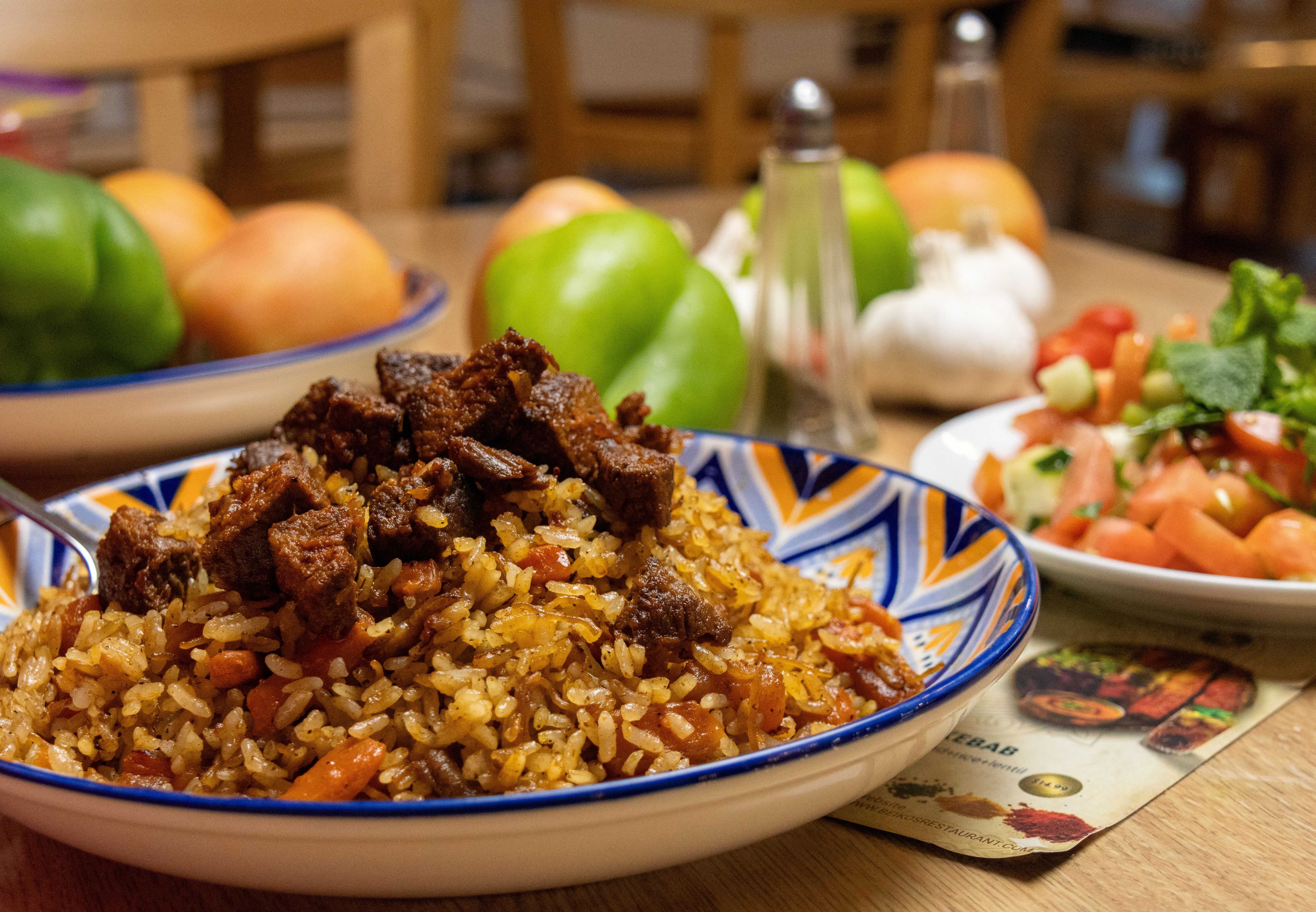
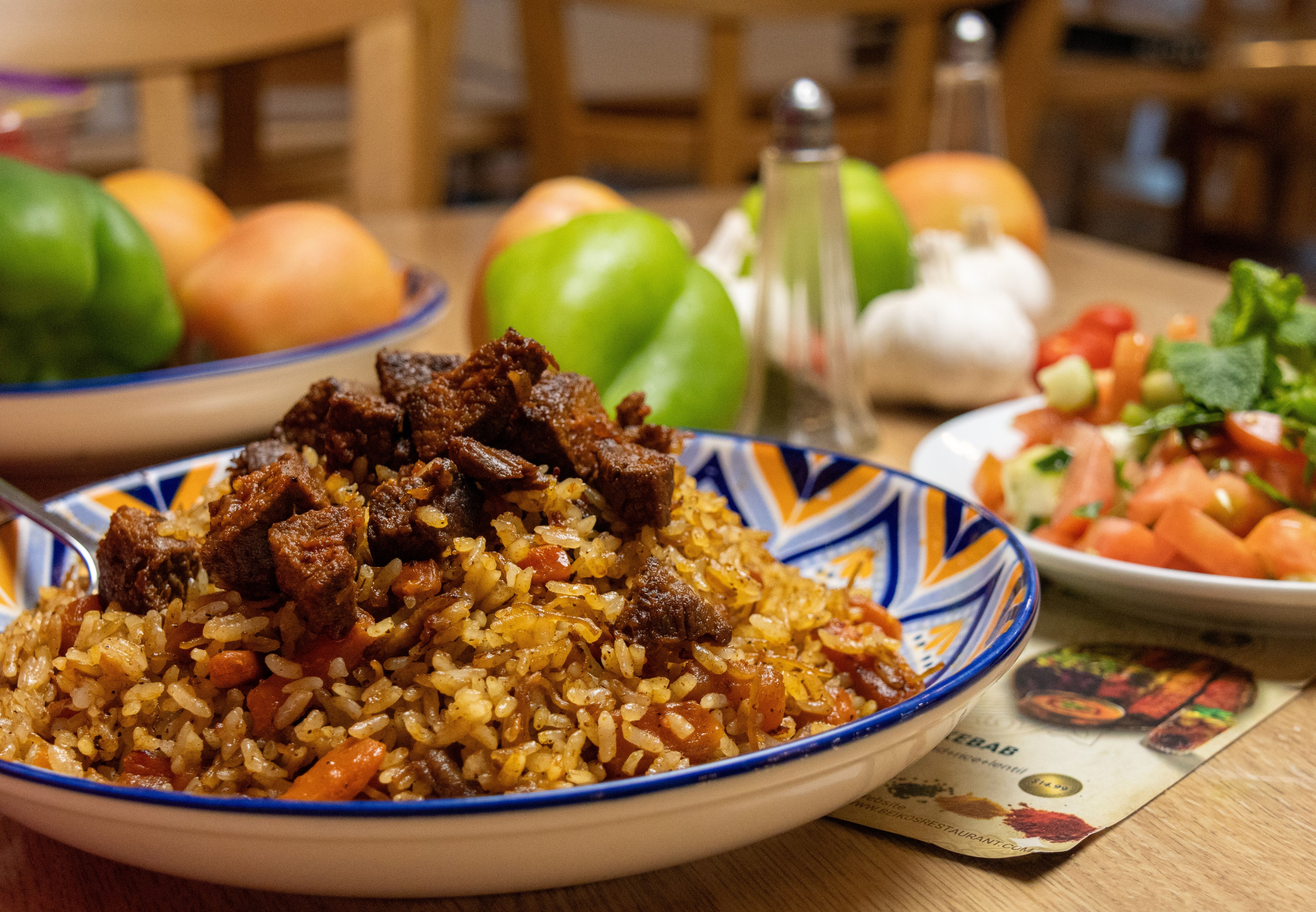
Beikos's plov combines rice, carrots and beef, served alongside a fresh shepherd salad.
Quat Bek Makhum never set out to become known for plov.
Born in Mongolia and of Kazakh descent, the owner of Beikos Mediterranean Grill opened his restaurant with a simple goal: make people feel welcome. Over the past year, that mission has pushed him into an unexpected pursuit—learning everything he can about one of Central Asia's most beloved dishes.
When customers began ordering plov, Makhum wanted to understand exactly what made a good one.
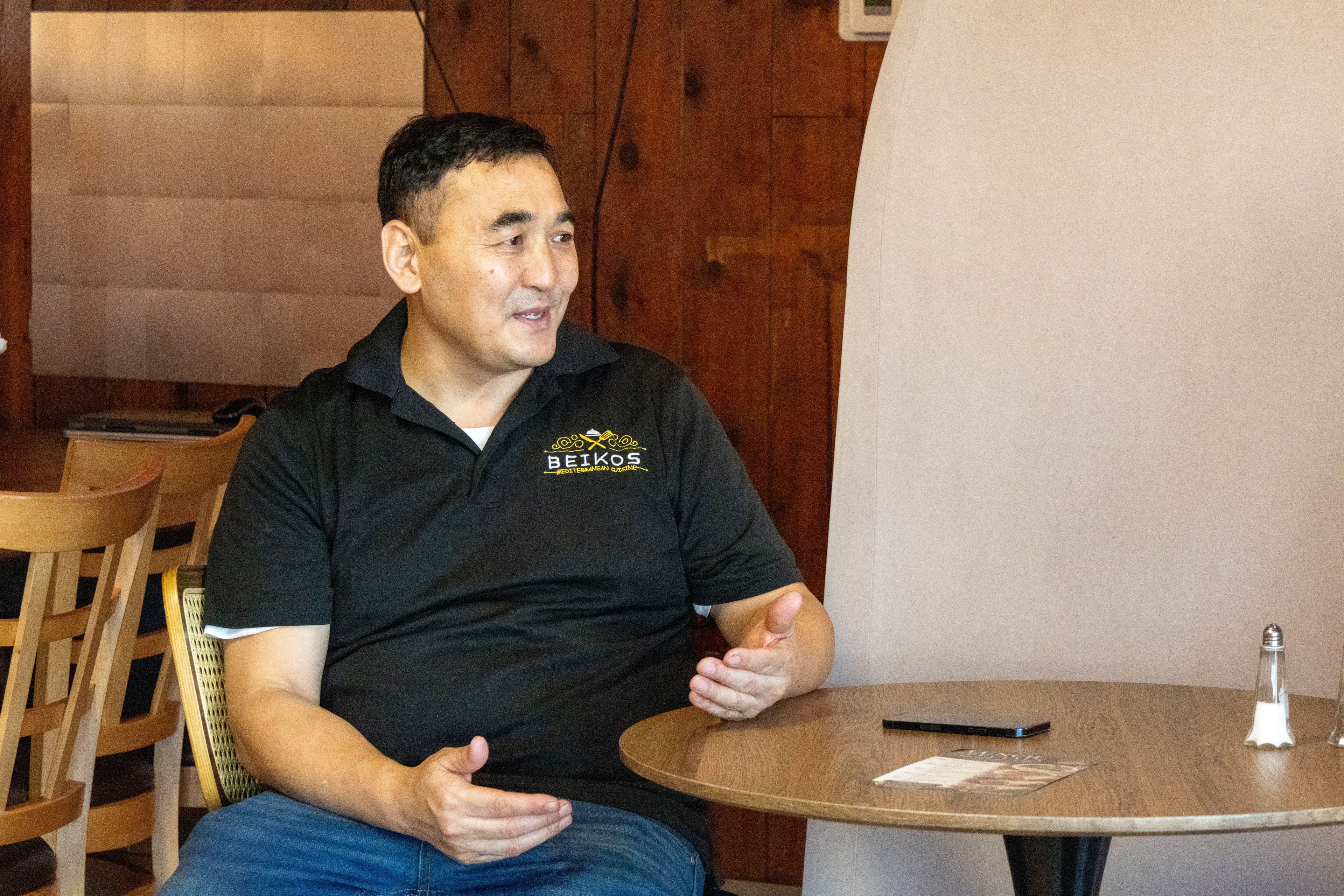
Kuat Bek Makhum, owner of Beikos Mediterranean Cuisine, spent months refining his plov recipe, balancing rice, meat and seasoning until it matched the flavors he wanted to share with customers.
So, he started studying.
Late at night, after the restaurant closed, he watched videos from cooks across Uzbekistan, Kazakhstan and beyond. He compared rice varieties, learned regional differences and experimented with ingredients. If one source left out a detail, he searched for another. “Even in the middle of the night, I wake up and try to watch videos,” he says.
His fascination comes from the same place as his approach to hospitality. Makhum constantly asks himself how food can be better tomorrow than it was today.
“If I get something and I'm not satisfied, I'll find a better option,” he says.
That mindset shapes every corner of Beikos. Customers from different countries fill the dining room. Conversations happen across languages. New friendships begin over shared meals.
For Makhum, food succeeds when people leave happy.
“I'm happy to see all kinds of people,” he says. “Everybody's meeting here in one place.”
His plov reflects that same spirit—part Kazakh memory, part Central Asian tradition and part ongoing quest for improvement.
World Cup Special: Uzbek-style plov — $13.99
How to try it: Order it with a shepherd salad. The fresh vegetables and herbs provide a bright contrast to the rich rice and meat while highlighting the dish's Central Asian roots.
Shandez Persian Grill
Iman Khedri's Journey Through Loobia Polo
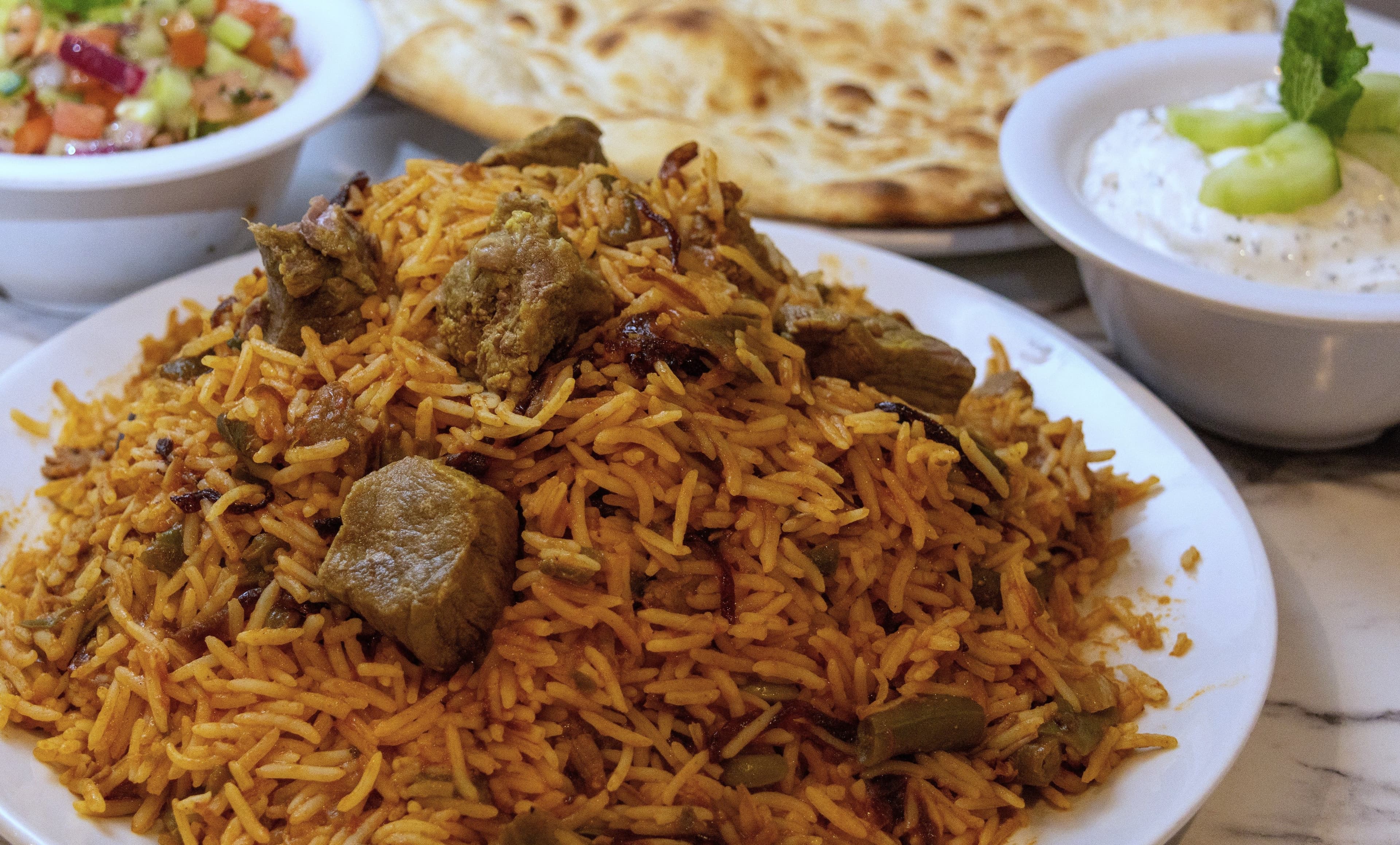
Loobia polo at Shandez Persian Grill. The Persian rice dish layers beef, green beans, tomato paste, caramelized onions and cinnamon, and is traditionally enjoyed with Shirazi salad, mast-o-khiar and fresh bread.
Long before he owned a restaurant in Houston, Iman Khedri spent hours watching kebabs cook over open flames in his hometown of Ahvaz, Iran.
While other children played, he lingered around a neighborhood kebab shop, cleaning and helping simply for the chance to observe.
“I worked there for free because I loved it,” he says.
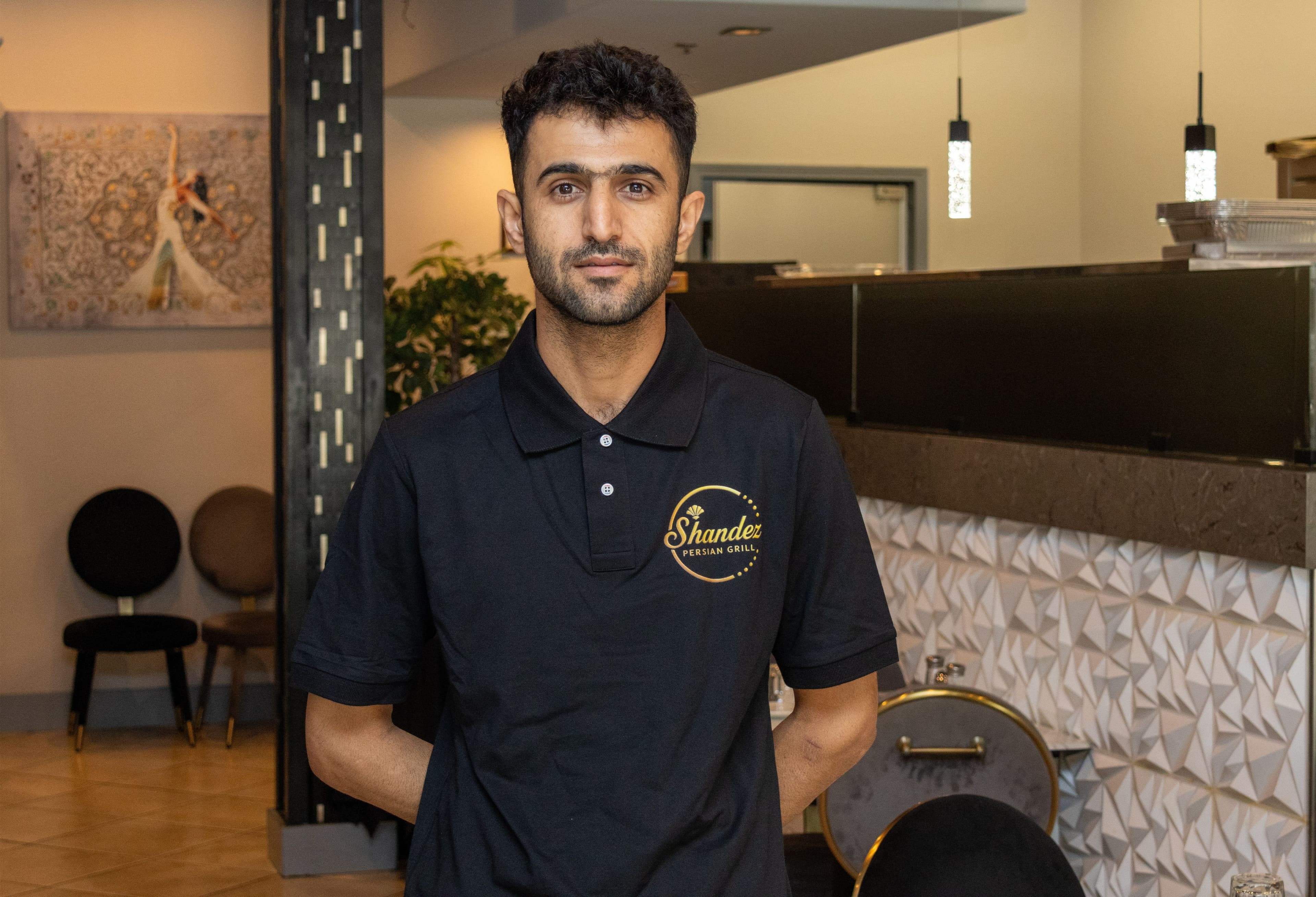
Iman Khedri of Shandez Persian Grill traces his culinary journey from southern Iran to Tajikistan and, ultimately, Houston, where he continues to prepare the Persian dishes that shaped his career.
That curiosity eventually carried him to Tehran, where, at 13 years old, he started as a dishwasher and worked his way into the kitchen. What began as fascination grew into a profession that would take him far from home. After years cooking in Iran, Khedri spent five years in Tajikistan, working in restaurants in Dushanbe and Kulob and learning how different ingredients, equipment and traditions could shape a dish.
The experience taught him to adapt rather than imitate.
“For the flavor, if I didn't move to Tajikistan, I wouldn't have had any challenge with the meat,” he says.
Today, those lessons shape the food he serves at Shandez Persian Grill.
For the World Cup promotion, the restaurant is offering loobia polo, a Persian rice dish made with green beans, beef, tomato paste, cinnamon and caramelized onions. The rice and meat are prepared separately before being combined and slowly steamed together, a process that takes roughly three hours.
Unlike many Central Asian versions of plov built around carrots and lamb, loobia polo draws its character from the warmth of cinnamon and the sweetness of fried onions.
Khedri's connection to cooking remains deeply personal.
“Cooking gave me everything,” he says.
World Cup Special: Loobia polo served with Shirazi salad, herbs, cheese, bread and tea — $17.99
How to try it: Enjoy it with Shirazi salad and mast-o-khiar. The fresh vegetables and yogurt balance the richness of the rice while allowing the cinnamon, beef and caramelized onions to shine.
Turan Uyghur Restaurant
Alimzhan Omar's Daily Ritual of Polo
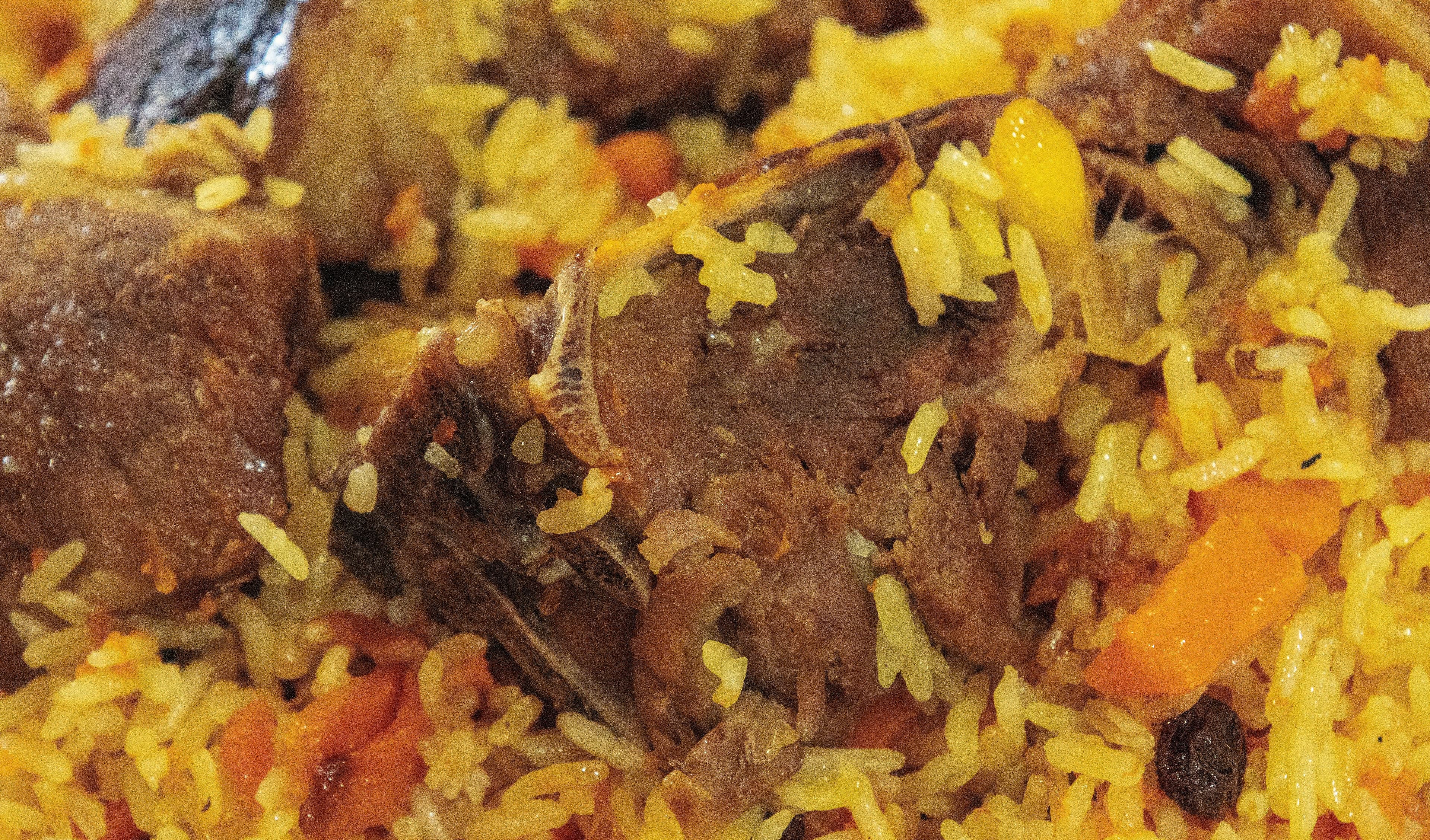
Uyghur polo topped with lamb, carrots and raisins at Turan Uyghur Restaurant in Houston.
For Alimzhan Omar, polo is not a special-occasion dish.
It is part of everyday life.
Growing up in Kashgar, he ate it regularly at home and watched it take center stage at weddings, celebrations and community gatherings. Today, thousands of miles from home, he still prepares it almost every day.
“We Uyghurs grow up eating polo,” he says.
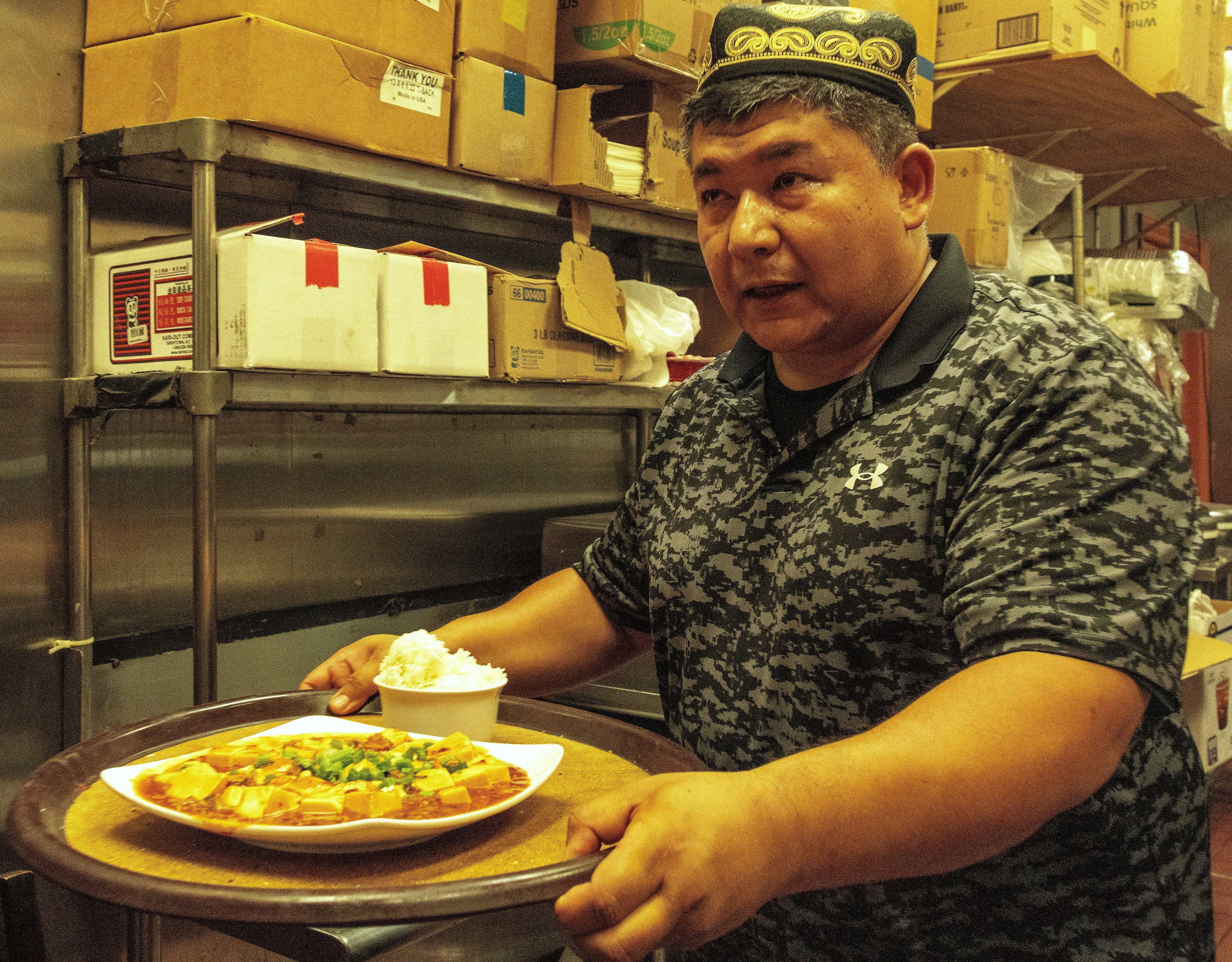
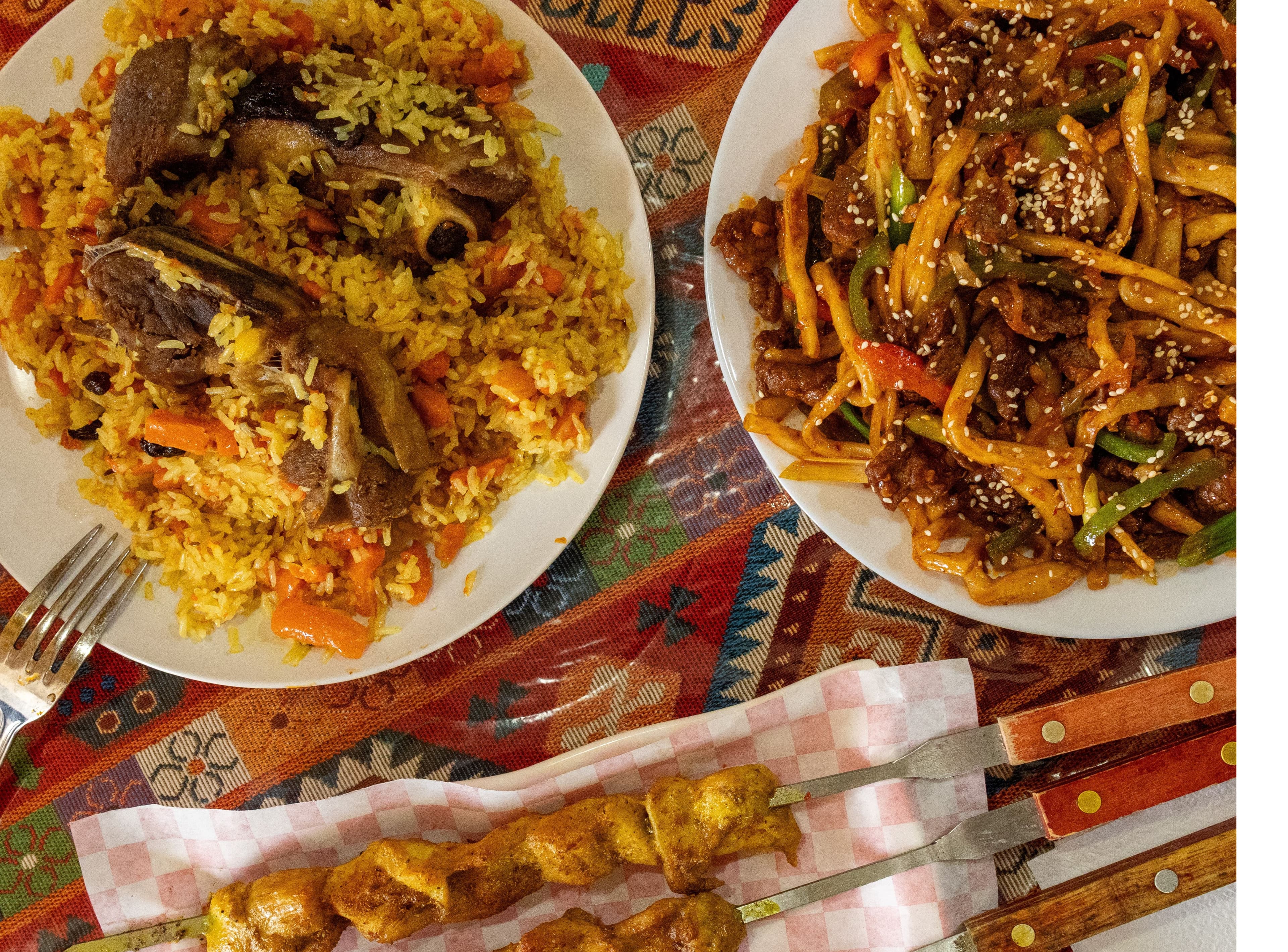
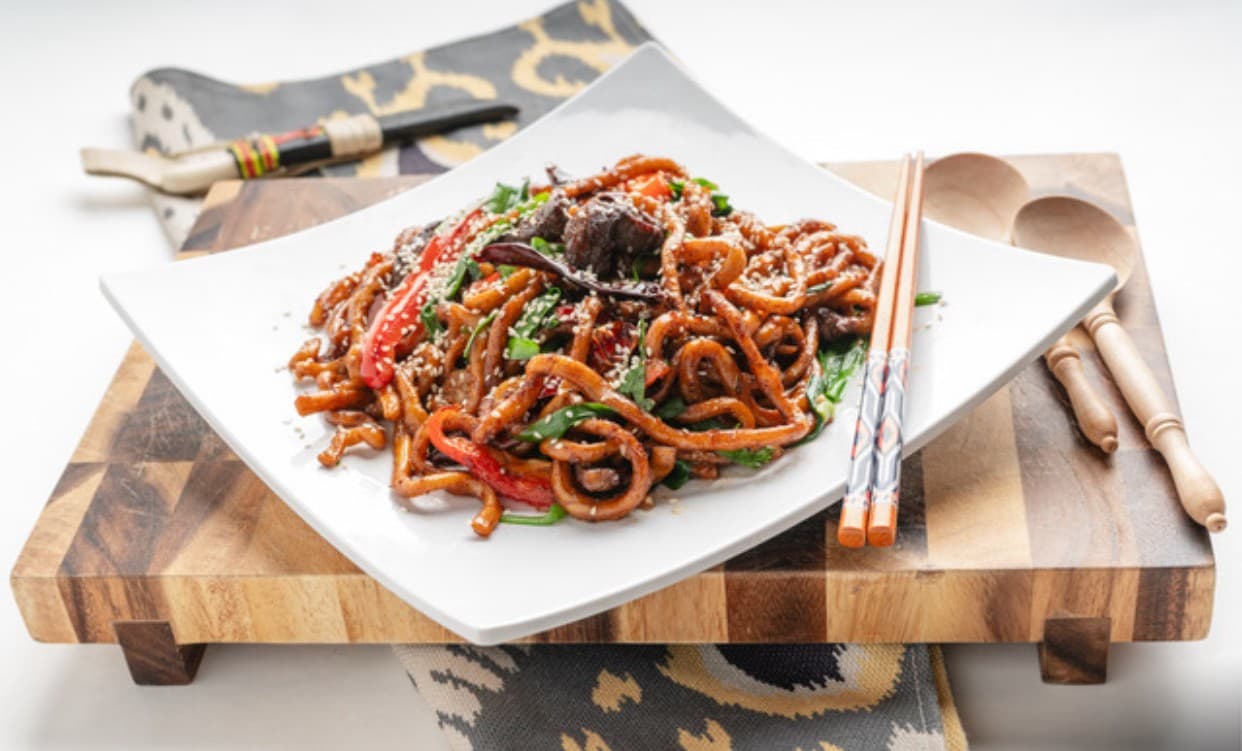
Upper: Alimzhan Omar, owner of Turan Uyghur Restaurant, carries a freshly prepared dish through the restaurant's kitchen in Houston. Lower: A spread of Uyghur dishes at Turan Uyghur Restaurant includes polo, hand-pulled Qorma Chop noodles and grilled kebabs.
At Turan Uyghur Restaurant, with two locations in Houston and one in Plano, Texas, Omar offers two versions for World Cup visitors: a beef polo and a lamb polo. While the ingredients remain simple—rice, carrots, meat, cumin, oil and salt—the balance is not.
Years of restaurant experience taught him that ingredients in Texas behave differently than those back home. Rather than chase an exact replica of the polo he knew growing up, he adjusted his recipe for local diners, eventually settling on a lighter rice that still carries the flavors of the dish.
“I tried to make it a little different, so more people can accept it,” he said.
The process requires patience. Rice and meat must cook at the proper pace, and rushing can undo hours of work. His favorite moment comes at the very end, when he lifts the lid and watches the dish come together.
“The rice is golden, the carrots are on top. Then I mix everything together and the color changes. That makes me happy,” he said.
The comment reveals something larger than technique. For Omar, polo is not simply a recipe. It is a tradition he has carried from Kashgar to Houston.
World Cup Special: Beef polo — $15.95; Lamb polo — $18.95
How to try it: Order the lamb version if you want the richer, more traditional flavor. Omar recommends enjoying either plate with salad and yogurt, a combination he first discovered as a child and still prefers today.