A Mother’s Journey Raising a Child With Autism in Kyrgyzstan
In this first-person account, one mother reflects on when patience sustains a family—and when it must give way to action.
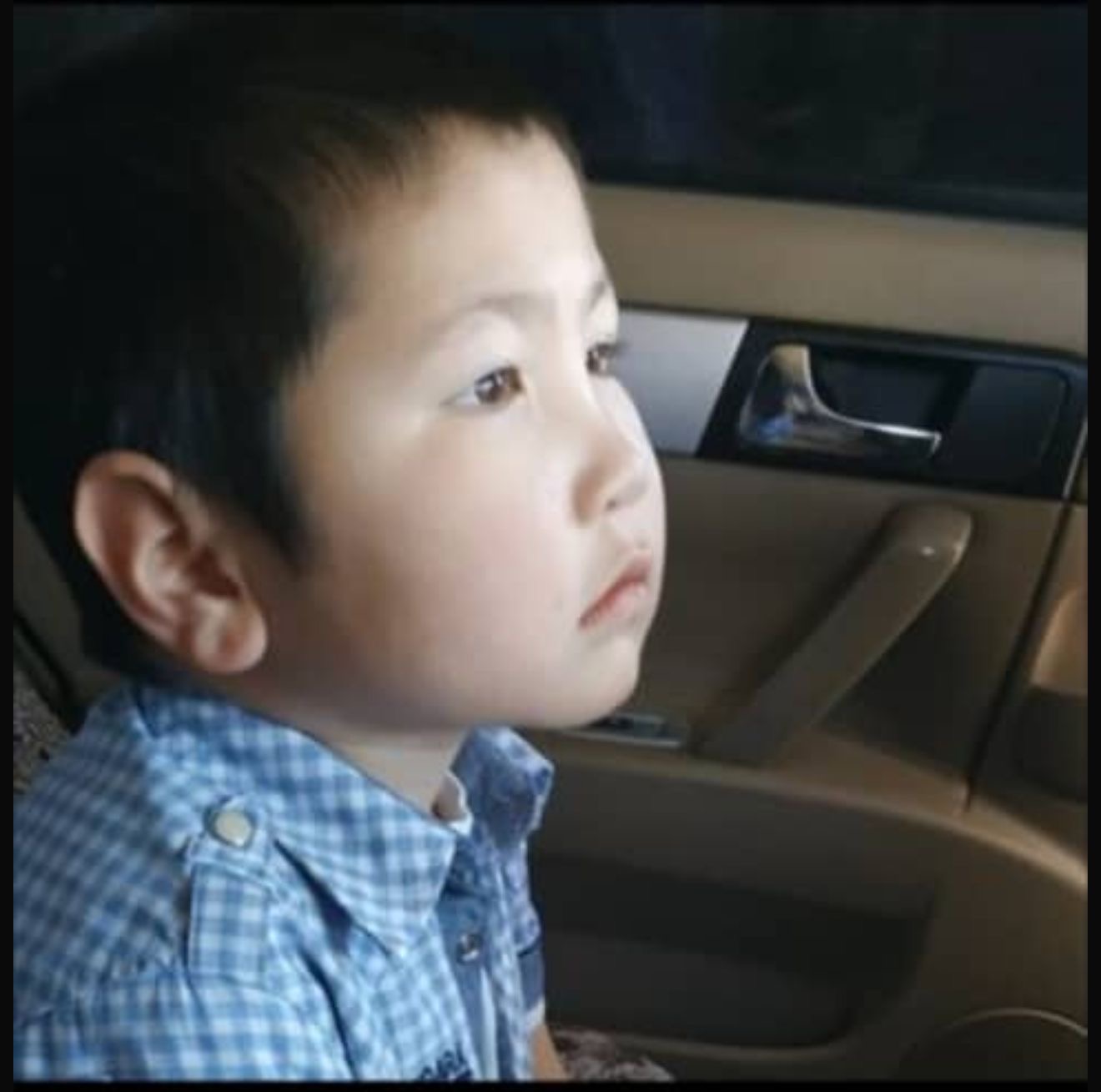
Summary: Amir is 12 years old and lives with autism in Osh, Kyrgyzstan. He does not speak, cannot care for himself and requires constant supervision. His mother has spent years moving between therapy centers, dietary interventions and a medical system that once had no language for autism.
This first-person essay traces her journey through caregiving, exhaustion and the moment she begins to question whether waiting is still an act of love—or a risk.
Editor’s Note: The author is seeking support to take her son to Turkey for specialized autism treatment that is not available in Kyrgyzstan. If you would like to learn more or support this next step, you can visit the family’s GoFundMe page here.
In the early years of my son’s life, I began to feel guilt. As Amir grew older, that feeling grew with him. I kept asking myself the same question again and again: Why did my child become autistic? Whether I was walking outside, lying awake at night or watching other children play, the question stayed with me.
When Amir, now 12 years old, was small, sleep was the first thing we lost.
At night he would scream, cry and yell. Amir slept on the couch. When he could not fall asleep, he would hit his head against it again and again. I watched him strike himself, over and over. I tried to calm him, but now he is bigger and I no longer have the strength I once had.
Some nights he fell asleep at three in the morning. Other nights it would be five. Every night was different.
By morning my body would feel heavy. When I did not sleep, everything hurt.
.jpeg&w=3840&q=75)
I began to understand that my world was different when Amir was 3, maybe 4. I watched him while other children played. They ran together, shared toys and called to one another. Amir did not join them. He walked alone, ran in circles and spun in the same place again and again. He did not know how to play nor understood that he was supposed to interact with other children.
Relatives tried to reassure me. “He will speak,” they said. “Don’t worry.” They told me he was still small, that he would speak at 5, at 6. Their words made me angry. I felt alone in what I was seeing, as if only I could sense that something was wrong.
In 2018, when Amir was 4 years old, I began taking him to doctors and psychologists. At that time, no one spoke about autism. The doctors repeated the same words: speech delay, speech delay. They did not know anything else.
I did not receive Amir’s diagnosis from a doctor. I found it myself. Late at night, when the house was quiet, I searched the internet. I found tests. I answered the questions. The result said: autistic.
Later, Amir was granted disability status. The last time we renewed it was in 2022.
Psychologists prescribed psychotropic medications. Those medications made Amir worse. There was no progress. That is why I stopped taking him to psychologists. There was no benefit.
The turning point came when we began working with a dietitian. We were told that it was not enough to work only psychologically. We also had to work with the gut. That was when I understood that this was not only a psychological problem. We started dietary changes and that opened a different path.
The question of why Amir is the way he is has never stopped. It haunts me into the night. It shadows me whenever I see other children his age.
Our mornings begin the same way. I wash Amir’s face myself. He cannot do anything on his own. The hardest part is not one task but the fact that he cannot care for himself at all.
He is very selective with food. If he refuses one meal, I prepare another. Feeding him takes time, patience and energy, and at 42 years old, I often feel all three fading away.
Amir attends therapy regularly. The center is in the city. Inside there are ABA sessions, sensory integration, physical exercises, massage and acupuncture. When Amir enters the room, he screams. He cries at the therapists. Sometimes there are two ABA specialists working with him.
When he cries, he fights and bites. During acupuncture, he arches his body and resists the needles until several adults hold him still. When he screams and yells, I can only hold him and try to calm him. There is nothing else I can do.
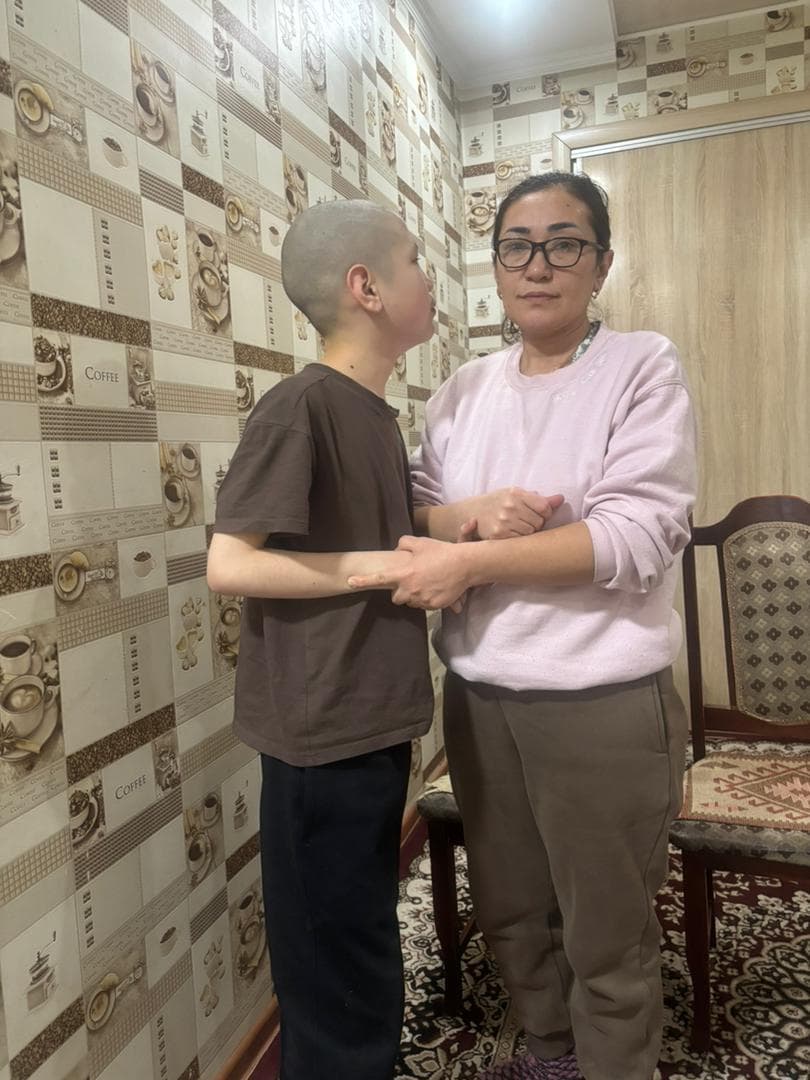
The author, Nurjan Moydinova, with her son, Amir. Now 11, Amir has a form of nonverbal autism.
Watching this is painful because I am choosing it for him. But I stay. I always stay.
In the evenings, thoughts come to me. I imagine Amir speaking. I imagine him playing with other children. Sometimes I imagine him growing up, studying and working. These thoughts return at night, when sleep does not.
Every day I am tired. But I am not allowed to get tired. I am not allowed to get sick. So, I force myself to keep going.
I have four children, three daughters and Amir. My oldest daughter is 24, my middle daughter is 22 and my youngest daughter is 9, The older girls are married now. They try to help when they can. Amir lives with me full time.
We live in Osh, in the south of Kyrgyzstan.
It was through therapy sessions that I began meeting other mothers, mothers whose children are also autistic. About 15 of us attend a formal center five days a week. We share information, experiences and whatever we learn. These meetings give me relief. Each mother carries her own burden, but we do not carry it alone.
That is when I learned something painful: autism is not the same for everyone. Families who have money go abroad for treatment, to Russia, Turkey and even America. Emotionally, it is heavy to know that I do not have the same opportunities. It feels like I am losing time.
I began hearing stories about children who went to Turkey for treatment. Mothers told me that first understanding comes and then speech begins.
I saw children from our own group after stem cell treatment. I saw them with my own eyes. Their progress was strong.
Some began to understand more of the world around them. Some began to speak. Others learned small forms of independence.
I began thinking about Turkey after listening to other mothers and seeing changes in their children.
What I want is not a miracle. I want time that still has direction. I have learned that waiting can feel like hope but sometimes waiting is only another way of standing still. A child does not stand still. His body grows. His needs grow. And a mother must grow with them.
I plan to go to Konya, Turkey, to a clinic called Fizikon. In our city, there are no such opportunities. Staying means repeating the same days, hoping time will be kind. I have learned that time is not kind. It only moves forward.
Money wakes me at night. There were days when I did not sleep at all. As time passes, my hope sometimes fades. Fear grows stronger each day, especially when I see Amir crying and screaming. I am afraid of waiting too long.
Belief carried me for many years. It told me that if I endured, if I stayed strong, things would change on their own. But belief can also delay. It can keep a mother standing still while time moves on.
I am afraid of choosing wrong. I am afraid of hoping too much. But I am more afraid of looking back and realizing that belief kept me still when action was possible.
I imagine my son understanding more of the world. I imagine him finding words or signs or ways to tell me what he feels. I imagine him needing me a little less not because he loves me less but because he can stand more firmly on his own.
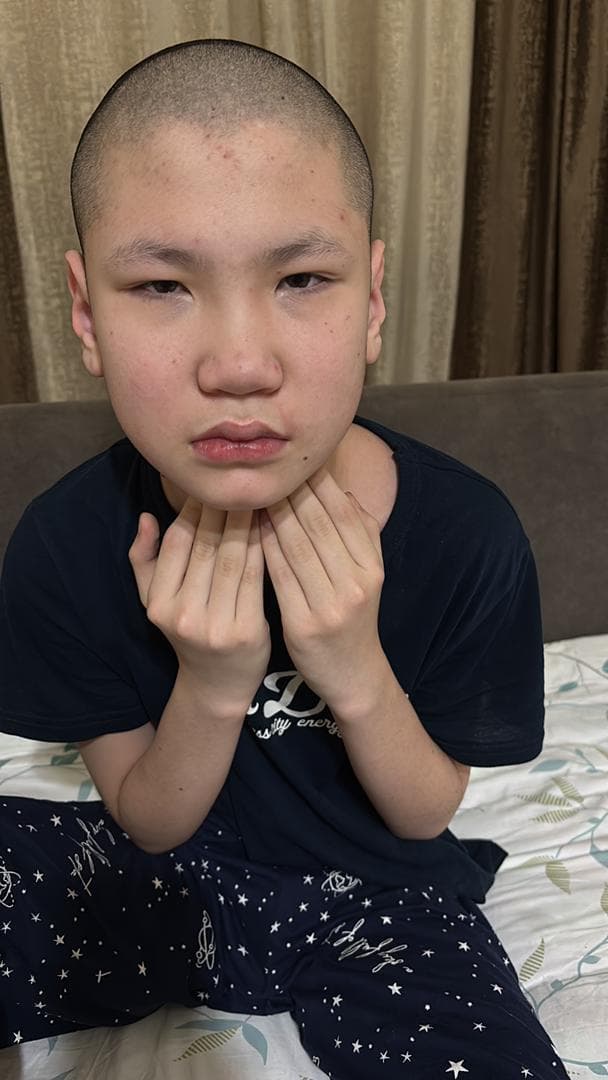
If Amir ever says “Mama,” that moment will belong only to us. But even if he never does, I want him to know that I did not stop. That I did not confuse endurance with care. That I chose movement over silence.
This is where I am now: between fear and decision, between belief and action. I am still a mother who hopes. But I am also a mother who knows that hope must sometimes walk ahead of fear, even when the path is not clear.