One Flower Does Not Make a Garden: Central Asian Proverb on Unity, Kindness and Community
Poet Sayyora Toychieva reflects on an Uzbek proverb that teaches why no one flourishes alone.
Central Asian proverbs encode ethical knowledge shaped over centuries. Among them, “One flower does not make a garden” expresses a collective philosophy rooted in cooperation and moral interdependence.
In this essay, Sayyora Toychieva situates the proverb within broader cultural, spiritual and social frameworks—revealing how shared goodness sustains communities across time.
In humanity’s 3,000-year history, there are countless traditions and chains of wisdom passed down through the ages by human intelligence and reflection. No matter which country or nation you look at, each has a place for oral literature—sayings, proverbs and folk wisdom. What is interesting is that not a single proverb or saying encourages a person toward evil.
A person’s favorite word is always his own name. In this world, there is nothing more tender or beloved than a mother’s lullaby. No matter which language it is sung in, it becomes a sweet melody for the child’s soul. Just as there is no such thing as a “bad mother,” there is no such thing as a “bad lullaby.” The first song a child hears—this melody of affection that stays in their ears throughout their whole life—is considered the tune of growth and living.
Wherever they may live on earth, parents always call their children toward goodness, hard work and moral character. An English parent recites Shakespeare or Hemingway, a French one quotes Louis Aragon, a Russian refers to Pushkin, a Chinese to Confucius—all as examples teaching a child not to go astray in life, to behave well, and to become a true human being. As proof of their words, parents draw from their own life experience to guide the child toward honesty, firm faith, and justice.
The proverb, “Bir gu’l bog’ bo’lmagay” (one flower does not make a garden) also teaches us to raise our children to seek what is good—true connection, sincerity—rather than duplicity, deceit or selfishness. Folk wisdom such as “Ikkov yakshi” (two heads are better), “It bu’l qush bo’l, ko’p bo’l” (Be a dog or a bird—be many), “Birniki mingga mingniki tumanga” (what belongs to one belongs to a thousand; what belongs to a thousand belongs to ten thousand), “ko’pdan quyon qochib qutulmas” (no rabbit escapes the many) “do’sti ko’pning yuzi yurug’” (one with many friends has a bright face)—all point to the beauty and abundance found in community, variety, and togetherness.
Imagine a person who creates a garden. With flowers, basil, apples, apricots, he turns a green valley into a paradise. If a water-keeper, a gardener and a farmer join him, the blessing of the work multiplies.
Our life consists of holidays and good days. On our birthdays, we feel joy seeing friends step through our doorway; and in difficult days, we share our troubles with these same dear ones. A sincere, open-hearted person—someone without a trace of malice—lifts our spirit; our heart rises like a mountain.
Late-19th, early 20th-century Uzbek jadid writer Mahmudxo‘ja Behbudiy said: “Bir dasta tayoqni birga bog’langiz, kimsa sindirolmas. Agarda ajratsangiz bir-birin har kim sindirar” (tie a bundle of sticks together and no one can break it. Untie them, and anyone can break each one.). The proverb’s same message finds itself in the eighth-century Orkhun Turkic inscription of Tonyukuk, the advisor to the Qagans. “If thin becomes thick, it is hard to bend it, they say; / And if tender becomes tough, it is hard to break it.” This wisdom teaches that the divided are devoured by wolves; the separated gain nothing; and that unity and cooperation carry great power.
If we reflect a bit, we see throughout life that the shared meal tastes better, the shared opinion is wiser, and the shared counsel sweeter.
A content person, someone whose gaze is humble, is worthy of respect. A forgiving, compassionate, merciful person is a loving soul. A truthful, envy-free person is an honorable one. And someone who can find a way into many hearts is truly priceless.
In various corners of the world, some people lack bread, some lack water, some lack clean air. But above all, human beings need affection—kindness, care, and sweet words. A meeting brightens the heart; a good word lights a lamp in one’s chest. And if these good words and this affection come from a person with strong support—many friends and companions—then such a person lives long, and the longer they live, the more good they do and the more they help increase the number of good people in the world.
I witnessed such qualities—the way goodness multiplies like leaves, how one flower becomes a whole garden—in the life of one wise academic, a renowned scholar. This thinker, who raised all six of his children to the level of professor, founded a “School of Excellence” at the very school where he once studied. He inspired hundreds of his students to donate books to their alma maters. He personally established scholarships for financially struggling students. He devoted himself wholeheartedly to knowledge, science, and reflection, and became an academician of the academy of sciences of six different countries.
To serve goodness, to increase the number of good people—every fruit and every outcome of this noble quality becomes goodness in the end.
As the Qur’an says: “The reward for good is nothing but good.” This is a sign that nothing in this bright world goes unanswered.
Why does the sky not fall down upon the earth? Because, in our eyes, it is held up by the virtues and good deeds of the righteous. That is why we should say not “I” but “We” more often, for the strength of many becomes a shield against every trouble and misfortune.
A human being lives only once. In this world, where one enters through one door and leaves through another, the only thing that should remain behind a person is goodness—bringing happiness to their children and loved ones.
History offers many examples of this. We will write about them in our next articles, dear ones.
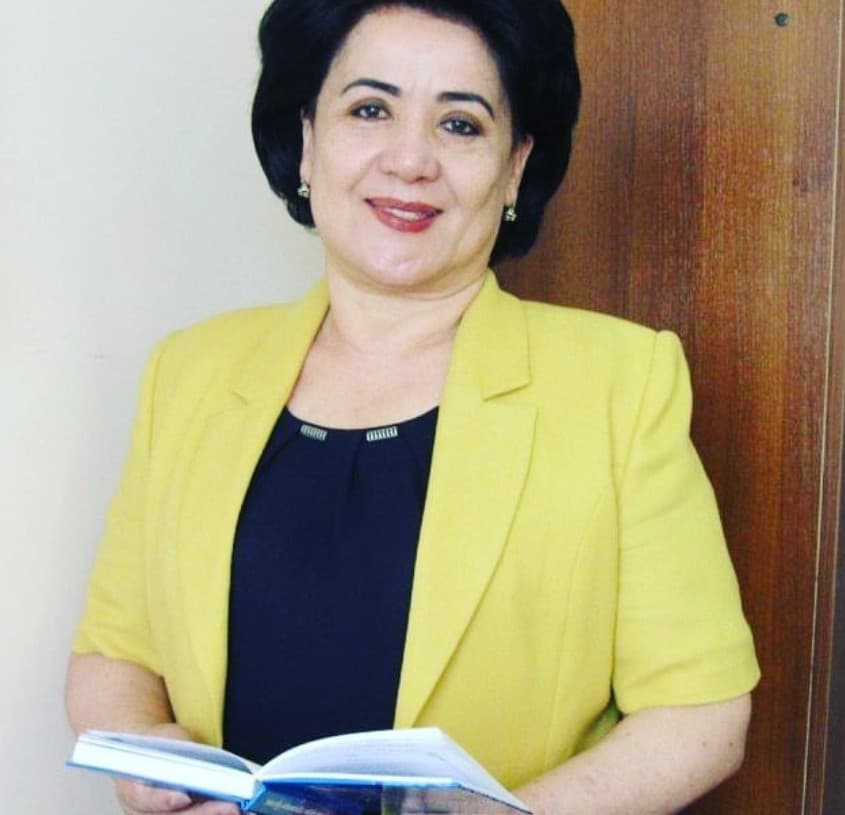
Sayyora Toychieva is a highly esteemed poet and scholar. A professor at the International Islamic Academy of Uzbekistan, she also serves as a member of the Writers’ Union of Uzbekistan.
Read more Words of Wisdom here.