Spring Across Borders: How Seattle’s Central Asian Communities Keep Nowruz Alive
Nowruz in Seattle looks like a celebration—music food, children in embroidered dress—but for many Central Asian families, it is also an act of cultural survival.
.jpeg&w=1920&q=100)
An attendee of the 2025 Nowruz celebration in Seattle hosted by the North American Kazakh Association prepares sumalak, a traditional Central Asian dish served during Nowruz. Photo courtesy of Kyrgyz Community of Washington State
Summary: As winter loosens its grip in Seattle, Central Asian communities gather to celebrate Nowruz, the spring new year observed by more than 300 million people worldwide. Through food, music and shared traditions, Kyrgyz, Turkmen and Kazakh families are not only marking the arrival of spring but preserving language, culture and identity for a new generation growing up far from home.
In a rented hall at Shoreline Community College in north Seattle, a dozen mothers move quickly between rows of tables, adjusting embroidered dresses and velvet hats on their children while trays of baursak (boorsok in Kyrgyz), plov and steaming tea are arranged along a long table. Kyrgyz, Turkmen and Kazakh mingle in conversation as families arrive, greeting friends they have not seen for months. Outside, the gray Pacific Northwest winter is beginning to loosen its grip. Inside, preparations for Nowruz—the Central Asian spring new year—are underway.
.jpeg&w=3840&q=75)
Aigerim Dzahnyshpekova, left, poses with friends at the 2024 Nowruz celebration organized by relations the nonprofit Kyrgyz Community of Washington State. A volunteer for the organization’s public relations team, Dzhanyshpekova knows first hand what goes into putting together such Nowruz celebrations every year. “Here we have to make an effort to organize it,” she explains, adding that “people come together intentionally.” Photo courtesy of Aigerim Dzhanyshpekova
Among the mothers preparing for the celebration is Aigerim Dzhanyshpekova, a Kyrgyz immigrant who has lived in Seattle for seven years. As she straightens the collar of her six-year-old daughter’s dress, she watches the room slowly fill with families from across Central Asi a . For many immigrants like her, Nowruz offers something rare: a moment when a community scattered across a new country gathers to remember where it came from. “Nowruz feels like our real New Year,” she says. “It reminds me of family gatherings, warmth and the traditions we grew up with.”
Celebrated on the spring equinox by more than 300 million people worldwide, the holiday has taken on new meaning for Central Asians living abroad. In cities like Seattle, the festival has become a way to preserve language, share traditional foods and introduce children to customs they might otherwise know only through stories.
Holding Onto Tradition
In Kyrgyzstan, Nowruz celebrations often fill public squares with music, games and large communal meals. In Seattle, the gatherings are smaller and typically organized by volunteers, but the emotional meaning remains strong. Dzhanyshpekova volunteers as part of the public relations team for the nonprofit Kyrgyz Community of Washington State. She says the effort required to organize the celebration deepens its importance for the community. “Here we have to make an effort to organize it,” she explains, adding that “people come together intentionally.”
For many parents, the holiday also becomes a lesson in identity for children growing up far from Central Asia. Through language, food and traditional clothing, families try to ensure that cultural memory carries into the next generation. “I want her to hear the Kyrgyz language, taste our traditional food and understand where she comes from,” Dzhanyshpekova says.
Building Community From Scratch
For Gulmet Kulmedov, a Turkmen community organizer who moved to Seattle in 2016, Nowruz celebrations began as a response to homesickness. The first gathering he helped organize as cofounder of the nonprofit Oasis Foundation brought together only a few dozen people. Friends invited friends, families invited neighbors, and the event slowly expanded. “Like many immigrants, I missed our culture and our special days,” he says.
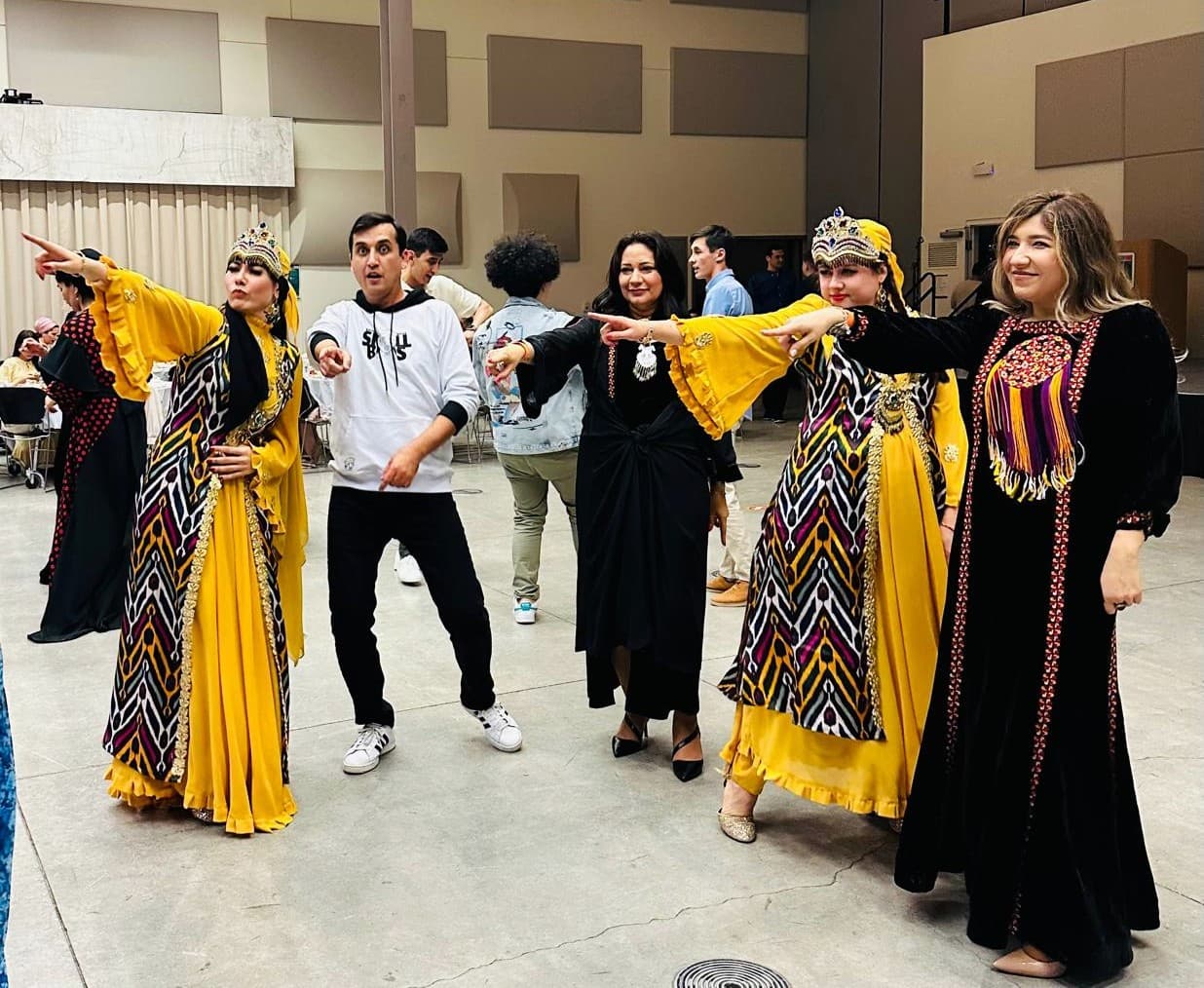
Gulmet Kulmedov, founder of Oasis Foundation, a nonprofit serving the Turkmen communities of Washington state., celebrate Nowruz with Turkmen performers at the Nowruz celebration from 2025.
Today the Turkmen community in the region numbers around 1,000 people, and Nowruz celebrations can attract 300 or more guests. Families bring traditional dishes such as yarma and kavurma while children perform dances and musicians play folk songs. Over time, the gatherings have also become spaces where different Central Asian communities meet and celebrate together.
“Nooruz belongs to many cultures,” Kulmedov says.
A Bridge Between Communities
In Seattle’s Kazakh community, Nowruz celebrations have also become an opportunity to build visibility and cultural pride. Kerem Onat, a Turkish and Crimean Tatar musician who helped cofound the North American Kazakh Association in 2024, says cultural events often serve as the public face of the community. “I wanted people to know that the Kazakh community exists,” he says.
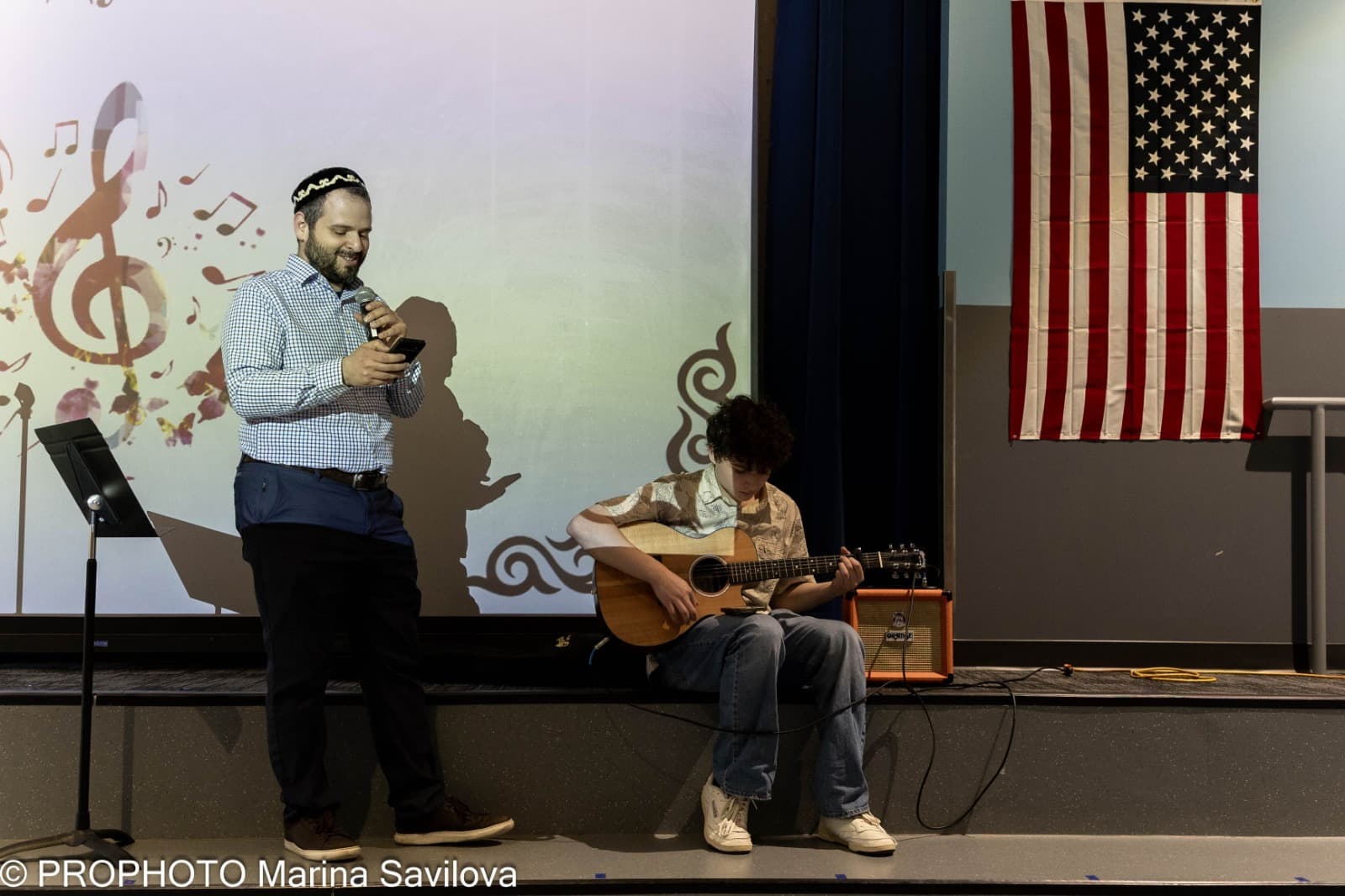
Kerem Onat, cofounder of North American Kazakh Association, a nonprofit organization, performs with his son at a Nauryz celebration last year. Photo by Marina Savilova
In the United States, Kazakhstan is still unfamiliar to many Americans, and events like Nowruz celebrations help challenge stereotypes while introducing audiences to the region’s traditions. Food often provides the most immediate connection. “When people hear Nowruz, they immediately think of plov,” Onat says with a laugh. “And baursak. You cannot have Nowruz without baursak.”
Music plays a similar role. Onat performs on several instruments, including the oud, tar and dombra, and frequently appears at cultural events across Central Asian communities. Through these collaborations, he says, the connections between the region’s cultures become increasingly clear.
“The more I work with these communities, the more similarities I see,” he says.
A Tradition Thousands of Years Old
The roots of Nowruz stretch deep into ancient history. Kyrgyz historian and ethnographer Tynchtykbek Choroev says the holiday grew out of early observations of the natural world and the seasonal movement of the sun. Long before written calendars, communities across Eurasia watched the sun’s path and marked the spring equinox as the beginning of a new cycle.
.jpeg&w=3840&q=75)
Photo courtesy of Marina Savilova
Petroglyphs discovered in places like Saimaluu-Tash in Kyrgyzstan contain solar symbols tied to seasonal changes, suggesting ancient communities already recognized the equinox as a moment of renewal. Although the holiday is often associated with Persian traditions, Choroev notes that many Eurasian cultures developed their own spring celebrations independently.
“For ancient Turkic societies, the year also began with the spring equinox,” he says.
Even during the Soviet period, when the holiday was discouraged, families quietly preserved it within their homes.
A New Spring in a New Country
Back in the Seattle community hall, preparations are nearly finished. Children run between tables while parents arrange dishes and pour tea for arriving guests. Dzhanyshpekova steps back for a moment and watches her daughter join other children near the stage, their colorful clothes bright against the gray Seattle afternoon outside.
“For our children,” she says softly, “this is how they learn who they are.”
Soon the music will begin, the tables will fill and hundreds of people will gather to welcome the arrival of spring.
Just as they have for generations—even thousands of miles from home.