Why an Economist Turned to Poetry to Explore Money, Migration and Starting Over
A former World Bank economist explains why stories endure long after financial formulas fade.
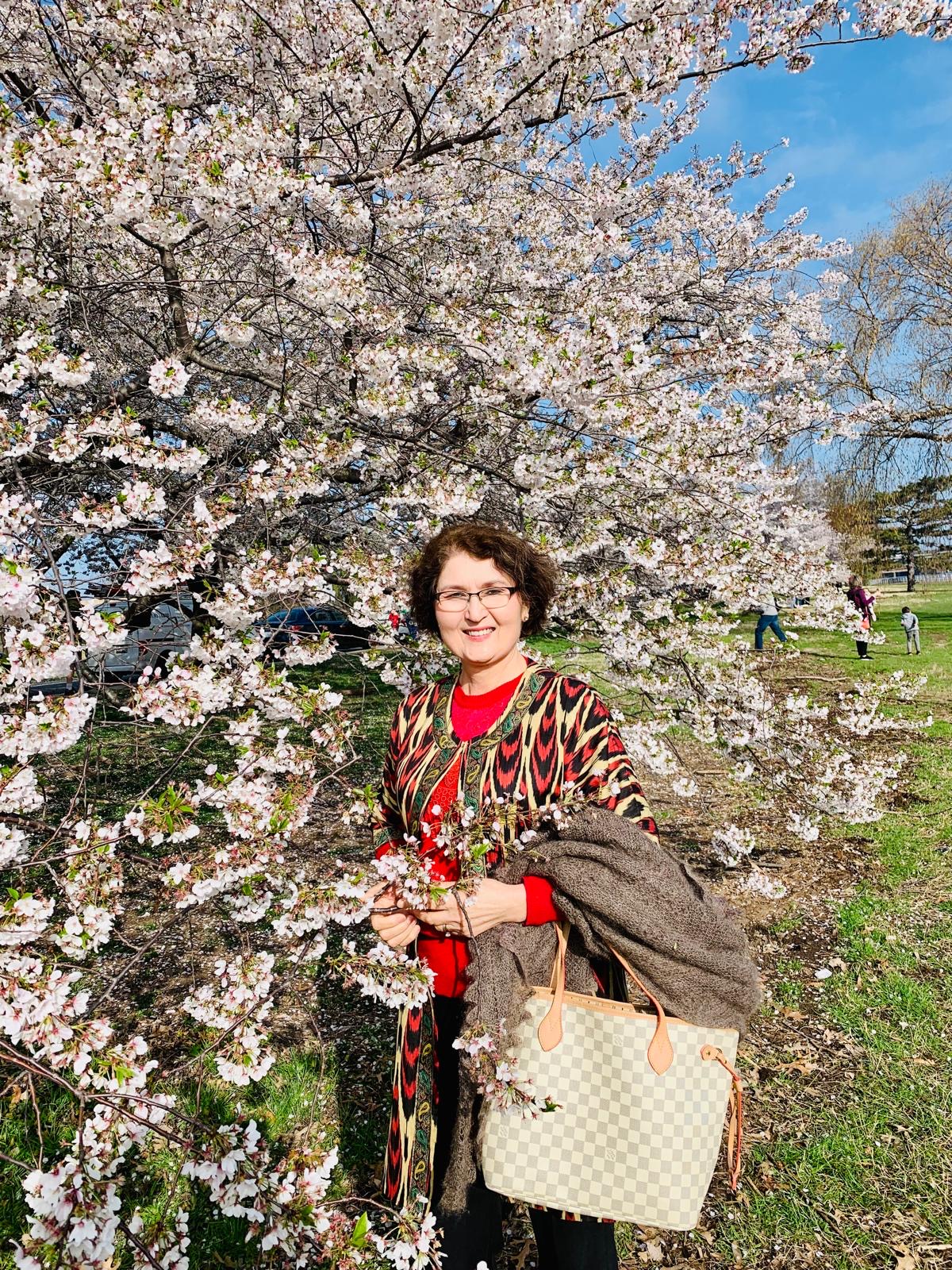
Photo courtesy of Gulnaz Abdukadir
Summary: Drawing on a career in global finance and a lifelong love of poetry, Gulnaz Abdukadir reflects on the emotional realities of money, the challenges of rebuilding life in a new country and why stories often teach what financial formulas cannot.
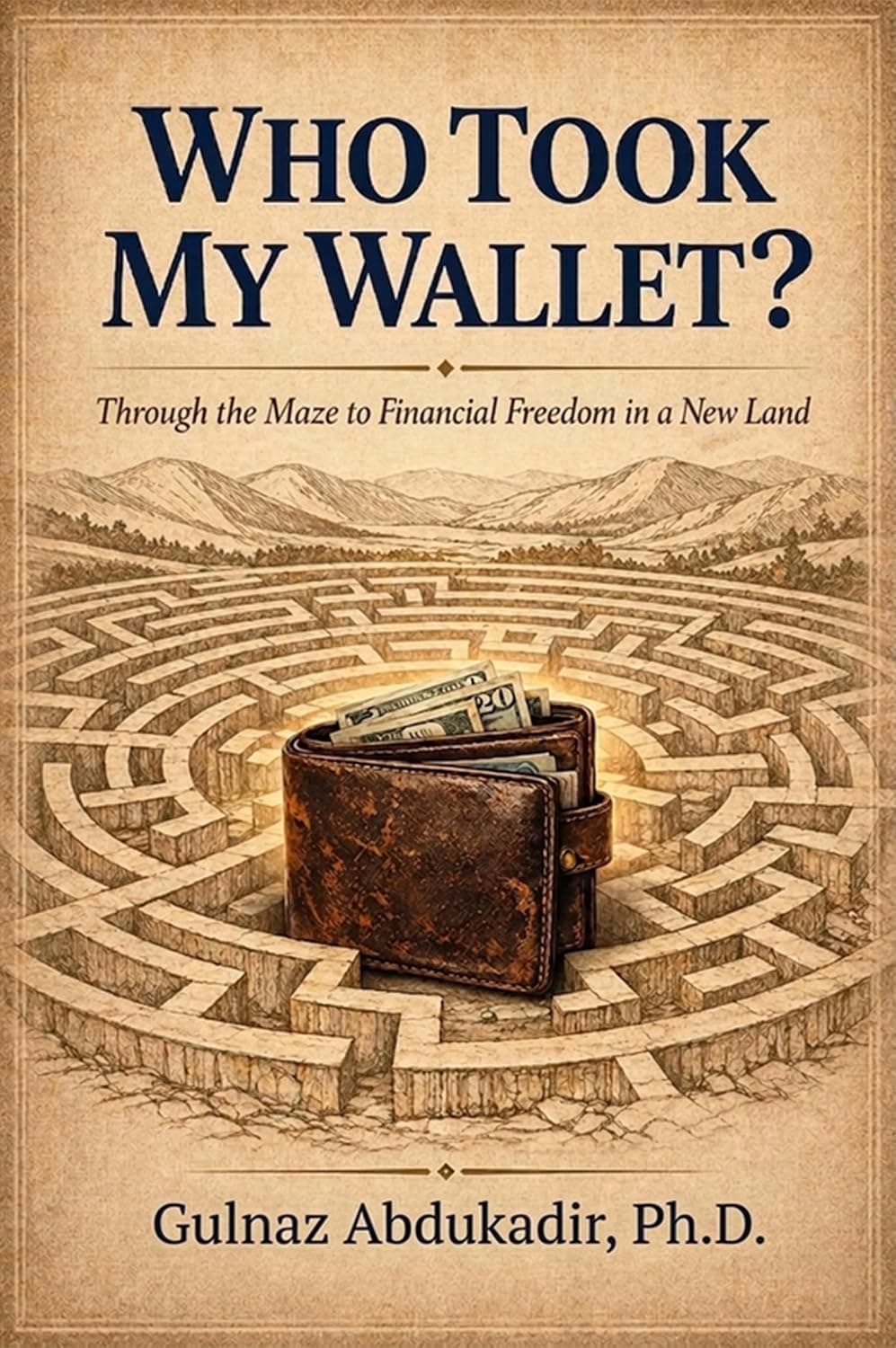
Gulnaz Abdukadir built a career in the technical language of money—a decade at the World Bank and more than twenty years in the financial industry. Yet her latest book leaves the charts behind. Who Took My Wallet?—Through the Maze to Financial Freedom in a New Land, a 127-page fable, follows four immigrants—a scholar, an investor, a refugee and a hustler—through a maze that stands in for the American financial system, with short poems marking each turn.
Born in Ghulja, in East Turkistan, Abdukadir writes from the Uyghur immigrant experience while reaching toward anyone starting over. Ahead of her July 16 talk at JF Books in Washington, DC, she spoke with Edgu Bilig about economics, storytelling, migration and the emotional dimensions of financial freedom. The conversation has been edited for length and clarity.
You spent your career inside the machinery of money. Why write a fable instead of a handbook?
I started to. I had given lectures for the Uyghur Academy on retirement planning, the stock market, Medicare, Medicaid, estate planning, and thought I would turn them into a guide. Then I asked myself: will people remember the charts a year from now? Probably not. After decades watching money—at the World Bank and among my own community, clients and friends—I came to believe people remember stories, not statistics. A fable lets readers see themselves in its characters. Economics can explain how markets work, but it cannot explain why people fear money, chase it, lose it or misunderstand it.
You spent a decade at the World Bank studying economies at the largest scale. What did that experience teach you about the financial lives of immigrant families?
Something simple: whether you are talking about a nation or a family, the principles are often the same. Both struggle with scarcity, uncertainty and sudden shocks, and both must choose between today's needs and tomorrow's security. I saw countries burdened by debt and vulnerable because they relied on a single source of income. Later, as a financial advisor, I saw the same patterns in families—no emergency savings, too much debt, every hope resting on one paycheck. The scale was different, but the human story was remarkably similar. Security does not come from avoiding uncertainty. It comes from preparing for it.
You place short poems at the book's turning points instead of explanations. What can a poem say about money that a spreadsheet cannot?
A spreadsheet can tell you how much you have gained or lost, but not what that loss felt like, or what a gain meant to a family. It cannot capture the anxiety of starting over, or the quiet pride of standing on your own feet. Poetry reveals the emotional truth behind money—hope, fear, sacrifice, dignity and love—which is why I placed poems at the turning points. My love of poetry came from my uncle. I watched him use poetry to preserve memories and give meaning to ordinary life, and he taught me that a few lines can carry a lifetime of feeling. I try to bring both worlds together—the economist who explains how money works and the poet who asks why it matters.
What do newcomers most often get wrong about money in America?
Many arrive believing that hard work alone guarantees success. Hard work is essential, but in America there is another language to learn—credit scores, mortgages, retirement plans, insurance, taxes and investing. Many of us come from places where these systems work very differently or barely exist. So, newcomers are learning a new financial language at the same time they build a new life, often in a second spoken language too. When things go wrong, it is rarely because someone was careless. It is because no one handed them the map—and the map itself keeps changing.
In the book, the characters find their way not by working harder but by building together. Was that deliberate?
Very deliberate. I do not believe anyone truly succeeds alone. When I first arrived, I watched immigrants share apartments, pass along job leads, mind one another's children and translate documents late into the night. We built a support system because we had to. That is how people survived and eventually thrived.
The story of the self-made person is inspiring, but it is only part of the truth. In the book, the four travelers stop competing and start pooling what they have. That is when the maze finally opens—not through a clever trade, but through trust.
You arrived in the US in the mid-1980's with about $500. What do you wish someone had told you then?
Do not be afraid of money, but do not ignore it either. Learn its language early—the sooner you understand credit, saving and investing, the fewer painful lessons you will pay for later. And do not try to carry it alone; ask questions, lean on your community and share what you learn. Money is not the purpose of life. But understanding it gives you the freedom to pursue what truly matters—your family, your education and your peace of mind. That, in the end, is what financial freedom in a new land means.
Who Took My Wallet?: Through the Maze to Financial Freedom in a New Land Gulnaz Abdukadir. Emberlight Press, 2026. Available in hardcopy and electronic formats through Amazon.com.
More from