At 16, He Helps Keep Ramadan Nights Running at a Houston Mosque
As hundreds gather for nightly Ramadan prayers in Sugar Land, a high school student quietly manages crowds, livestreams and overflow rooms—often before he even has time to pray himself.
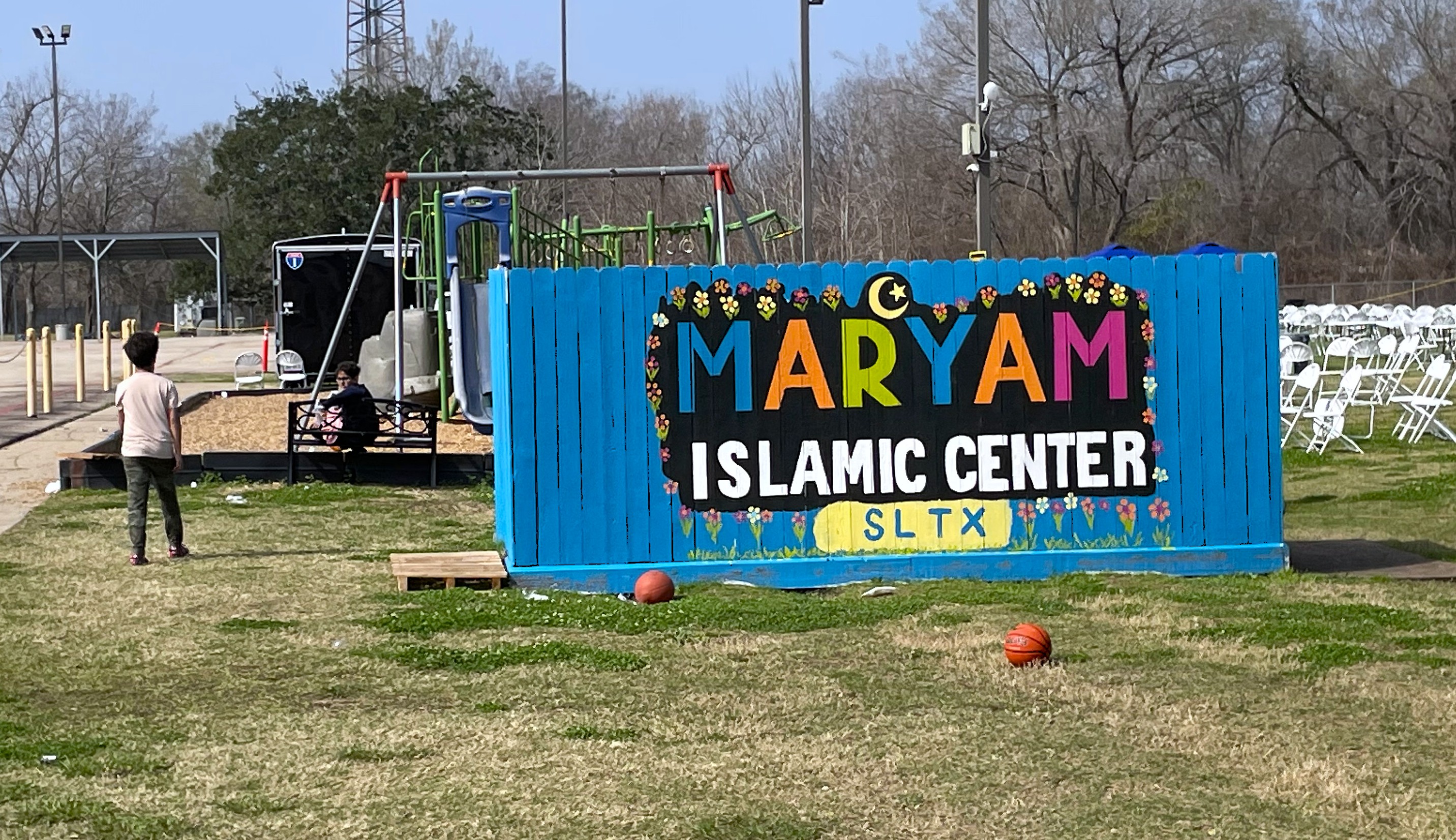
The grounds of Maryam Islamic Center in Sugar Land, Texas. During Ramadan, volunteers help manage large nightly prayer gatherings that bring together diverse Muslim communities from across Houston.
Summary: During Ramadan, mosques across Houston fill nightly with worshippers from diverse Muslim communities, including families from Kazakhstan, Kyrgyzstan, Turkmenistan and Uzbekistan who share these spaces of prayer. At Maryam Islamic Center in Sugar Land, volunteers help manage crowds that can reach more than a thousand people during evening prayers.
In this Q&A, 16-year-old volunteer Rayaan Khan reflects on the unseen work that keeps those gatherings running—from directing worshippers to overflow spaces to balancing school, fasting and late nights at the mosque.
Editor’s Note: Because of the subject’s age, we did not include a photograph of him with this article.
Since the start of Ramadan three weeks ago, mosques across Houston have filled each night with worshippers from across the Muslim world. For many members of the city’s growing Central Asian communities—from Kazakhstan, Kyrgyzstan, Turkmenistan and Uzbekistan—these mosques have served as shared spaces of prayer where diverse Muslim communities gather side by side.
Behind the scenes, a small group of volunteers has helped make those nights possible: directing crowds into overflow areas, managing sound systems and livestreams and ensuring that hundreds of worshippers can pray safely and comfortably.
One of those volunteers is Rayaan Khan, a 16-year-old Houston student whose family trace their roots to Pakistan, has spent the past four years helping Maryam Masjid in Sugar Land operate during Ramadan. He helps manage crowds during the nightly Ramadan prayers. His experience offers a glimpse into the unseen work that sustains mosque life during the holy month.
How did you first start volunteering at Maryam Masjid?
I started volunteering around 2021. At first, I helped with the weekend school. I would help teachers bring materials, take the kids to recess and assist with whatever they needed. Over time I started helping more with the masjid itself, especially during events and prayers.
How large is the community that gathers here during Ramadan?
It’s a very large community. On busy nights the parking lot fills up, and that alone has more than a thousand spaces. I would say we can have around 1,000 to 1,500 people coming to pray.
What does your role look like on a typical Ramadan night?
As soon as I arrive, I put on my volunteer vest and check the sound system. I set up the livestream and make sure the speakers are working. Then I check the air conditioning and fans because the prayer hall fills quickly.
Once people start arriving, my main job is managing the doors. When the main prayer area fills up, I redirect people to overflow areas upstairs or outside so everyone still has space to pray.
Do you get to pray yourself during that time?
At first, I usually can’t because I’m helping people find space. After the fourth rak‘ah of taraweeh, when things calm down a little, that’s when I’m usually able to step away and pray.
Why continue volunteering when it means sacrificing part of your own prayer time?
Last Ramadan I was thinking about that. I wondered why I was doing this if I was missing part of the prayer. But the imam reminded everyone that if you help people pray, you receive the reward for that prayer as well. That really changed my perspective. Helping people pray is also a form of worship.
What’s the most challenging part of volunteering during Ramadan?
It’s not always the best experience. A lot of people get upset because we’re trying to do our work. Some people think they need to pray immediately and they block someone else’s way. They want to be in the main area and don’t want to go to the overflow areas.
Sometimes they yell at us. It’s not the best, but you just have to handle it with tact. You say, ‘I’m sorry, there’s nothing else I can do. Either you go to the overflow areas, or you wait
How do you stay calm when people are upset?
It takes discipline. You try to understand their perspective because they might feel like they’re missing part of the prayer. But, at the same time, you have to stand your ground. If volunteers aren’t respected, it becomes very difficult to manage the crowd.
You’re also a high school student. How do you balance Ramadan, school and volunteering?
Time is the hardest part.
I wake up early for suhoor, go to school while fasting and then come to the mosque at night to volunteer. There isn’t always a lot of sleep during Ramadan.
My family helps a lot. My mom prepares food for suhoor, and my parents help with things at home so I can focus on school and volunteering.
Where did your sense of service come from?
Mostly from my parents. My mom works in administration at the mosque, and I saw how much time she sacrificed for the community. My dad is also always there for our family and relatives whenever they need something.
Seeing that growing up made me realize helping your community is important.
What does “community” mean to you?
Community means people doing something together. When people come to the masjid regularly, they start meeting each other, making friends and helping each other. Over time it feels like a family.
What do you wish people understood about volunteers?
Volunteering isn’t always easy. A lot of people think it’s simple, but there’s actually a lot happening behind the scenes. Without volunteers, nights during Ramadan would be very difficult to manage.
Volunteers help keep everything organized so everyone can pray comfortably.
Check out this other Q&A with Uzbek American influencer Jahongir Karim and how he is redefining visibility.