The Inheritance: How TASA Built a Bridge Between Generations
Nearly 20 years later, TASA's future depends on whether the next generation steps forward.
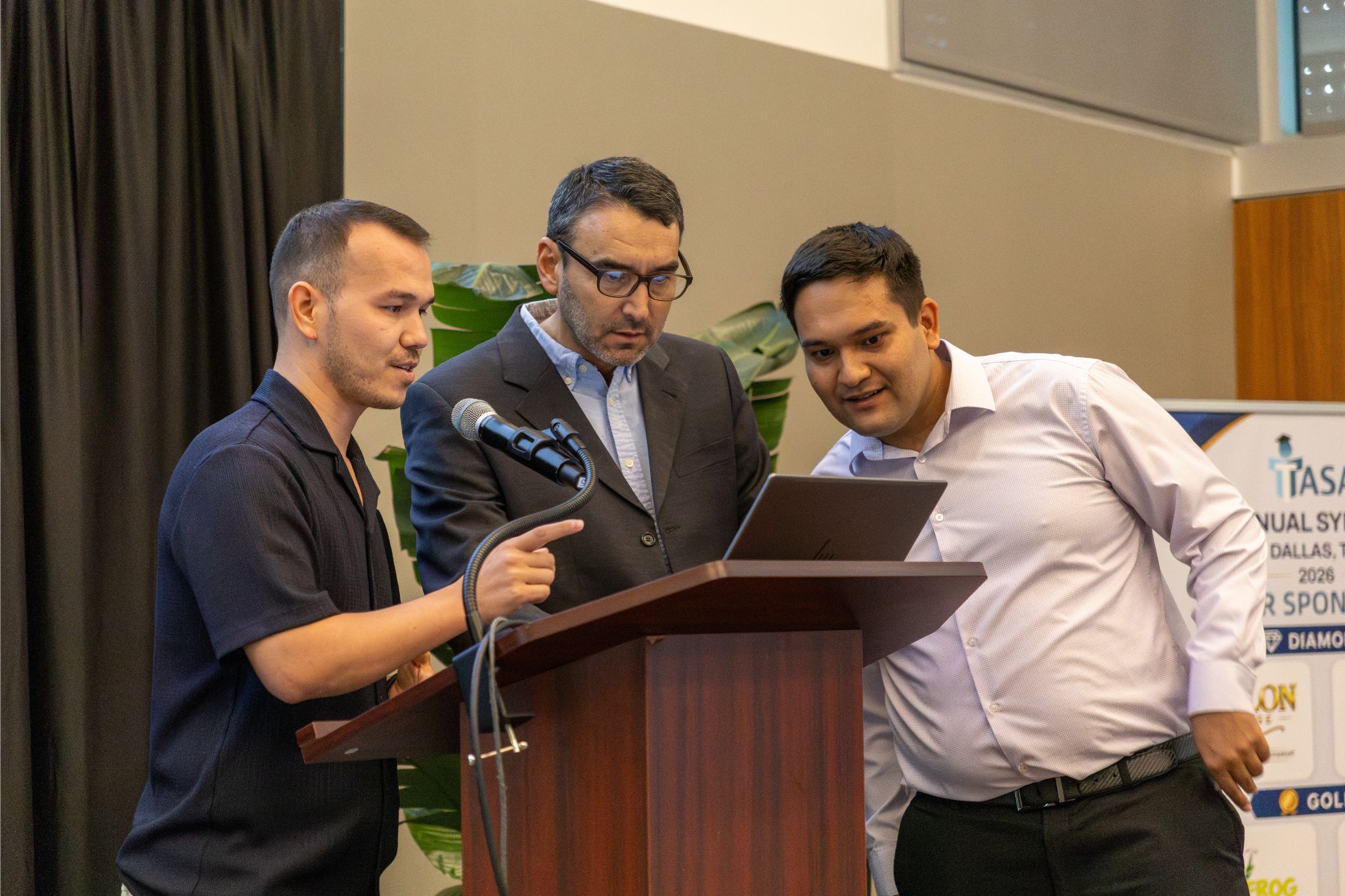
Turkmen American Scholars Association cofounder Vepa Rejepov (center) and board member Gadam Myratgeldiyev (left) confer with presenter Gaygysyz Ashyrov during the organization's 20th annual symposium in Dallas. For many attendees, TASA's greatest legacy lies not in its events but in the mentorship passed from one generation to the next.
Summary: The Turkmen American Scholars Association (TASA) celebrates its 20th annual symposium in Dallas, bringing together Turkmen students, scholars and professionals from across the United States. Founded in 2007 by volunteers, the organization has helped connect researchers, foster mentorship and create opportunities for young Turkmens pursuing education and careers abroad. Through the stories of board member Gadam Myratgeldiyev, longtime attendee Begench Aydogdiyev, scholar Yusuf Azmun and founder Vepa Rejepov, this feature explores how one small community organization built a lasting network—and how the next generation is working to keep it alive.
In 2010, somewhere in Turkmenistan, a 12-year-old came across a name in a newspaper.
The article, about a Turkmen student who had won gold at the International Biology Olympiad, captured a first in the country’s history. That student had gone on to study abroad, earn a PhD in the United States and help found the Turkmen American Scholars Association.
Gadam Myratgeldiyev was training for Olympiads of his own at the time. He clipped the article and saved it.
Fourteen years later, he sits on TASA’s board.
“I could see where I should be heading,” Myratgeldiyev says. “I saw what came after.”
For nearly 20 years, TASA has connected Turkmen students, researchers and professionals scattered across the US. Run entirely by volunteers, the organization has helped young scholars find mentors, introduced collaborators and created a place where one generation can pass knowledge and opportunity to the next. As TASA just returned to Dallas for its 20th anniversary, many of the students who once looked to its founders for guidance are beginning to assume that responsibility themselves.
Myratgeldiyev is one of them.
The road from that newspaper clipping to MIT ran through two international gold medals in chemistry, a missed email interview, a waitlist and a second application.
During his first year at MIT, he attended his first TASA symposium.
“I got to meet all of the founders, all of the people who came there,” he says. “It was a really special moment.”
He returned year after year, volunteering and building relationships with scholars who had already traveled the path he hoped to follow.
After graduating in 2018, Myratgeldiyev applied to PhD programs on his own. He targeted only top-ranked schools, sought no advice and collected rejection after rejection.
“I was too overconfident,” he says. “I didn’t ask any advice. That taught me a lot.”
Two years later, he approached the process differently and turned to mentors within TASA for help.
“He was the one most willing to spend extra time to help me,” Myratgeldiyev says of one mentor. “He knew I could do it, and I knew I could do it.”
Today, Myratgeldiyev is pursuing the kind of academic career he once read about in a newspaper clipping.
Begench Aydogdiyev followed a different path.
He does not present papers. He does not organize symposiums. He holds no official role in the association. Yet since 2009 he has traveled from New York to Chicago, California, Washington, DC, Houston and Dallas, often taking the same seat in the front row and staying until the final presentation.
He missed one event.
“There must have been something going on a little wrong with me,” he says.
Otherwise, he has been there.
“My main purpose is to support those people—the organizers, the scholars,” he says. “I go there to support them.”
This July, Aydogdiyev turns 50. Despite raising four children and building a life in New York, he still pays his own way and spends a weekend each year with an organization run entirely by volunteers.
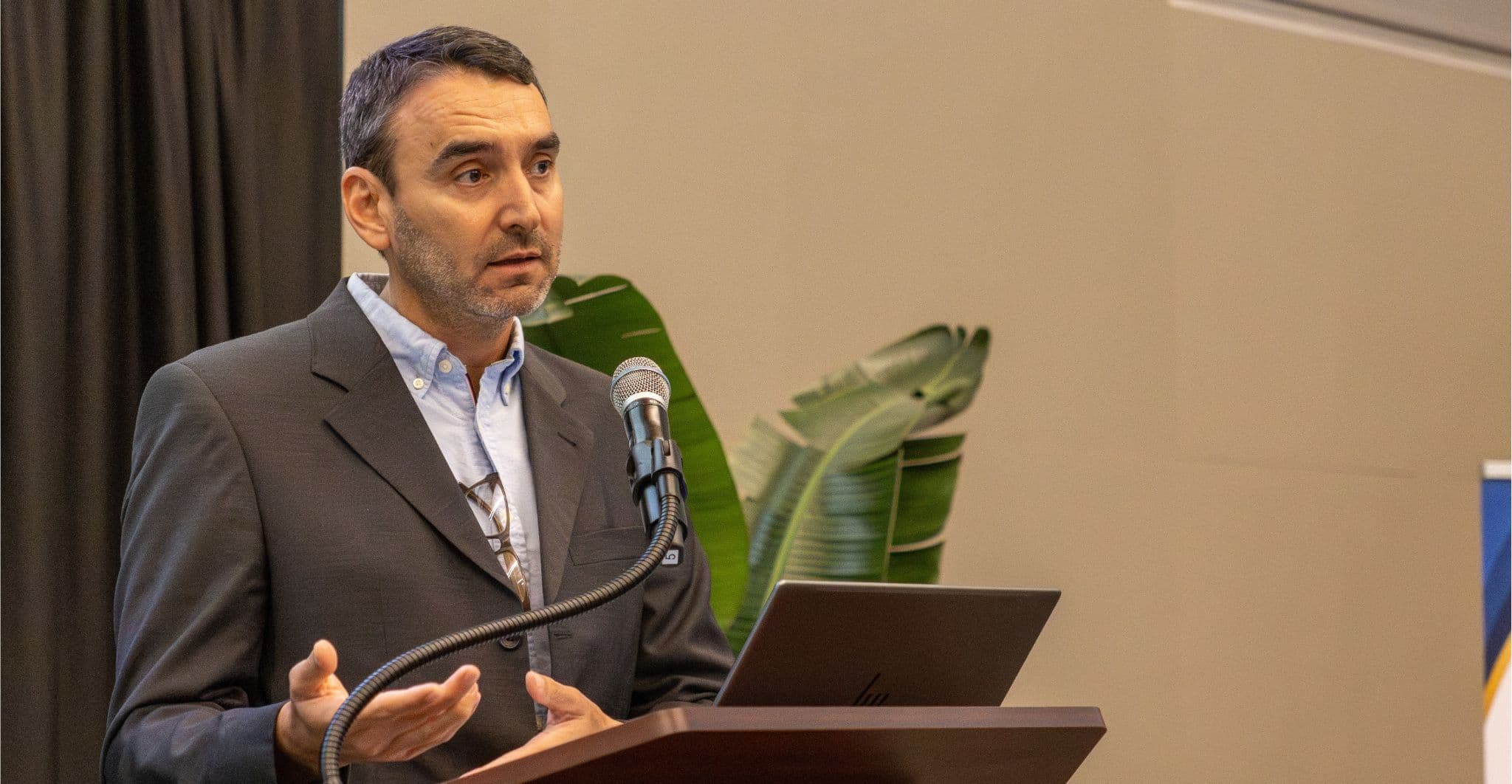
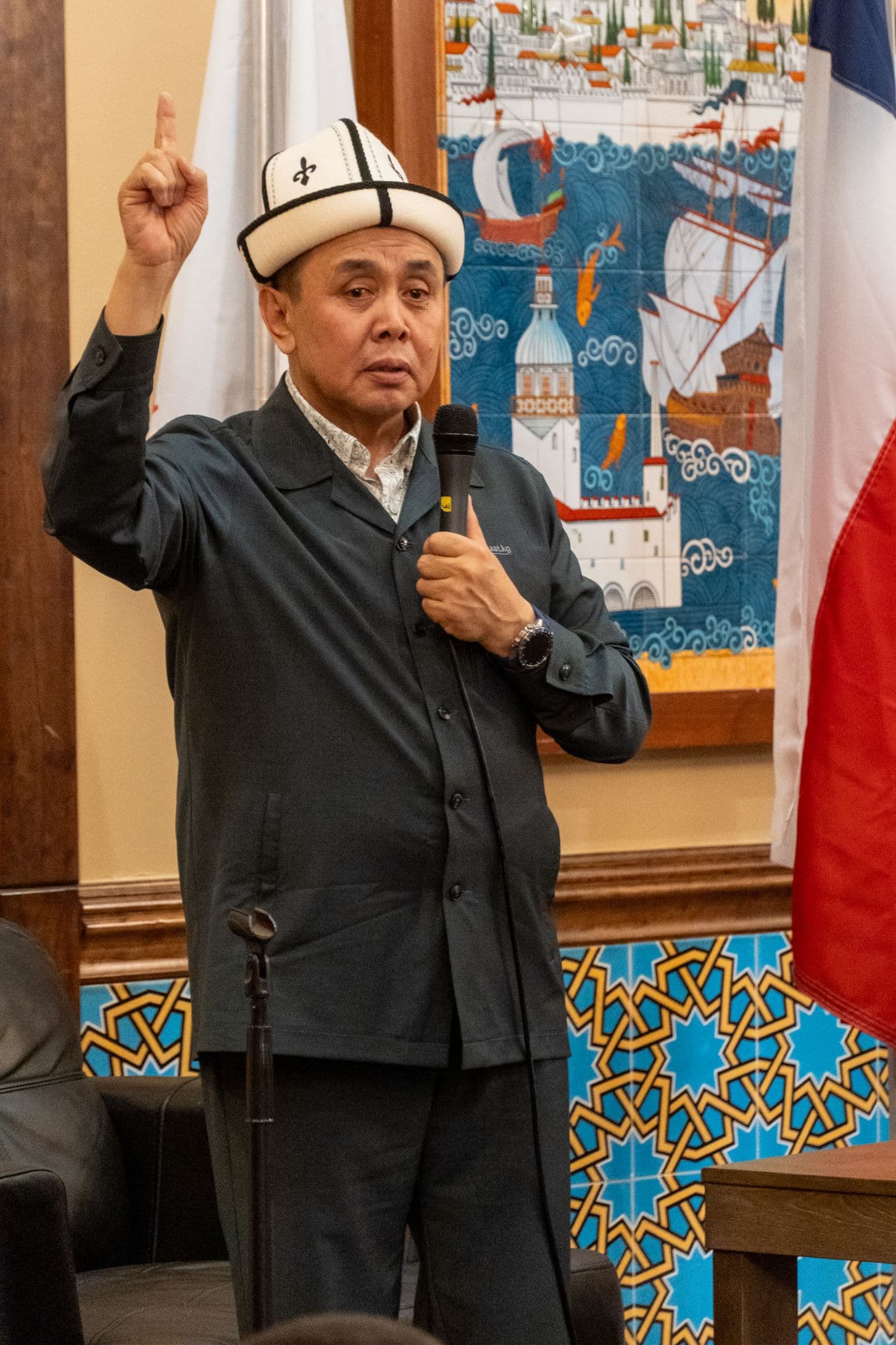
Rejepov, one of TASA's founders and longtime chairman of the board, addresses attendees during the symposium.
TASA began in Dallas in 2007 when its chairman of the board, Vepa Rejepov, and two friends noticed that Turkmen scholars had scattered across the US with few opportunities to connect.
They organized a gathering and invited Turkmen students, researchers and professionals from across the country.
“We didn’t have some grand plan,” Rejepov says. “We just wanted to bring people together.”
The first event drew people from across the country. It worked well enough that Houston offered to host the next one. An organization was registered. The symposium became annual.
No board member has ever been paid.
“No one is getting paid from TASA,” Rejepov says. “If I have to go to TASA in San Francisco, I pay out of my pocket. And on top of it, our board members donate.”
Over the years, students found mentors willing to review applications and personal statements. Researchers found collaborators and co-authored papers. Young professionals discovered career paths they had never considered. Two participants met through TASA and later married.
“When I see the presenters sharing their work, I feel their success as my own,” Rejepov says. “Every year after the symposium, it motivates me to come back.”
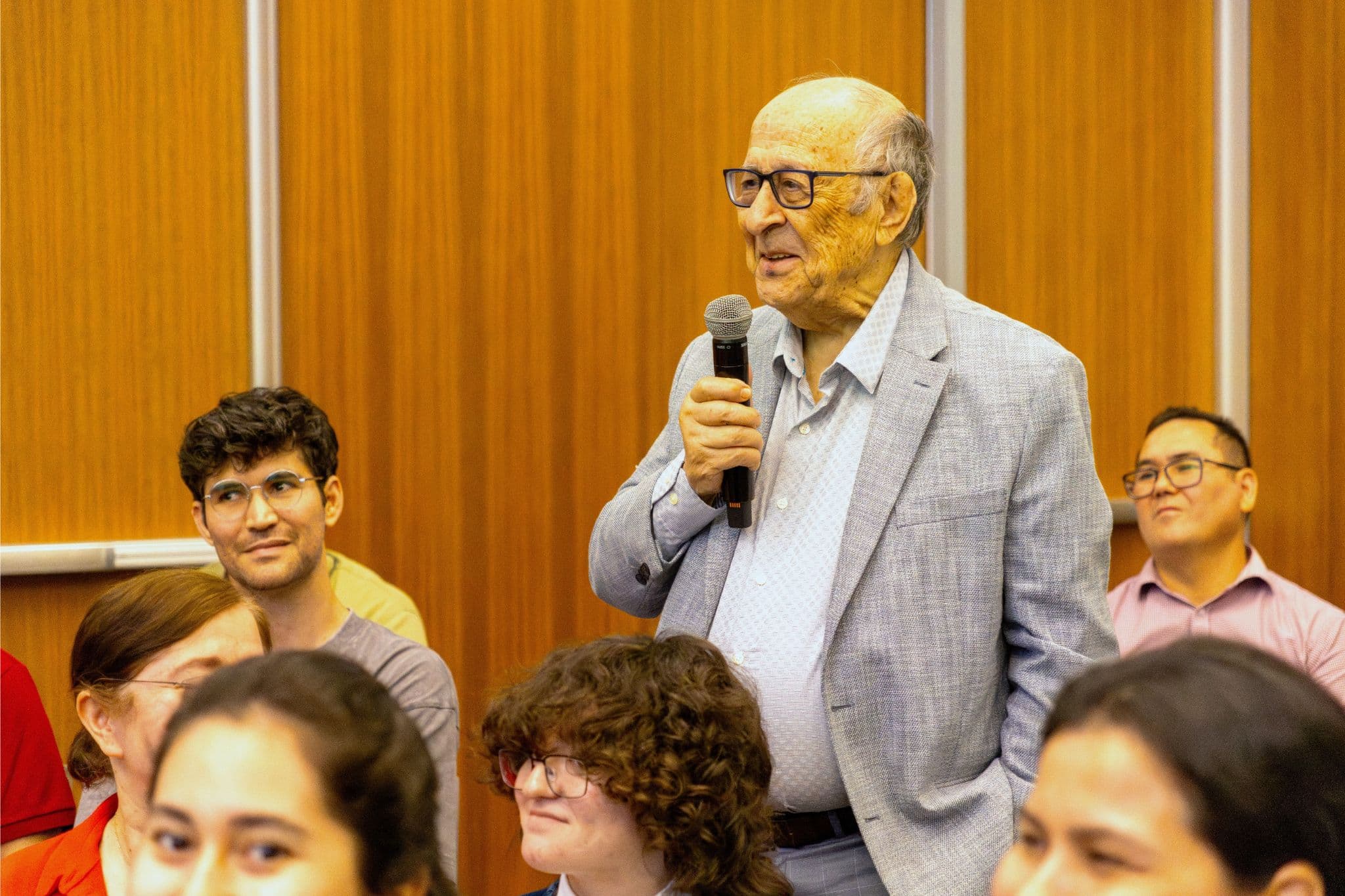
Linguist and scholar Yusuf Azmun has attended TASA gatherings for more than a decade and continues to contribute research on Turkmen language and culture.
Yusuf Azmun has attended since around 2010.
A scholar of Magtymguly, the Turkmen national poet, he has spent decades researching Turkmen language and culture.
“In Turkmenistan, articles shouldn’t be more than two pages,” he says. “Sometimes you have to praise the president. This organization makes me work.”
At the Dallas anniversary event, Azmun presented research on a Turkmen alphabet that survived 3,000 years before disappearing after the Arab conquest of Central Asia.
This year TASA returned to Dallas, where it began.
For the first time, the local Turkmen community sponsored the anniversary gathering. Businesses, like Avalon Lounge, Delo Trans Inc., Frog Roofing, Prime Rise Group and Rexi Realty helped cover costs the organization would otherwise shoulder itself.
Scholars presented research. Musicians performed classical Turkmen works. In the evening, attendees gathered at South Fork Ranch, made famous by the television series Dallas, for a Turkmen cultural celebration.
Azmun presented his research.
Aydogdiyev took his customary seat near the front.
Myratgeldiyev reconnected with mentors who once had helped guide him.
Rejepov watched another generation take the stage.
Myratgeldiyev, the youngest board member, already fields messages from students in Turkmenistan asking about applications, exams and personal statements. He reviews essays, answers questions and hopes one day to serve as TASA president.
“I can’t describe how much help I got from others to get where I am,” he says. “I don’t want to help—I have to. If I don’t, I will be wasting my potential.”
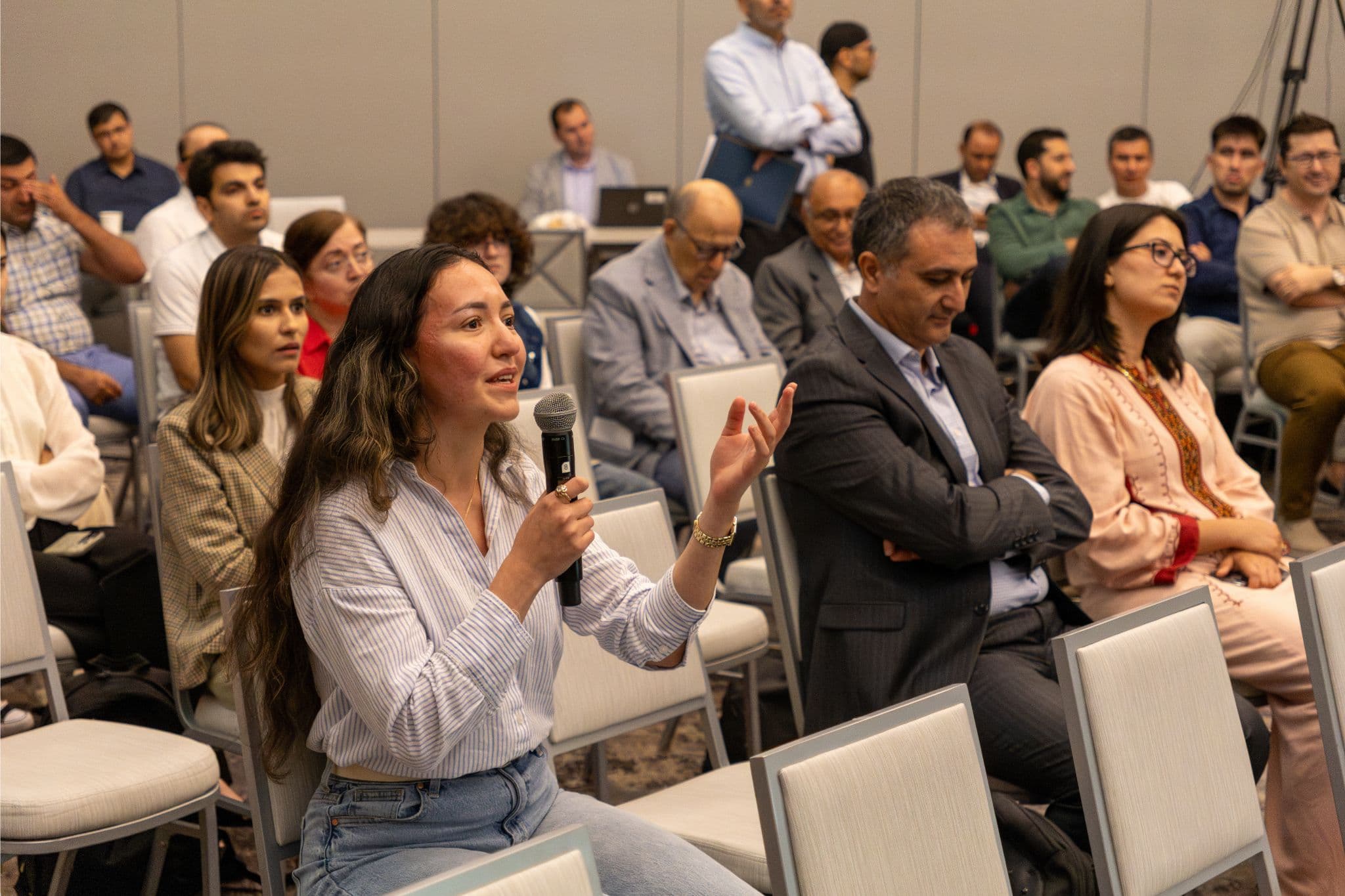
Audience members participate in a discussion during the Dallas symposium.
Somewhere in the audience in Dallas, first-time attendees watched researchers present work they have never encountered before. They sat across from people who have already traveled the road they hope to follow.
Some will come back next year.
Some will volunteer.
And some, eventually, will become the people others travel across the country to see.